The Complete Guide to Fidelity Mutual Fund Fees
What Does It Actually Cost to Trade Mutual Funds at Fidelity?
Understanding the fidelity cost to trade mutual funds is simpler than most people expect — but there are a few key numbers every investor should know before placing a trade.
Here’s a quick breakdown:
| Fund Type | Purchase Fee | Redemption Fee |
|---|---|---|
| Fidelity-branded funds | $0 | $0 |
| FundsNetwork NTF (non-Fidelity, no transaction fee) | $0 | $0 (or $49.95 if sold within 60 days) |
| FundsNetwork Transaction-Fee (TF) funds | $49.95 (some up to $100) | $0 |
| Load funds | $0 transaction fee (fund sales charge may apply) | $0 |
The short version: Most Fidelity mutual funds cost nothing to trade online. But if you buy a non-Fidelity fund through their FundsNetwork platform, you could pay up to $49.95 per purchase — or a $49.95 early redemption fee if you sell too soon.
There’s also a layer of less visible costs — like expense ratios, 12b-1 fees, and revenue-sharing payments that fund companies make to Fidelity — that don’t show up as line items on your trade confirmation.
For retirees managing withdrawals and trying to stretch every dollar, these fees can add up faster than expected. This guide breaks down every cost so you know exactly what you’re paying — and how to keep more of your money working for you.
Understanding the Fidelity Cost to Trade Mutual Funds
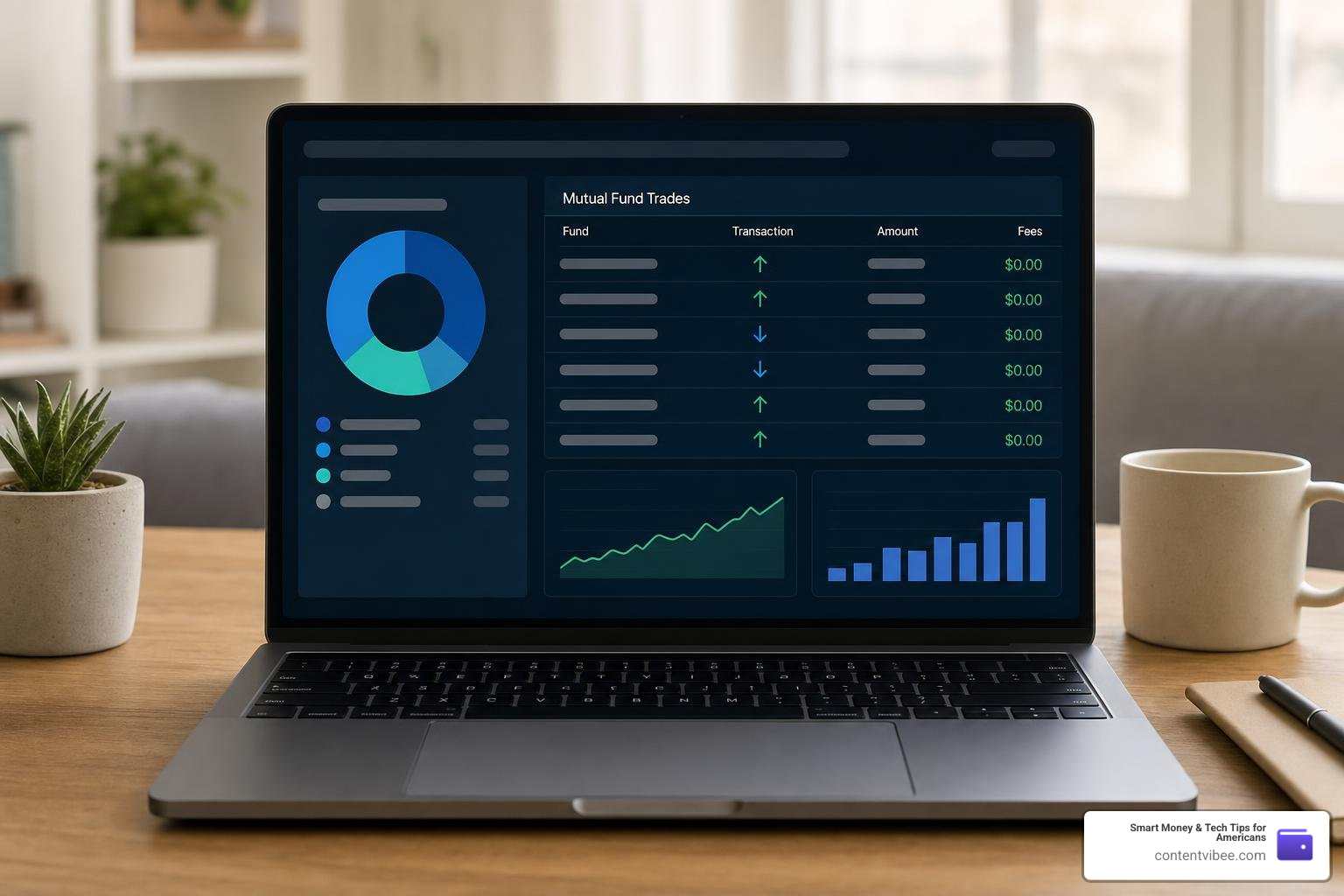
When we look at building a long-term portfolio, minimizing transaction costs is one of the easiest ways to boost our net returns. In the modern brokerage landscape of July 2026, many of us have grown accustomed to completely free stock and ETF trades. However, the mutual fund universe operates under a different set of rules.
At Fidelity, the baseline fidelity cost to trade mutual funds is highly competitive, but it is not entirely uniform. For proprietary Fidelity mutual funds, online commissions are indeed $0. This means you can buy and sell options like the Fidelity 500 Index Fund (FXAIX) without paying a dime in transaction fees.
But when we step outside of Fidelity’s own product lineup, we enter the FundsNetwork. This is Fidelity’s massive supermarket of third-party mutual funds, which features over 10,000 options. Within this network, funds are divided into distinct classes that determine whether you will pay a transaction fee.
To see how these flat fees fit into the broker’s broader pricing structure, you can review the Trading Commissions and Margin Rates | Fidelity page. Additionally, we have analyzed the overall platform expenses in our guide on What Does It Really Cost To Trade On Fidelity.
To put Fidelity’s costs into perspective, it helps to compare them to other industry giants like Charles Schwab and Vanguard:
- Account Service Fees: Fidelity charges a $0 annual account service fee. In contrast, Vanguard charges a $20 annual account service fee for certain accounts (though this can be waived under specific conditions).
- Account Transfer-Out (ACAT) Fees: If you ever decide to move your assets to another firm, Fidelity charges a $0 transfer-out fee. Schwab, on the other hand, typically charges $50 for full account transfers.
- Minimum Investments: Fidelity has a $0 minimum initial investment for its retail mutual funds. Vanguard generally requires minimums ranging from $1,000 to $100,000 depending on the specific fund class.
Fidelity Cost to Trade Mutual Funds: NTF vs. Transaction-Fee Funds
To navigate the FundsNetwork without getting hit by unexpected charges, we must understand the difference between No-Transaction-Fee (NTF) funds and Transaction-Fee (TF) funds.
NTF funds are third-party mutual funds that have partnered with Fidelity. Under this arrangement, you pay $0 to buy the fund, and $0 to sell it—provided you hold it long enough. TF funds, however, do not have this agreement. When you purchase a TF fund online, Fidelity charges a flat fee of $49.95 per purchase (and for certain specialized funds, this fee can reach up to $100).
Here is a direct comparison of how these two fund categories operate:
| Feature | No-Transaction-Fee (NTF) Funds | Transaction-Fee (TF) Funds |
|---|---|---|
| Online Purchase Fee | $0 | $49.95 (up to $100 for select funds) |
| Online Redemption Fee | $0 (if held 60+ days) | $0 |
| Short-Term Redemption Fee | $49.95 (if sold within 60 days) | None (standard holding rules apply) |
| Availability | Thousands of partner funds | Select independent/institutional funds |
While NTF funds look incredibly attractive because they lack an upfront purchase fee, they come with a major catch: the short-term trading rule. If you sell an NTF fund within 60 days of buying it, Fidelity will charge you a $49.95 early redemption fee. This fee exists to discourage short-term trading, as mutual funds are designed for long-term buy-and-hold strategies. For a deeper look at this dynamic, check out our breakdown on Fidelity Mutual Fund Trade Fee When Is Free Not Actually Free.
How to Minimize Your Fidelity Cost to Trade Mutual Funds
If you want to keep your trading costs at absolute zero, we recommend following a few straightforward practices:
- Stick to Fidelity and NTF Funds: Build the core of your portfolio using Fidelity’s proprietary funds or third-party funds marked as NTF.
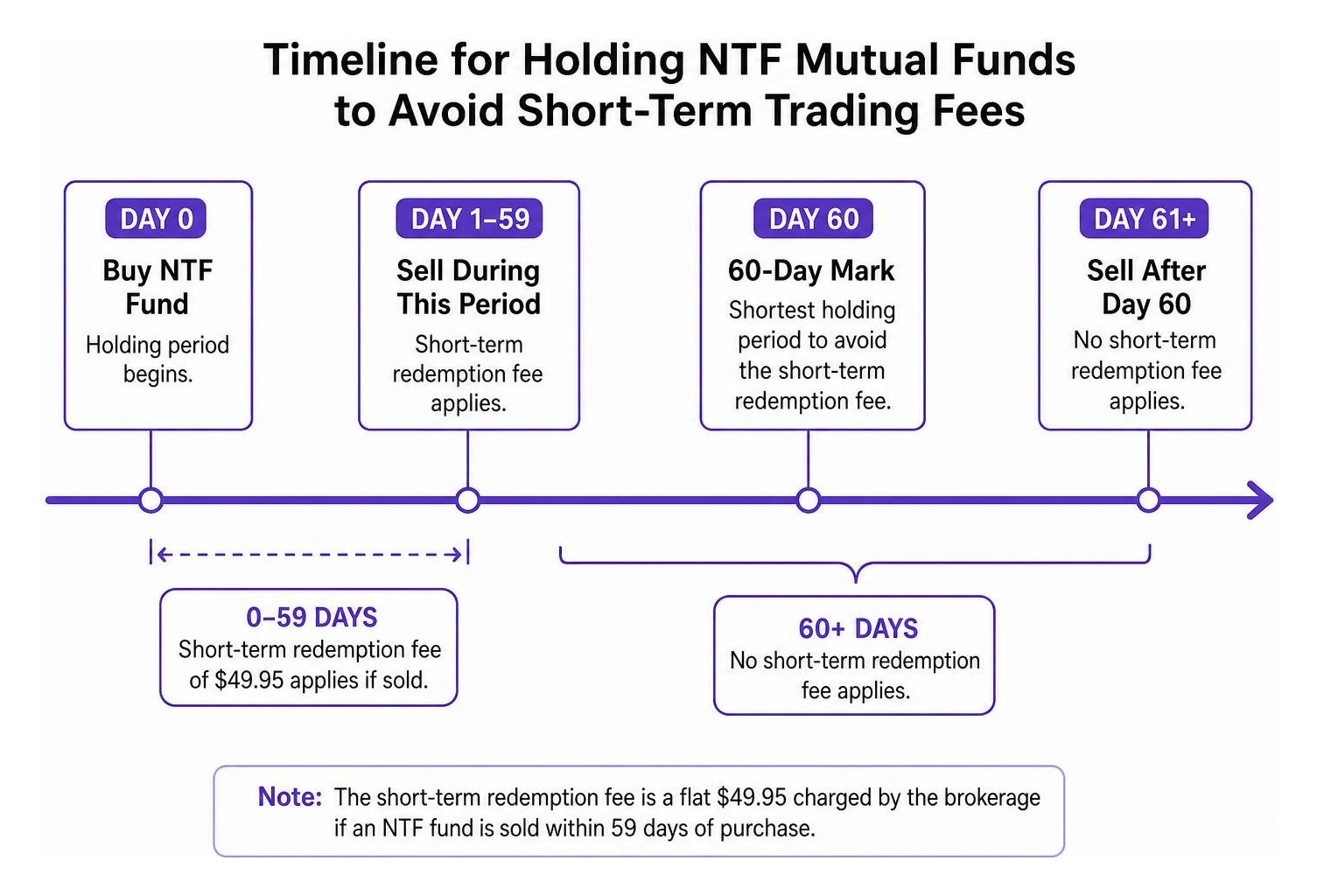
- Respect the 60-Day Rule: When you purchase an NTF fund, mark your calendar. Ensure you hold the position for at least 61 days before executing a sale to avoid the $49.95 short-term redemption fee.
- Trade Online: Always place your trades through Fidelity.com or Active Trader Pro. Placing trades through an automated phone system (FAST) or with the help of a representative will incur significant convenience charges.
- Utilize Automatic Investing: Once you meet the initial plan minimums, you can set up automated, recurring investments for up to 20 mutual funds to build your positions systematically without transaction fees.
For a comprehensive list of all potential transaction charges, you can download the official Fidelity Brokerage and Commission Fee Schedule | Trading information . We also cover the nuances of trade execution costs in our article on the Fidelity Fee Per Trade.
The Different Types of Mutual Fund Fees at Fidelity
Beyond the transaction commissions we pay to buy or sell a fund, there are ongoing internal costs built directly into the mutual funds themselves. These expenses do not show up as a deduction on your monthly statement; instead, they are taken directly out of the fund’s assets, which subtly lowers your overall investment return.
To understand these internal costs, we must look at the fund’s prospectus. The primary metric to look for is the expense ratio, which represents the annual percentage of your investment that goes toward managing the fund. For example, if you have $10,000 invested in a fund with a 0.50% expense ratio, you are paying $50 a year to the fund managers.
Additionally, many mutual funds carry 12b-1 fees. These are annual marketing and distribution fees capped by the National Association of Securities Dealers (NASD) at 0.75% for distribution and 0.25% for service.
To make matters more complex, brokers like Fidelity often engage in revenue-sharing arrangements. Mutual fund companies pay Fidelity anywhere from 5 to 50 basis points (0.05% to 0.50%) based on the average daily balance of the assets held in NTF funds on the platform. This compensation helps fund Fidelity’s platform support, systems development, and marketing programs. While this doesn’t cost you a direct fee, critics point out that these revenue-sharing agreements can pressure fund managers to keep their overall expense ratios higher to maintain their profit margins.
To learn more about how these moving parts interact, read our guide on Fidelity Fees And Commissions Explained Without The Fine Print.
Proprietary Fidelity Funds vs. Third-Party Funds
Fidelity revolutionized the personal finance industry by introducing its proprietary Fidelity ZERO index funds:
- Fidelity ZERO Total Market Index Fund (FZROX)
- Fidelity ZERO Large Cap Index Fund (FNILX)
- Fidelity ZERO Extended Market Index Fund (FZIPX)
- Fidelity ZERO International Index Fund (FZILX)
These four funds carry a 0.00% expense ratio and require a $0 minimum initial investment. For a long-term buy-and-hold investor, they represent the absolute cheapest way to gain broad market exposure. However, there is a proprietary catch: these ZERO funds cannot be transferred “in-kind” to another brokerage. If you ever decide to leave Fidelity, you must sell these funds (potentially triggering capital gains taxes) and transfer the cash.
By contrast, standard Fidelity index funds like the Fidelity 500 Index Fund (FXAIX) carry a microscopic expense ratio of 0.015% (about $1.50 per year on a $10,000 investment) but can be transferred in-kind to other brokerages. Third-party funds from outside providers often carry higher expense ratios and may require transaction fees, making proprietary Fidelity options highly attractive for cost-conscious investors.
Representative-Assisted vs. Online Trading Costs
We always emphasize using online platforms to execute your trades. If you decide to place a mutual fund trade over the phone or with the assistance of a live representative, the costs rise dramatically.
Here is how the pricing changes depending on your chosen trading method:
- Online Trades: $0 for Fidelity and NTF funds; $49.95 for Transaction-Fee funds.
- FAST (Automated Phone System): 0.5625% of the trade’s principal value, with a minimum fee of $75 and a maximum cap of $187.50.
- Representative-Assisted Trades: 0.75% of the trade’s principal value, with a minimum fee of $100 and a maximum cap of $250.
Using a representative to buy a transaction-fee fund could easily turn a simple trade into a $100+ expense. Unless you have a complex transaction that absolutely requires human intervention, stick to the online portal.
Hidden Costs: Short-Term Trading Fees and Holding Rules
Many investors get caught off guard by situational fees that only trigger under specific circumstances. The most common of these is the 60-day short-term trading rule on NTF funds.
Because mutual funds incur administrative costs when investors buy and sell shares, fund families and brokerages use holding periods to discourage rapid trading. If you buy an NTF fund and sell it 45 days later, Fidelity will charge you a flat $49.95 short-term redemption fee.
It is important to note that this fee is charged by Fidelity itself to maintain the integrity of its free transaction program. It is completely separate from any individual redemption fees that the mutual fund company itself might outline in its prospectus. To protect your returns, you can read our detailed review of platform rules in the Fidelity Brokerage Account Fees Review What You Need To Know guide.
Redemption Fees and Holding Periods
To map out a smart trading strategy, we can visualize the timeline required to completely avoid redemption fees:
If you are dealing with load funds, you must also account for sales charges. Fidelity does not charge a transaction fee to buy or sell load funds, but the fund family’s standard charges still apply:
- Front-End Loads: A sales charge deducted from your initial investment. For example, if you invest $10,000 into a fund with a 5% front-end load, $500 is paid as a commission, and only $9,500 goes toward buying shares.
- Back-End Loads (CDSL): A contingent deferred sales load deducted when you sell your shares. This fee often starts around 5% if you sell within the first year and gradually decreases to 0% if you hold the shares for several years.
Always read the “Shareholder Fees” section of a fund’s prospectus to identify these charges before committing your capital.
Account Maintenance and Low-Balance Fees
One of Fidelity’s greatest strengths is its transparent, low-overhead account structure. We enjoy:
- $0 Account Service Fees: There are no annual or monthly maintenance charges to keep your account open.
- $0 Minimum Balance Requirements: You do not need to maintain a specific balance to avoid penalty fees.
- $0 IRA Closeout Fees: If you decide to close or move your retirement account, Fidelity does not charge a termination fee.
This stands in stark contrast to several competitors who charge annual maintenance fees or transfer-out penalties, making Fidelity an exceptionally safe harbor for smaller accounts and starter portfolios.
Frequently Asked Questions About Fidelity Mutual Fund Fees
Does Fidelity charge a fee to buy non-Fidelity mutual funds?
Yes, depending on how the fund is classified. If the non-Fidelity fund is part of the FundsNetwork No-Transaction-Fee (NTF) program, you will pay $0 to buy it. However, if the fund is classified as a Transaction-Fee (TF) fund, you will pay a flat fee of $49.95 (or up to $100 for select funds) per purchase.
What is the short-term redemption fee for NTF funds at Fidelity?
Fidelity charges a flat fee of $49.95 for online redemptions of NTF mutual funds held for less than 60 days. If you execute this short-term sale via the FAST automated phone system, the fee is 0.5625% of the principal (minimum $75). If you use a live representative, the fee is 0.75% of the principal (minimum $100).
Are there any annual account fees for holding mutual funds at Fidelity?
No. Fidelity does not charge annual account service fees, inactivity fees, or low-balance fees for standard retail brokerage accounts or IRAs. The only ongoing costs you will experience are the internal expense ratios charged directly by the mutual funds themselves.
Conclusion
Minimizing the fidelity cost to trade mutual funds comes down to understanding the platform’s rules. By sticking to proprietary Fidelity funds, utilizing the No-Transaction-Fee (NTF) network, holding your positions for at least 61 days, and placing all of your trades online, you can build a highly diversified, institutional-grade portfolio while keeping your transaction fees at absolute zero.
For retirees and long-term savers, keeping these costs low is one of the most reliable ways to protect your wealth and ensure your retirement nest egg lasts as long as possible.
Ready to dive deeper and optimize your portfolio’s cost structure? Read our comprehensive guide, The Ultimate Guide To Fidelity Trading Fees And Savings, to discover step-by-step strategies for eliminating investment friction and keeping more of your hard-earned returns.