Robo-Advisor Asset Allocation: Can Robots Really Gauge Your Risk Tolerance?
Can a Robot Really Manage Your Money? What to Know About Robo-Advisor Asset Allocation
Robo-advisor asset allocation is the automated process of dividing your investment portfolio across stocks, bonds, and other assets — using computer algorithms instead of a human financial advisor.
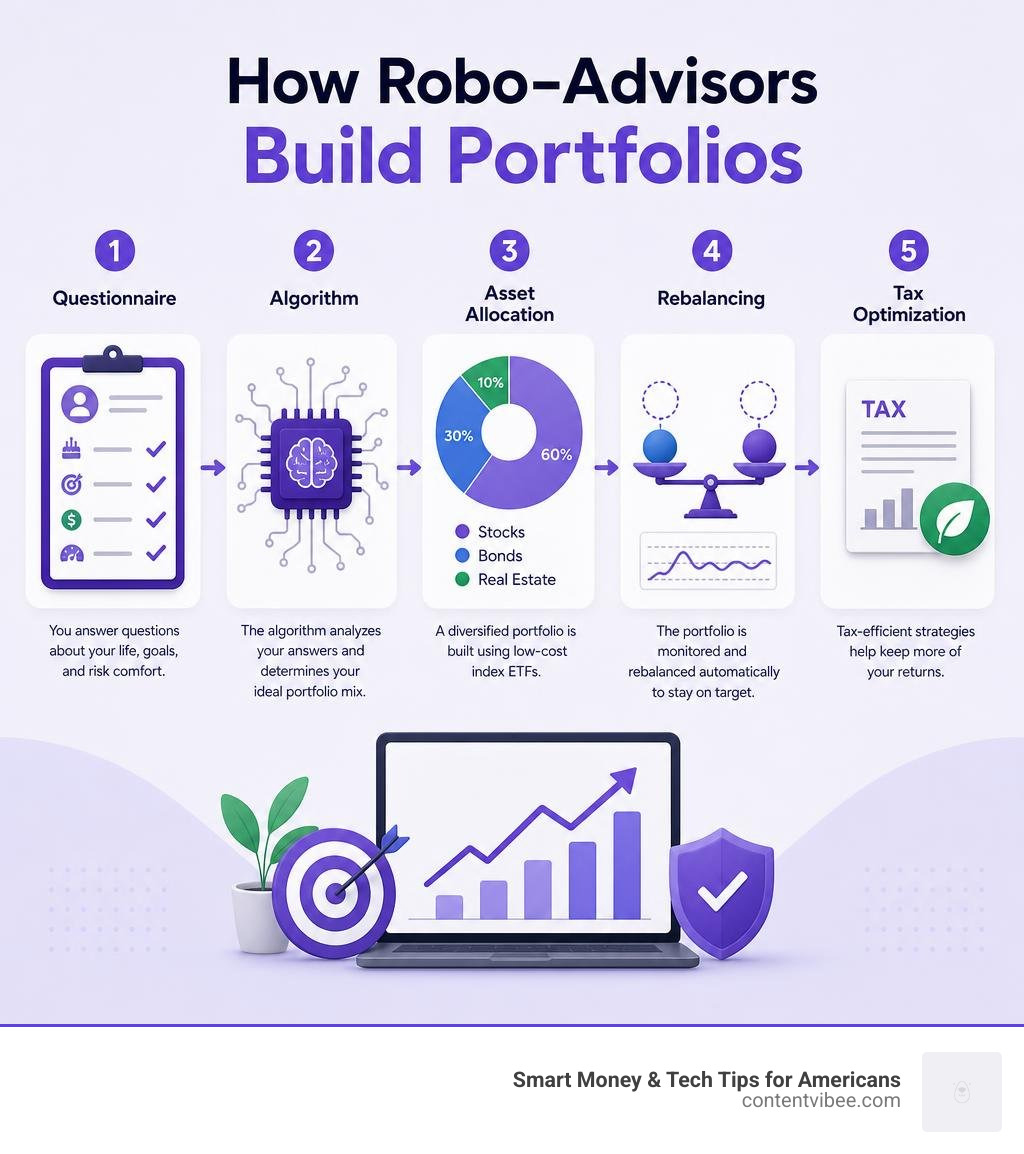
Here’s a quick look at how it works:
| Step | What Happens |
|---|---|
| 1. You answer questions | The platform asks about your age, goals, income, and risk comfort |
| 2. Algorithm picks a portfolio | Software maps your answers to a target mix of asset classes |
| 3. Portfolio gets built | Low-cost index ETFs are purchased across stocks, bonds, and sometimes real estate |
| 4. Automatic rebalancing | If your portfolio drifts too far from the target, it’s corrected automatically |
| 5. Ongoing optimization | Some platforms harvest tax losses and update allocations annually |
Robo-advisors have grown fast — the market was valued at $8.3 billion in 2024 and is projected to hit $33.6 billion by 2030. Platforms like Betterment, Wealthfront, and Schwab now manage billions in assets for everyday investors.
But here’s the real question most people have: can an algorithm actually understand your risk tolerance — or is it just guessing?
The answer is more nuanced than the marketing suggests. These platforms use serious financial theory (rooted in Nobel Prize-winning research by Harry Markowitz). But they also have real limitations, especially when markets get volatile or your life gets complicated.
This guide breaks it all down — plainly and honestly.
Understanding Robo Advisor Asset Allocation and Modern Portfolio Theory
To understand how robo-advisors make decisions, we have to travel back to 1952. That was the year economist Harry Markowitz introduced Modern Portfolio Theory (MPT) and the concept of mean-variance optimization.
Before Markowitz, investors mostly focused on picking individual winning stocks. Markowitz showed that you shouldn’t look at a stock in isolation. Instead, you should look at how it behaves in relation to the rest of your portfolio.
The core idea of mean-variance optimization is simple: for any given level of risk, there is an optimal mix of assets that will give you the highest expected return. This optimal boundary is called the efficient frontier.
   Expected Return
 ^
 | * * * *  <-- The Efficient Frontier (Optimal Portfolios)
 | *
 | *
 | * x  Risk (Volatility)
Robo-advisors use these exact institutional asset management principles to build your portfolio. Instead of trying to “beat the market” by picking hot stocks, they adopt a passive indexing strategy. They identify a broad range of asset classes—such as U.S. equities, international stocks, emerging markets, real estate, and government bonds—and build a diversified portfolio using low-cost Exchange-Traded Funds (ETFs).
By spreading your money across asset classes that don’t move in perfect lockstep (meaning they have low correlation), the algorithm aims to maximize your returns while keeping your portfolio’s overall volatility as low as possible. For a deeper dive into how institutions structure these models, check out the research from Fidelity Institutional Asset Management .
The Mechanics of Automated Portfolio Management
Once your target robo advisor asset allocation is set, the robot doesn’t just sit there. It monitors your portfolio daily to handle the administrative heavy lifting that human investors often neglect.
How Algorithms Determine Your Robo Advisor Asset Allocation
Before a single dollar is invested, the robo-advisor has to profile you. This is usually done through a 5-to-10-minute digital onboarding questionnaire.

These questionnaires try to measure three things:
- Time Horizon: When will you need this money? (e.g., 30 years for retirement vs. 3 years for a house down payment).
- Risk Capacity: How much risk can you afford to take based on your net worth, income, and timeline?
- Risk Tolerance: How much risk can you stomach emotionally before you panic-sell during a market drop?
While this process is highly convenient, academic researchers have raised questions about its accuracy. A study on Robo Advising and Investor Profiling pointed out that traditional onboarding questionnaires can be vague and highly subjective.
The study compared standard robo-advisor portfolios against portfolios built using Relative Risk Aversion (RRA)—a classical mathematical measure from expected utility theory. The researchers found that RRA-based portfolios consistently achieved higher Sharpe ratios (0.52 to 0.58 out-of-sample) compared to standard robo-advisor portfolios (0.18 to 0.33). The study suggested that many robo portfolios are actually “ultraconservative,” with volatilities too low to match realistic levels of risk aversion, showing that algorithmic profiling still has room to grow.
Rebalancing Bands and Tax-Loss Harvesting
Once your portfolio is live, the algorithm keeps it on track using rebalancing bands and automated tax strategies.
Over time, different assets grow at different speeds. If stocks have a great year, your portfolio might drift from a target of 60% stocks and 40% bonds to 70% stocks and 30% bonds. This makes your portfolio riskier than intended.
Robo-advisors solve this by setting drift limits (typically ±5%). If an asset class drifts outside its allowable band, the algorithm automatically sells the overperforming assets and buys the underperforming ones to bring you back to your target allocation.
Additionally, taxable accounts often benefit from tax-loss harvesting (TLH). When an ETF loses value, the robo-advisor automatically sells it to realize a capital loss, which can be used to offset your capital gains taxes. To keep your asset allocation identical, the algorithm simultaneously buys a highly similar (but not “substantially identical”) ETF.
This process is carefully coded to avoid violating the IRS wash-sale rule, which bans claiming a tax loss if you buy the same security within 30 days. For an official overview of how these platforms manage these administrative and regulatory tasks, you can review the SEC Investor Bulletin: Robo-Advisors.
Benefits and Limitations of Algorithmic Asset Allocation
Like any technology, algorithmic investing has clear pros and cons.
The Benefits:
- Low Cost: Because algorithms do the work, robo-advisors are highly affordable.
- No Emotion: Algorithms don’t get greedy during bull markets or panic-sell during crashes.
- Discipline: Automated rebalancing and daily monitoring happen in the background without you having to lift a finger.
The Limitations:
- Algorithm Bias: The software assumes historical market relationships will always hold true.
- Limited Customization: You generally cannot opt out of specific sectors or buy individual stocks you like.
- Rigid Risk Profiling: A 10-question quiz cannot capture the full complexity of your financial life (like an expected inheritance, a family health crisis, or unique business risks).
Optimizing Your Robo Advisor Asset Allocation for Long-Term Goals
To make up for these limitations, top-tier robo-advisors have shifted from generic portfolios to highly personalized, goal-based investing.
Instead of putting all your money into a single bucket, platforms allow you to set up different goals, each with its own customized glide path (how your portfolio transition from aggressive to conservative over time).
For example, Vanguard Digital Advisor offers over 300 personalized glide paths based on age, risk attitude, loss aversion, and marital status. This is a massive upgrade over traditional target-date retirement funds, which assume everyone retiring in a specific year has the exact same risk tolerance.
Similarly, Betterment’s portfolio construction methodology utilizes 101 distinct risk levels to align with different goals:
- Major Purchase (e.g., a house): Starts at 90% stocks for long timelines, but glides down to 0% stocks as you near the purchase date, protecting your principal.
- Retirement: Keeps a meaningful stock allocation (around 56%) even at retirement age, acknowledging that you will withdraw your money slowly over decades rather than all at once.
- Emergency Fund: Focuses on safety and liquidity, utilizing low-volatility bond allocations with a small stock buffer to outpace inflation.
To understand the core financial theories that govern these decisions, you can study the foundational principles of portfolio construction and asset allocation.
The Limits of Mean-Variance Optimization in Market Crises
While mean-variance optimization works beautifully during normal market conditions, it faces severe challenges during black swan events and market shocks.
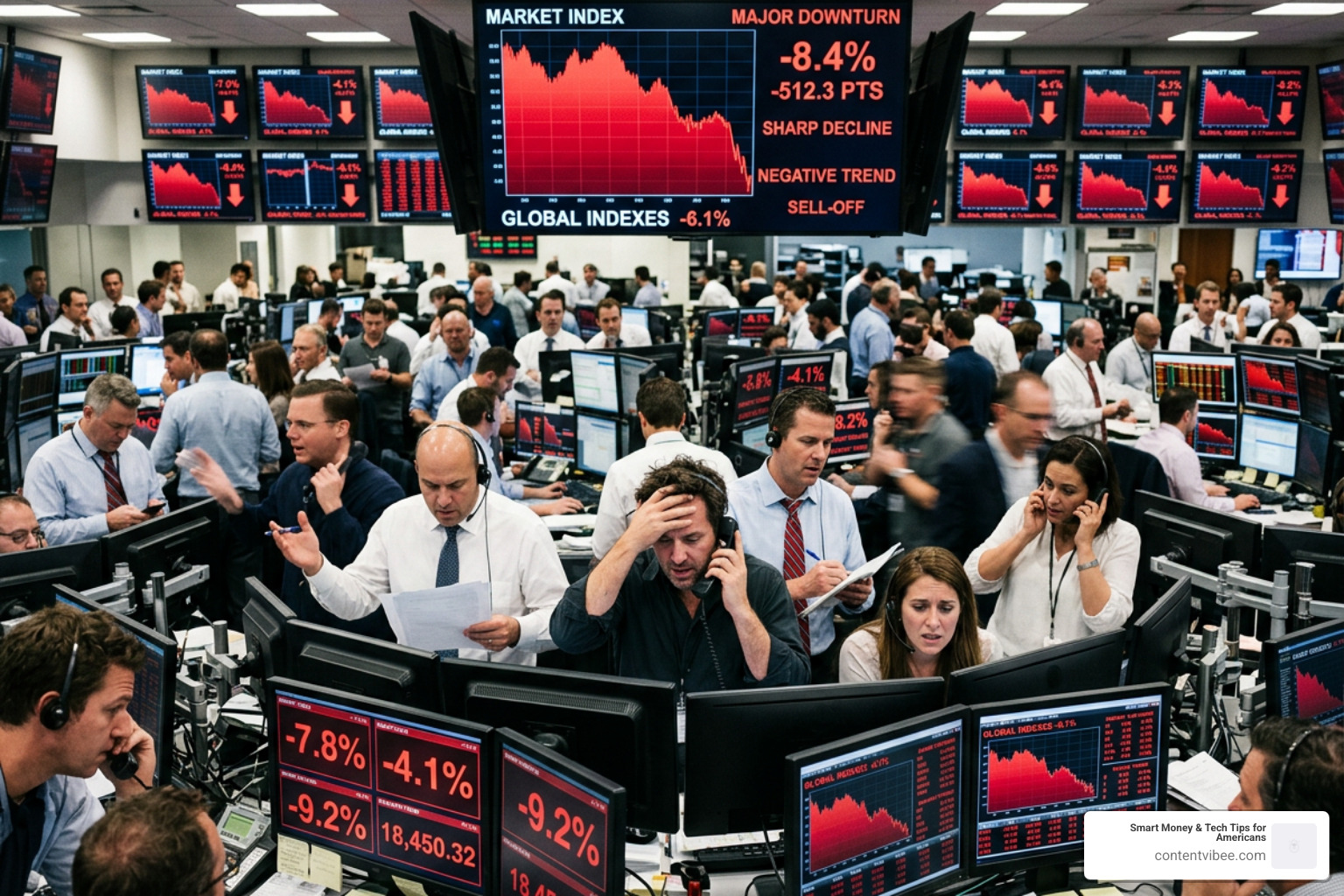
The math behind MVO assumes that asset returns are “normally distributed” (the classic bell curve). However, real-world markets experience “fat tails”—extreme events that happen far more often than normal distributions predict. For instance, on Black Monday in 1987, U.S. stocks fell by 23% in a single day. Between 1926 and 2011, there were 10 months with returns more than 3 standard deviations below the mean, far exceeding statistical expectations.
During a true financial crisis, asset correlations tend to break down. Assets that usually move in opposite directions suddenly plunge together as investors panic and sell everything for cash. When correlations approach 1, the diversification benefits of your robo advisor asset allocation can temporarily disappear.
Furthermore, MVO is highly sensitive to estimation errors. If the historical inputs for expected returns, volatility, or correlation are even slightly off, the resulting portfolio can be highly suboptimal. This is why platforms like Charles Schwab review and update their Capital Market Expectations (CMEs) annually to keep portfolios aligned with shifting economic realities. You can read about their annual process in Why We Update Portfolio Allocations and ETFs Each Year | Charles Schwab .
Fortunately, robo-advisors provide an underrated defense during crises: behavioral coaching. By locking their user interfaces, sending calming educational emails, and showing projected long-term outcomes instead of daily losses, they help prevent investors from making devastating market-timing mistakes during periods of high market volatility.
Robo-Advisors vs. Traditional Human Advisors
How do these automated platforms stack up against a living, breathing financial planner?
The choice usually comes down to the complexity of your financial situation and your budget.
| Feature | Robo-Advisor | Traditional Human Advisor |
|---|---|---|
| Average Cost | 0.20% to 0.35% AUM annually | 1.00% AUM or flat hourly fees |
| Account Minimum | Very low ($0 to $500) | Often high ($50,000 to $250,000+) |
| Personalization | Algorithmic (based on goals) | Deeply customized to your life |
| Fiduciary Duty | Yes (for registered platforms) | Varies (always verify if they are a fiduciary) |
| Human Touch | None to limited (hybrid models) | High (face-to-face meetings, phone calls) |
Many modern platforms now offer a hybrid model. This gives you the low-cost efficiency of automated asset allocation, but allows you to schedule virtual meetings with a certified financial planner (CFP) for complex issues like estate planning, tax strategies, or retirement withdrawal sequencing.
To help you decide which path is right for your money, read the guide on Choosing Between a Robo-Advisor and a Human Advisor – FINRA.
A Look at Major US Robo-Advisors (As of June 2026)
If you decide to go the automated route, the major U.S. providers offer distinct features and fee structures:
- Vanguard Digital Advisor: Charges a highly competitive net advisory fee of around 0.20% (index option) to 0.25% (active option). It requires a $100 minimum per account and was ranked first overall in Morningstar’s Robo-Advisor Report for 2025. You can explore their services directly via Robo-Advisor – Automated Investing Services – Vanguard .
- Fidelity Go: Excellent for beginners, charging 0% advisory fees for balances under $25,000, and 0.35% for balances above that. It utilizes proprietary flex funds with 0% expense ratios.
- Wealthfront: Charges a flat 0.25% management fee with incredibly low average underlying ETF expense ratios of 0.08%. It offers broad diversification across more than 10 asset classes, including real estate and dividend equities.
- Charles Schwab (Schwab Intelligent Portfolios): Charges no management fee, but requires a $5,000 minimum. It builds portfolios across 20 asset classes with average expense ratios of 0.12%. It keeps a portion of your portfolio in cash, which can act as a drag on returns during bull markets. Learn more at Charles Schwab and Automated Investing | Schwab Intelligent Portfolios .
- Betterment: Charges $5 per month for balances under $24,000, or 0.25% annually for larger balances with recurring deposits. Underlying ETF expense ratios range from 0.04% to 0.17%.
For a side-by-side comparison of current features and promotional offers, you can research and compare the top-rated platforms to find the best fit for your financial goals.
Frequently Asked Questions about Automated Investing
How do automated platforms adjust portfolios during a market crash?
During a market crash, the platform’s algorithm monitors your asset allocation daily. If the stock market drops significantly, your stock allocation will fall below its target. The algorithm will automatically sell some of your safer assets (like bonds) and buy cheaper stocks to bring you back to your target allocation. This forces you to “buy low” without any emotional hesitation.
Are digital investment platforms safe for retirement planning?
Yes, they are highly suitable for long-term retirement planning. Most reputable robo-advisors offer Traditional, Roth, and SEP IRAs. They automatically manage your glide path, gradually shifting your portfolio to safer, income-producing assets as you approach your target retirement age. However, ensure the platform you choose is registered with the SEC and is a member of the Securities Investor Protection Corporation (SIPC), which protects your securities up to $500,000 if the brokerage firm fails.
What is the average fee for an automated investment service?
The industry standard management fee ranges from 0.20% to 0.35% of assets under management (AUM) annually. In addition to this fee, you will pay the internal expense ratios of the underlying ETFs, which typically average between 0.05% and 0.15%. Combined, you can expect to pay around $25 to $50 annually per $10,000 invested.
Conclusion
At Smart Money & Tech Tips for Americans, we believe that technology is one of the greatest tools ever created for building personal wealth.
Robo-advisors have democratized investing, taking sophisticated institutional strategies like mean-variance optimization, automatic rebalancing, and tax-loss harvesting, and making them accessible to anyone with $100. While an algorithm can’t replace the empathy and deep personalization of a human advisor during complex life transitions, it is an incredibly efficient, low-cost way to manage your long-term wealth.
If you are ready to put your portfolio on autopilot, make sure to evaluate each platform’s fees, cash drag, and minimum balance requirements to decide if automated apps are the right fit for your wallet.