How Personal Injury Lawyers Can Help You

When You Need a Personal Injury Lawyer: What to Know First
Personal injury lawyers help accident victims recover money for medical bills, lost wages, and pain and suffering — without any upfront cost to you.
If you’ve been hurt due to someone else’s negligence, here’s what you need to know right away:
How Personal Injury Lawyers Work — Quick Overview
| Question | Quick Answer |
|---|---|
| How do they charge? | Contingency fee — you pay nothing unless they win |
| Typical fee | Around 33% of your settlement or verdict |
| What can you recover? | Medical bills, lost wages, pain and suffering, future care costs |
| Is there a deadline to file in New York? | Generally 3 years (shorter for some cases) |
| What if you were partly at fault? | You can still recover — New York reduces your award by your fault percentage |
| First step? | Free consultation — bring any police reports, photos, and medical records |
New York is one of the most plaintiff-friendly states in the country. The median damages award in New York personal injury jury verdicts is $287,628 — significantly higher than the national median. And in serious cases, verdicts can reach into the tens of millions.
But getting fair compensation isn’t automatic. Insurance companies often make low initial offers, hoping you’ll settle fast. That’s exactly where a skilled personal injury lawyer makes the biggest difference.
This guide walks you through everything — from how lawyers build your case, to understanding New York’s no-fault rules, to knowing what your claim might actually be worth.
Similar topics to personal injury lawyers:
How Personal Injury Lawyers Maximize Your Compensation

When you are recovering from an unexpected accident, the last thing you want to do is fight with an insurance adjuster. Unfortunately, insurance companies are in the business of saving money, not handing out generous payouts. That is why having a legal advocate on your side is critical to securing a fair outcome for your personal injury claim.
Experienced personal injury lawyers understand the tactics insurance companies use to minimize your injuries. Without professional representation, you might accept a quick settlement that covers your immediate ER bill but leaves you paying out-of-pocket for years of physical therapy, future surgeries, or lost earning capacity.
By handling everything from evidence gathering to aggressive negotiation, a lawyer ensures that your claim reflects the true, long-term cost of your injuries.
How Personal Injury Lawyers Investigate Your Accident
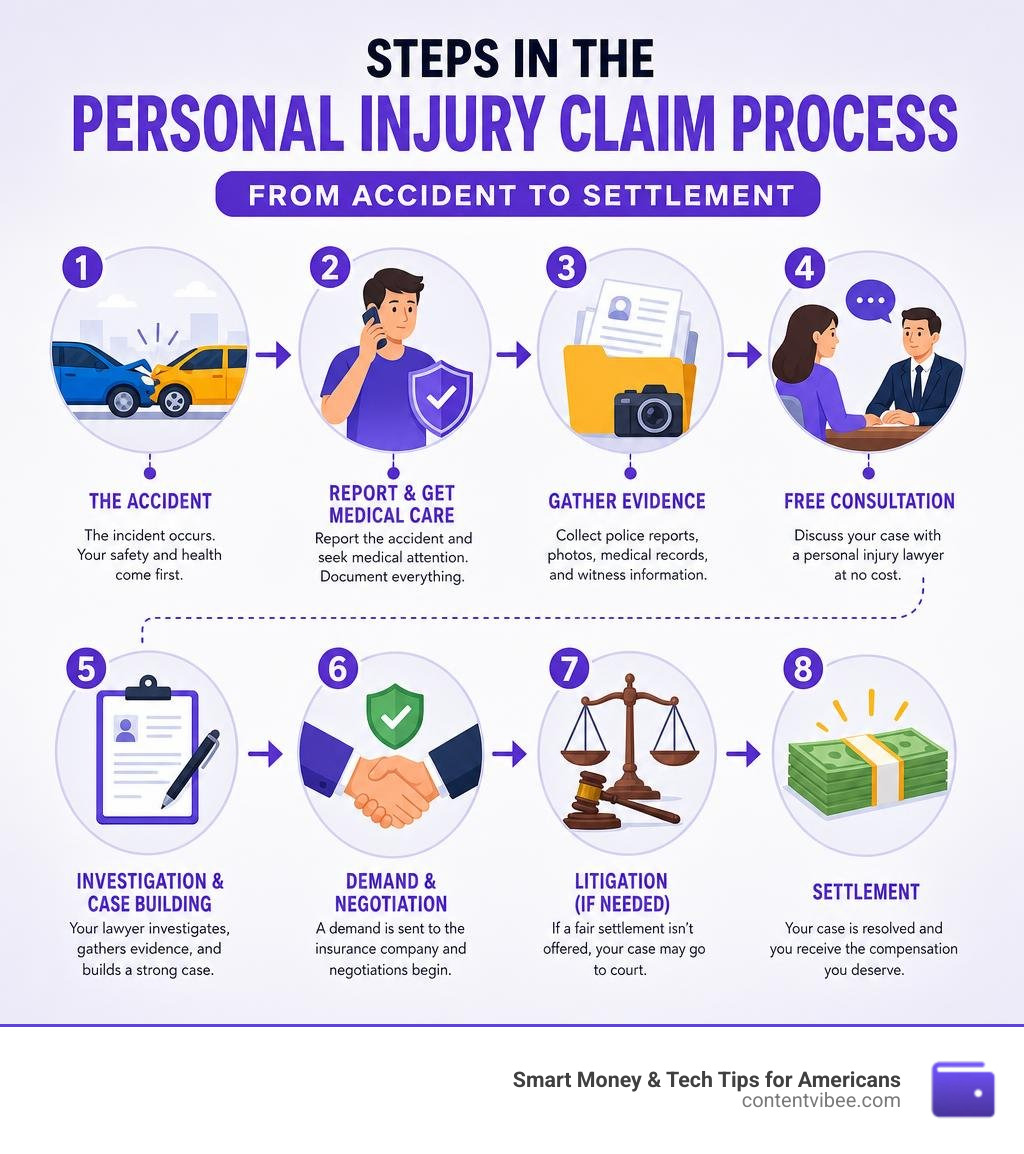
A successful claim is built on an unbreakable foundation of evidence. From the moment you hire an attorney, they launch a comprehensive investigation to prove both liability (who caused the accident) and damages (how much the accident cost you physically and financially).
To build a strong case, your legal team will typically gather:
- Official Police and Accident Reports: These provide an objective, third-party account of the incident immediately after it occurred.
- Witness Statements: Eyewitness accounts can corroborate your version of events and prevent the at-fault party from changing their story later.
- Video and Photographic Evidence: This includes photos of the accident scene, vehicle damage, your physical injuries, and any nearby security or dashcam footage.
- Medical Records and Bills: Detailed documentation from your doctors linking your injuries directly to the accident.
- Expert Witness Testimony: In complex cases, lawyers will collaborate with medical professionals, accident reconstruction experts, and economic analysts to prove how the crash happened and how it will impact your life going forward.
If you are looking for top-tier legal support on the West Coast, working with a highly rated Los Angeles Personal Injury Lawyer | J&Y Law can help you secure the expert testimony and evidence needed to win a complex claim.
Negotiating with Insurance Companies for Fair Settlements
Once the evidence is compiled, your lawyer will draft a formal settlement demand letter to the insurance company. This document outlines the facts of the accident, details your medical treatment, and presents a specific financial demand.
Insurance companies almost never accept the first demand. Instead, they respond with a lowball offer, hoping you are desperate enough for cash to sign away your rights. A skilled lawyer knows how to counter these tactics. They will use your medical records, wage statements, and local verdict data to demonstrate why the insurer’s offer is inadequate.
Understanding how much does a personal injury lawyer charge can help put your mind at ease. Because personal injury attorneys work on a contingency fee basis, they do not get paid unless you do. This aligns your interests perfectly: the more compensation they secure for you, the more they earn. If you want to dive deeper into the financial side of hiring legal help, check out our guide on how much does a personal injury lawyer cost.
If the insurance company refuses to negotiate fairly, your lawyer will prepare your case for litigation. Often, simply filing a lawsuit and setting a trial date is enough to make the insurance company increase their offer. To ensure you have a team capable of taking your case all the way to court, you should look for Personal Injury & Car Accident Lawyers | Steinger, Greene & Feiner who have a proven track record of securing maximum compensation for their clients.
Key Factors to Consider When Hiring Personal Injury Lawyers
Choosing the right legal advocate is one of the most important decisions you will make after an accident. To ensure you get the best possible representation, consider the following key factors:
- Trial Experience: While most personal injury claims settle out of court, you want a lawyer who isn’t afraid to go to trial if the insurance company refuses to be reasonable. Insurers know which attorneys actually litigate cases and which ones settle cheap.
- Specialization: Law is vast. You do not want a general practitioner who handles divorces and wills representing you in a complex truck accident claim. Look for dedicated accident and injury lawyers who specialize exclusively in personal injury law.
- Proven Success Rate: Ask about their history of settlements and verdicts. While past results do not guarantee future outcomes, a consistent record of high-value recoveries is a strong indicator of competence.
- Clear Communication: Your lawyer should be accessible, responsive, and willing to explain complex legal jargon in plain English.
Finding the right local advocate can feel overwhelming, but utilizing resources like injury lawyer near me how to find the right one will help streamline your search.
Depending on your location, you may want to look into highly respected regional firms. For instance, if you are in the Midwest, consulting a St. Cloud Personal Injury Lawyer | Nelson Personal Injury LLC can provide you with dedicated, family-focused representation. If you are in the South, looking into a Texas Personal Injury Law Firm | Jim Adler, The Texas Hammer or the Personal Injury Lawyers of Tampa will connect you with aggressive advocates who have spent decades fighting for injured victims.
Understanding New York Personal Injury Laws and Regulations

Navigating the legal landscape in New York can be complicated due to the state’s unique insurance rules, comparative negligence standards, and strict statutory deadlines. If you are injured in the Empire State, understanding these laws is crucial to protecting your right to financial recovery.
No-Fault Car Insurance vs. Standard Liability Claims
New York is one of a dozen states that operates under a no-fault insurance system for motor vehicle accidents. This means that if you are injured in a car crash, your own insurance policy—specifically your Personal Injury Protection (PIP) coverage—will pay for your medical expenses, a portion of your lost wages, and other essential out-of-pocket costs, regardless of who caused the accident.
- The $50,000 Limit: The standard minimum PIP coverage in New York is $50,000 per person.
- What PIP Covers: It pays for ambulance rides, hospital stays, doctor visits, diagnostic tests, prescriptions, and up to 80% of your lost income (capped at $2,000 per month).
- The “Serious Injury” Threshold: Because of the no-fault system, you generally cannot sue the other driver for pain and suffering unless your injuries meet New York’s strict legal definition of a “serious injury.” Under New York Insurance Law § 5102(d), a serious injury includes:
- Significant disfigurement
- Bone fractures
- Loss of a fetus
- Permanent loss or limitation of a body organ, member, function, or system
- A non-permanent injury that prevents you from performing your normal daily activities for at least 90 of the first 180 days following the accident (the 90/180 rule)
With New York recording 381,306 car crashes in 2023 alone—resulting in 113,576 injury-causing crashes and 1,022 fatalities—knowing when you can step outside the no-fault system to file a personal injury lawsuit is essential for getting your medical bills fully paid.
Pure Comparative Negligence in New York State
What happens if you were partially to blame for your accident? In some states, being even 1% at fault prevents you from recovering any money. Fortunately, New York is a pure comparative negligence state.
Under this rule, your financial recovery is simply reduced by your percentage of fault. For example:
- If a jury determines your total damages are $100,000, but finds you were 30% at fault for the accident (perhaps because you were speeding slightly when another driver ran a red light), your award will be reduced by 30%.
- You will still receive $70,000 in compensation.
Because of this “pure” standard, you can theoretically recover damages even if you were 99% at fault for the accident, though your payout would only be 1% of the total damages. Insurance adjusters frequently try to assign unfair blame to injury victims to save money, which is why having an attorney to defend your actions is highly beneficial.
New York Statute of Limitations and Key Exceptions
You do not have forever to file a personal injury lawsuit. New York enforces strict deadlines, known as the statute of limitations. If you miss these deadlines, you lose your right to seek compensation forever.
- Standard Personal Injury Claims: In New York, you generally have three years from the date of the accident to file a lawsuit for personal injury.
- Wrongful Death Claims: If a loved one passes away due to negligence, the personal representative of the estate has only two years from the date of death to file a claim.
- Medical Malpractice: Claims against doctors or hospitals must be filed within two and a half years (30 months) from the date of the alleged malpractice or the end of continuous treatment.
- Sovereign Immunity (Suing the Government): If your injury was caused by a government entity (such as a slip and fall on a subway platform or an accident involving a municipal bus), the rules are incredibly strict. You must file a formal Notice of Claim within 90 days of the incident, and you generally have only one year and 90 days to file a lawsuit.
Types of Damages You Can Recover in a Personal Injury Case
In legal terms, “damages” refers to the financial compensation you seek to recover for your losses. These damages are broadly split into two categories: economic (tangible, financial losses) and non-economic (intangible, subjective losses).
To understand what your specific claim might be worth, you can use our Calculate your potential recovery tool to get a personalized estimate based on your medical bills and lost income.
| Damage Type | Description | Examples |
|---|---|---|
| Economic Damages | Verifiable financial losses with a clear receipt or dollar value | Medical bills, future treatment costs, lost wages, property damage |
| Non-Economic Damages | Subjective, physical, and emotional consequences of an injury | Pain and suffering, emotional distress, loss of enjoyment of life |
Economic Damages: Medical Bills and Lost Wages
Economic damages are designed to make you financially “whole” again by reimbursing you for every dollar the accident cost you. These are relatively straightforward to calculate because they are backed by bills, receipts, and pay stubs.
- Current and Future Medical Expenses: This covers everything from the initial ambulance ride and ER visit to surgeries, prescription medications, physical therapy, and assistive medical devices (like crutches or wheelchairs). If you require ongoing care, your lawyer will work with medical experts to estimate your lifetime medical costs.
- Lost Income: If your injuries forced you to miss work, you can recover the wages, bonuses, and benefits you lost during your recovery.
- Lost Earning Capacity: If your injuries result in a permanent disability that prevents you from returning to your career or working at the same capacity as before, you can seek compensation for the income you would have earned over the remainder of your working life.
- Property Damage: Reimburses you for repairs to your vehicle or replacement of personal items destroyed in the accident.
Non-Economic Damages: Pain and Suffering
Non-economic damages compensate you for the physical pain and emotional trauma caused by your injuries. Because these losses do not come with a price tag, they are much harder to calculate and often require an experienced lawyer to argue effectively.
- Pain and Suffering: Compensation for the actual physical pain you endured during the accident and throughout your recovery.
- Emotional Distress: Covers the mental health impacts of an accident, including anxiety, depression, PTSD, and sleep disturbances.
- Loss of Enjoyment of Life: If your injuries prevent you from participating in hobbies, sports, or activities that once brought you joy, you can seek damages for this loss.
- Loss of Consortium: Paid to a spouse to compensate for the loss of companionship, affection, and intimacy resulting from the victim’s severe injuries.
Frequently Asked Questions about Personal Injury Claims
What steps should I take immediately after an accident?
Your actions in the minutes and days following an accident can heavily impact both your health and your eventual legal claim. Follow these steps to protect yourself:
- Seek Medical Attention Immediately: Your health is the top priority. Even if you feel fine, adrenaline can mask severe injuries like internal bleeding or concussions. Seeing a doctor also creates an immediate medical record linking your injuries to the accident.
- Call the Police: Always report the accident. A police officer will document the scene, interview witnesses, and file an official report that serves as vital evidence.
- Document the Scene: If you are physically able, take photos and videos of the vehicles, road conditions, safety hazards, and your visible injuries.
- Gather Witness Contact Info: Get names, phone numbers, and email addresses of anyone who saw what happened.
- Avoid Admitting Fault: Do not apologize or say things like “I didn’t see you.” These statements can be used against you later.
- Contact a Lawyer: Before you speak to the other party’s insurance adjuster or accept a quick settlement, consult an experienced attorney. If you are dealing with an accident in the Southeast, reaching out to Premier Florida Personal Injury Lawyers | Kobren Law can help you protect your rights from day one.
What is the median damages award for New York personal injury cases?
The median damages award in New York personal injury jury verdicts is $287,628. This is significantly higher than the national average, reflecting New York’s robust legal protections for injured victims.
However, it is important to remember that case outcomes vary wildly based on the severity of the injury, the clear-cut nature of liability, and the amount of insurance coverage available. While minor slip-and-fall cases might settle for tens of thousands of dollars, major cases involving traumatic brain injuries, commercial truck wrecks, or medical malpractice frequently result in multi-million dollar payouts.
Can I still recover compensation if I was partially at fault?
Yes. Because New York follows a pure comparative negligence rule, you can recover compensation even if you were partially—or even mostly—at fault for the accident. Your final compensation package will simply be reduced by your percentage of responsibility.
The insurance company will almost certainly try to shift the blame to you to lower their payout, which is why having an attorney to build a strong defense is so important.
Conclusion
At Smart Money & Tech Tips for Americans, we believe that protecting your financial health is just as important as growing your wealth. An unexpected accident can derail your financial future in an instant, but knowing your legal rights—and when to call in the professionals—is your best defense.
If you own a business or drive commercial vehicles, making sure you have the right coverage is the first step in avoiding these costly legal battles. To protect your assets on the road, take a moment to Get a GEICO commercial auto insurance quote and ensure your business is fully protected.