Filing a Personal Injury Claim: What You Need to Know

What Is a Personal Injury Claim and Do You Have One?
A personal injury claim is the legal process you use to seek compensation when someone else’s actions u2014 careless, reckless, or intentional u2014 caused you harm.
Quick answer: You likely have a valid personal injury claim if all four of these are true:
- Someone owed you a duty of care (e.g., a driver, a property owner, a doctor)
- They breached that duty (e.g., ran a red light, left a wet floor unmarked)
- That breach directly caused your injury
- You suffered real, measurable harm (medical bills, lost income, pain)
If those four boxes are checked, you may be entitled to compensation for medical expenses, lost wages, and pain and suffering.
One minute you’re driving home. The next, another driver slams into you and suddenly you’re dealing with hospital bills, missed work, and an insurance adjuster who wants to close your case fast and cheap.
That’s exactly the situation personal injury law is designed to address.
But the process isn’t always straightforward. Deadlines vary by location. The rules for what you must prove are strict. And the difference between a strong claim and a dismissed one often comes down to what you do u2014 or don’t do u2014 in the days right after the accident.
This guide walks you through everything you need to know: the legal grounds for a claim, what you can recover, how long you have to file, and when it makes sense to get a lawyer involved.
Understanding the Basics of a Personal Injury Claim
At its core, a personal injury claim is a civil dispute designed to make an injured person “whole” again financially. When we talk about personal injury, we are looking at a specific branch of civil law known as tort law.
According to the Cornell Law Wex Definition, personal injury encompasses harm to a person’s body, emotions, or reputation, as opposed to damage done to their property. While a car accident often involves both physical injuries and property damage to the vehicle, the personal injury portion of your claim focuses strictly on the harm done to you as a human being.
This harm is generally categorized into two main areas:
- Bodily Harm: This includes physical injuries like broken bones, lacerations, traumatic brain injuries, spinal damage, or illnesses caused by toxic exposure.
- Non-Bodily Harm: This covers psychological and emotional trauma, such as severe anxiety, post-traumatic stress disorder (PTSD), and damage to your reputation (such as defamation).
Understanding this distinction is vital because a successful claim allows you to seek compensation for both the physical and emotional scars left behind by an accident.
Legal Grounds for Filing a Personal Injury Claim
To successfully resolve a personal injury claim, you cannot simply point to an injury and demand payment. You must establish the legal grounds for liability. In civil law, there are three primary grounds for bringing a claim:
- Negligence: This is by far the most common ground. Negligence occurs when someone fails to behave with the level of care that a reasonable person would have exercised under similar circumstances. Think of a driver texting instead of watching the road, or a hunter carelessly shooting a gun toward others. They did not necessarily mean to hurt anyone, but their carelessness caused harm.
- Strict Liability: Under strict liability, a defendant is held fully responsible for your injuries regardless of their intentions or how careful they were. This standard most commonly applies to product liability cases (where a manufacturer distributes a defective product that injures a consumer) or cases involving wild animals and certain dog bite claims depending on local laws.
- Intentional Wrongs: This occurs when someone intentionally acts to cause you harm. Common examples include assault, battery, and false imprisonment. In these cases, the perpetrator may face criminal charges from the state, but you must file a separate civil personal injury claim to recover financial compensation for your medical bills and trauma.
Common Examples of Personal Injury Cases
Personal injury law covers a wide range of situations. Some of the most frequent scenarios that lead to a personal injury claim include:
- Car Crashes: Distracted driving, speeding, and driving under the influence are leading causes of traffic injuries.
- Slip and Falls (Premises Liability): If a grocery store fails to clean up a spilled liquid or a landlord neglects a broken staircase, they can be held liable for any resulting injuries.
- Medical Malpractice: This occurs when a doctor, surgeon, or other healthcare professional fails to provide the standard of care expected in their field, resulting in patient injury or wrongful death.
- Product Liability: When a defective vehicle airbag, a dangerous pharmaceutical drug, or an unstable piece of children’s furniture causes harm, the manufacturer can be held strictly liable.
As noted in the California Courts Self Help Guide, many of these incidents involve a combination of physical injury and property damage, and navigating the court system requires proving every single element of your chosen cause of action.
Key Elements Required to Prove Your Case

If you decide to move forward with a claim, the burden of proof rests on your shoulders. To win, you and your legal representative must establish four key elements:
- Duty of Care: You must prove that the other party owed you a legal obligation to act with reasonable care. For example, all motorists owe a duty of care to other drivers, pedestrians, and cyclists to operate their vehicles safely.
- Breach of Duty: You must show that the other party failed to meet that standard of care. This is where you prove they ran the red light, left the spill on the floor for hours, or manufactured a faulty product.
- Causation: It is not enough to prove the defendant was careless; you must prove their carelessness directly caused your injuries. If you already had a bad back, you must prove that the car accident aggravated your condition or caused a completely new injury.
- Damages: Finally, you must prove that you suffered actual, measurable losses (damages) as a result of your injuries. If you were almost hit by a reckless driver but walked away with only a minor scrape and no medical bills, you do not have a viable claim because there are no compensable damages.
Damages and Compensation You Can Recover
When you file a personal injury claim, the ultimate goal is to recover financial compensation, legally referred to as “damages.” These damages are divided into two primary categories:
Economic Damages (Special Damages)
These are the quantifiable financial losses that come with a paper trail. They include:
- Medical Expenses: Ambulance rides, emergency room visits, surgeries, prescription medications, physical therapy, and any anticipated future medical treatments.
- Lost Wages: The income you lost because you had to miss work to recover. If your injuries prevent you from returning to your previous career, you can also claim a loss of future earning capacity.
- Household Assistance and Travel Expenses: Out-of-pocket costs for help around the house or travel to and from medical appointments.
Non-Economic Damages (General Damages)
These are subjective, non-monetary losses that affect your quality of life. They include:
- Pain and Suffering: The physical pain you endured during and after the accident.
- Emotional Distress: The psychological impact of the injury, such as anxiety, depression, insomnia, and loss of enjoyment of life.
To get an idea of what your potential claim could be worth based on your specific expenses, you can use our Personal Injury Settlement Calculator to estimate your potential recovery.
Filing Deadlines, Jurisdictions, and Claim Limits
You cannot wait forever to file a personal injury claim. Every state has strict laws, known as the statute of limitations, which dictate how long you have to take legal action. Once this window closes, you lose your right to sue forever.
These deadlines vary significantly depending on where you live and who you are suing:
- California: Under California law, you generally have two years from the date of the injury to file a lawsuit. However, if you are suing a government entity (like a city or state agency), you must file a formal administrative claim within six months (180 days).
- Connecticut: Similar to California, Connecticut law gives you two years to gather evidence and file a claim.
- New York City: If your injury was caused by the negligence of a municipality u2014 such as tripping on a broken NYC sidewalk or being hit by a city bus u2014 you must file a formal Notice of Claim with the Comptroller’s Office within 90 days of the incident before you can file a lawsuit.
Choosing the right venue (the specific court where you file) is also crucial. Generally, you must file your claim in the county where the injury occurred or where the defendant lives or does business.
| Region / Entity | Standard Statute of Limitations | Special Deadlines / Government Claims |
|---|---|---|
| California | 2 Years | 6 Months (Government claims) |
| Connecticut | 2 Years | Varies by municipality |
| New York City | 3 Years (Against private parties) | 90 Days (Notice of Claim against the City) |
What Happens if Your Claim Exceeds Small Claims Portal Limits?
In some jurisdictions, minor injury claims are routed through streamlined online portals to resolve disputes quickly without the need for formal court battles.
For example, in England and Wales, the Official Injury Claim (OIC) service handles road traffic accident claims where the personal injury value is u00a35,000 or less, and the total claim value (including other damages) does not exceed u00a310,000.
According to the Official Injury Claim Guide, if your medical evaluation or ongoing prognosis reveals that your injuries are more severe and exceed these values, the portal is no longer appropriate. In such cases, you must exit the simplified portal and seek independent legal advice to pursue your claim through the standard court tracks.
Steps to Take Immediately After an Injury

The actions you take in the minutes, days, and weeks following an accident will directly impact the success of your personal injury claim. To protect your rights, follow these steps:
- Seek Medical Care Immediately: Your health is the top priority. Even if you feel fine, adrenaline can mask serious injuries like internal bleeding or whiplash. Seeing a doctor immediately establishes an official medical record linking your injuries directly to the accident.
- Gather Evidence at the Scene: If you are physically able, take photos and videos of the accident scene, your injuries, vehicle damage, and any contributing factors (like a wet floor sign or a broken step).
- Obtain Police Reports and Witness Statements: Call the police to the scene so they can file an official report. Get the names and contact information of anyone who witnessed the incident.
- Write Down Your Timeline: As soon as possible, write down everything you remember leading up to, during, and after the accident. Keep a daily journal tracking your physical pain levels and how the injury impacts your daily life.
- Avoid Speaking to Insurance Adjusters: The other party’s insurance company may contact you quickly, offering a fast settlement. Do not sign anything or give a recorded statement until you have consulted with a professional.
When to Hire a Lawyer for Your Personal Injury Claim
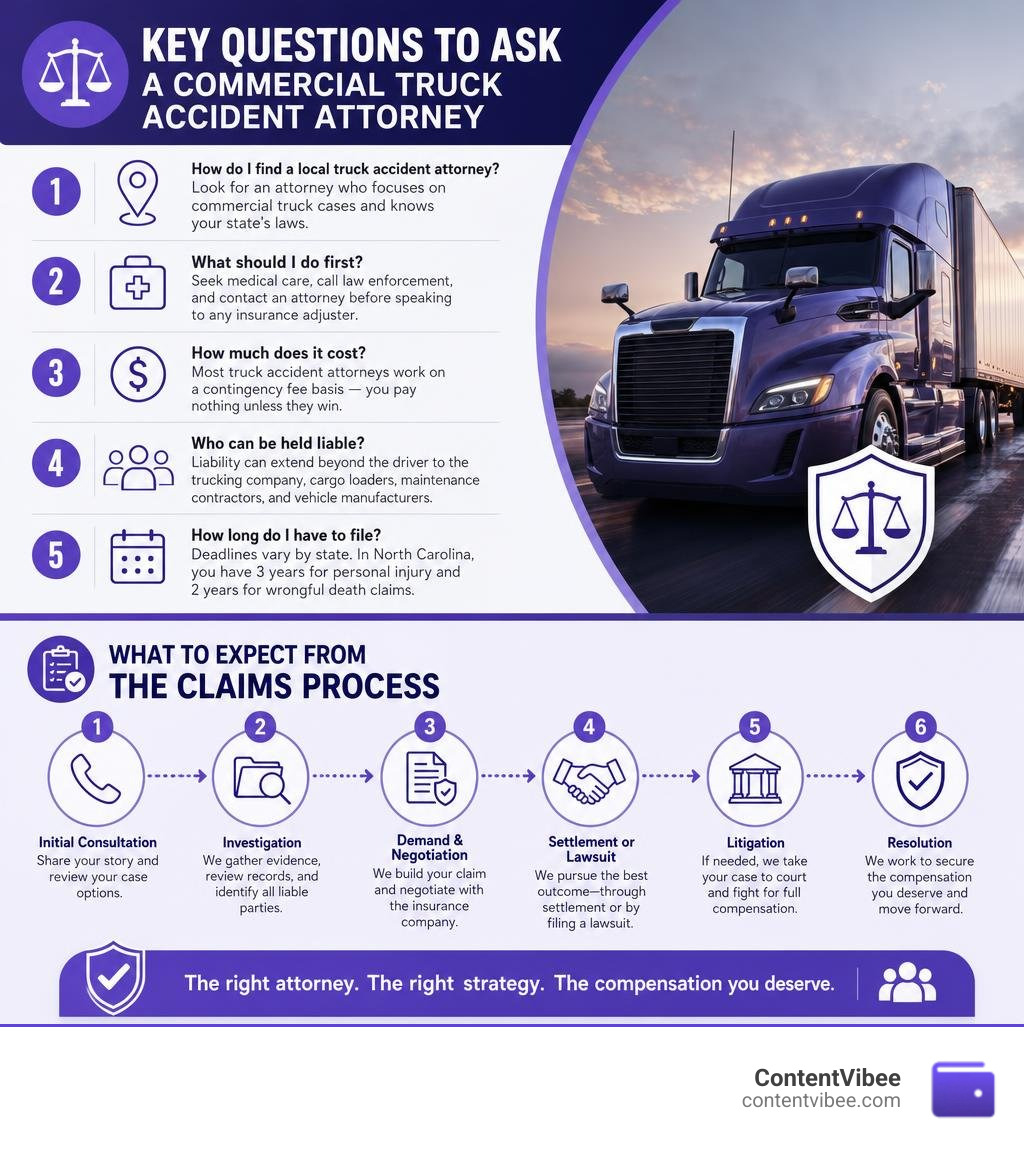
While you can handle minor claims on your own, you should almost always consult an attorney if you suffered severe injuries, face high medical bills, or if the insurance company denies liability.
Most personal injury lawyers operate on a contingency fee basis. This means you pay nothing upfront, and your lawyer only gets paid if they successfully win your case through a settlement or court verdict. Typically, their fee is a percentage of your final payout.
Before hiring representation, it is highly beneficial to understand How Much Does A Personal Injury Lawyer Cost so you can make an informed decision for your financial future.
Frequently Asked Questions
What is the standard timeline for a personal injury case?
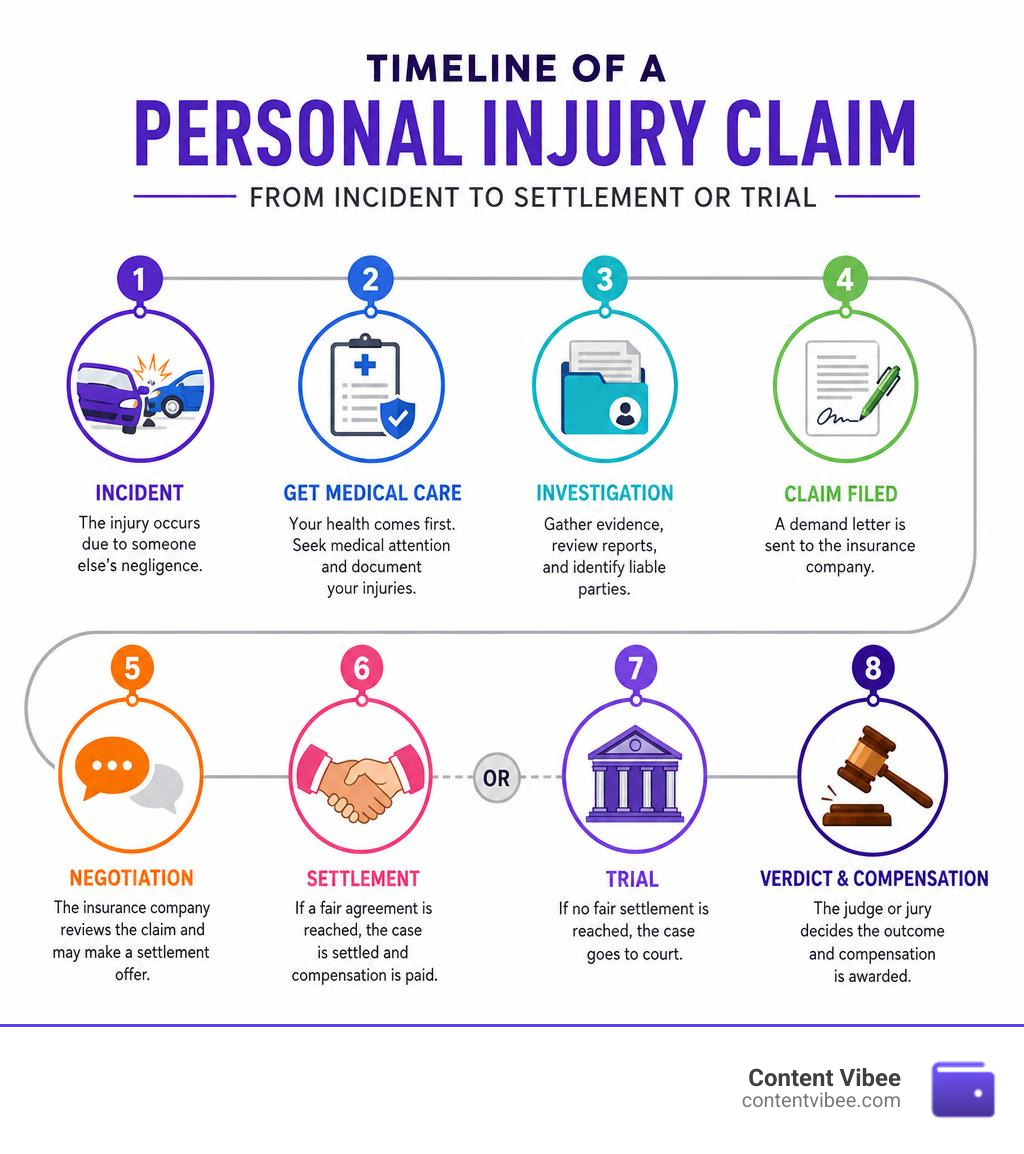
There is no single timeline. A straightforward case with clear liability might settle in a few months. However, if your injuries are complex, or if the insurance company refuses to offer a fair settlement, your attorney may need to prepare for trial, which can stretch the timeline to a year or more.
Can I still recover damages if I was partially at fault?
Yes, in many states. For example, California follows a pure comparative negligence rule. This means that even if you were 30% at fault for an accident, you can still recover 70% of your total damages.
How is the value of pain and suffering calculated?
Insurance companies and attorneys generally use two methods: the multiplier method (multiplying your total economic damages by a number between 1.5 and 5 depending on severity) or the per diem method (assigning a daily dollar value to your pain until you reach maximum medical improvement). To see how these calculations look in practice, check out our Realistic Settlement Calculator.
Conclusion
Navigating a personal injury claim can feel overwhelming, especially when you are trying to heal from a physical trauma. However, understanding your legal rights, gathering strong evidence, and staying mindful of strict deadlines are the most important steps you can take to secure your financial recovery.
If you are ready to take the next step and want to ensure your rights are fully protected, we highly recommend researching How Much Does a Personal Injury Lawyer Charge to help you find the right advocate for your recovery journey. At Content Vibee, we are here to provide the smart financial and legal insights you need to get your life back on track.