Big Truck Wreck Attorney: Top 5 Tips to Choose Wisely
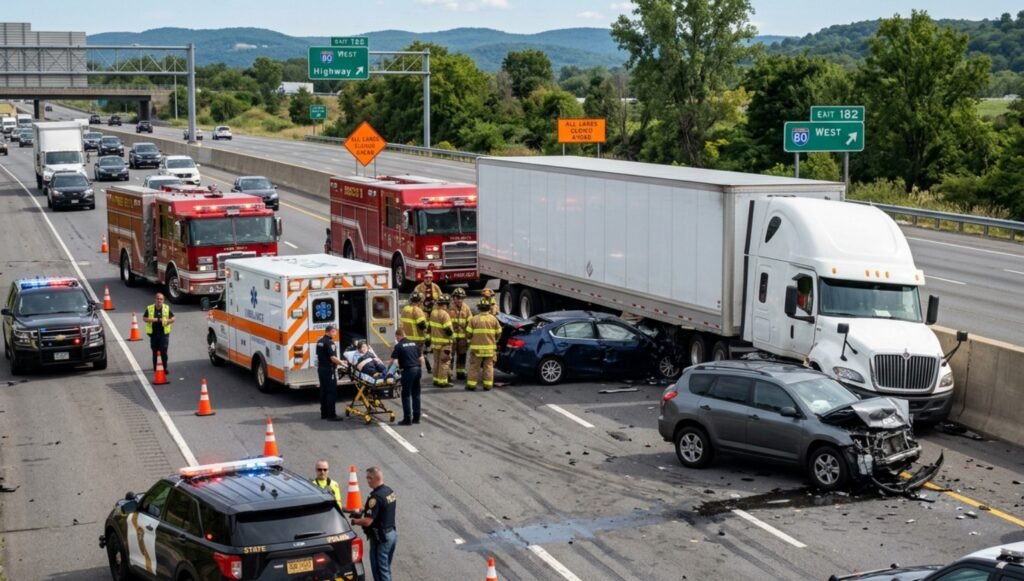
When a Big Truck Wreck Turns Your Life Upside Down
If you’ve been hit by a commercial truck, hiring a big truck wreck attorney as fast as possible is one of the most important decisions you’ll make. Here’s what you need to know right now:
Quick Answer: What Does a Big Truck Wreck Attorney Do?
- Preserves critical evidence – black box data, driver logs, and maintenance records before they disappear
- Identifies all liable parties – the driver, trucking company, freight broker, and others
- Fights insurance companies – who will move quickly to minimize your payout
- Calculates full damages – medical bills, lost wages, pain and suffering, and future care costs
- Handles federal regulations – FMCSA rules that general personal injury lawyers often don’t know
Big truck crashes are not like ordinary car accidents. A fully loaded commercial truck can weigh up to 80,000 pounds — compared to roughly 3,000 pounds for a typical passenger car. That difference in size and weight means the injuries are often catastrophic, the legal rules are far more complex, and the stakes are much higher.
In California alone, a single recent year saw 9,710 people injured and 367 killed in crashes involving large trucks. Across the U.S., 71% of people killed in large truck collisions were occupants of the smaller vehicle — not the truck.
Trucking companies know all of this. They send their own investigators to the crash scene within hours. They have legal teams and insurers ready to protect their bottom line before you’ve even left the hospital.
That’s exactly why choosing the right attorney — not just any personal injury lawyer — matters so much.
Similar topics to big truck wreck attorney:
Why You Need a Specialized Big Truck Wreck Attorney
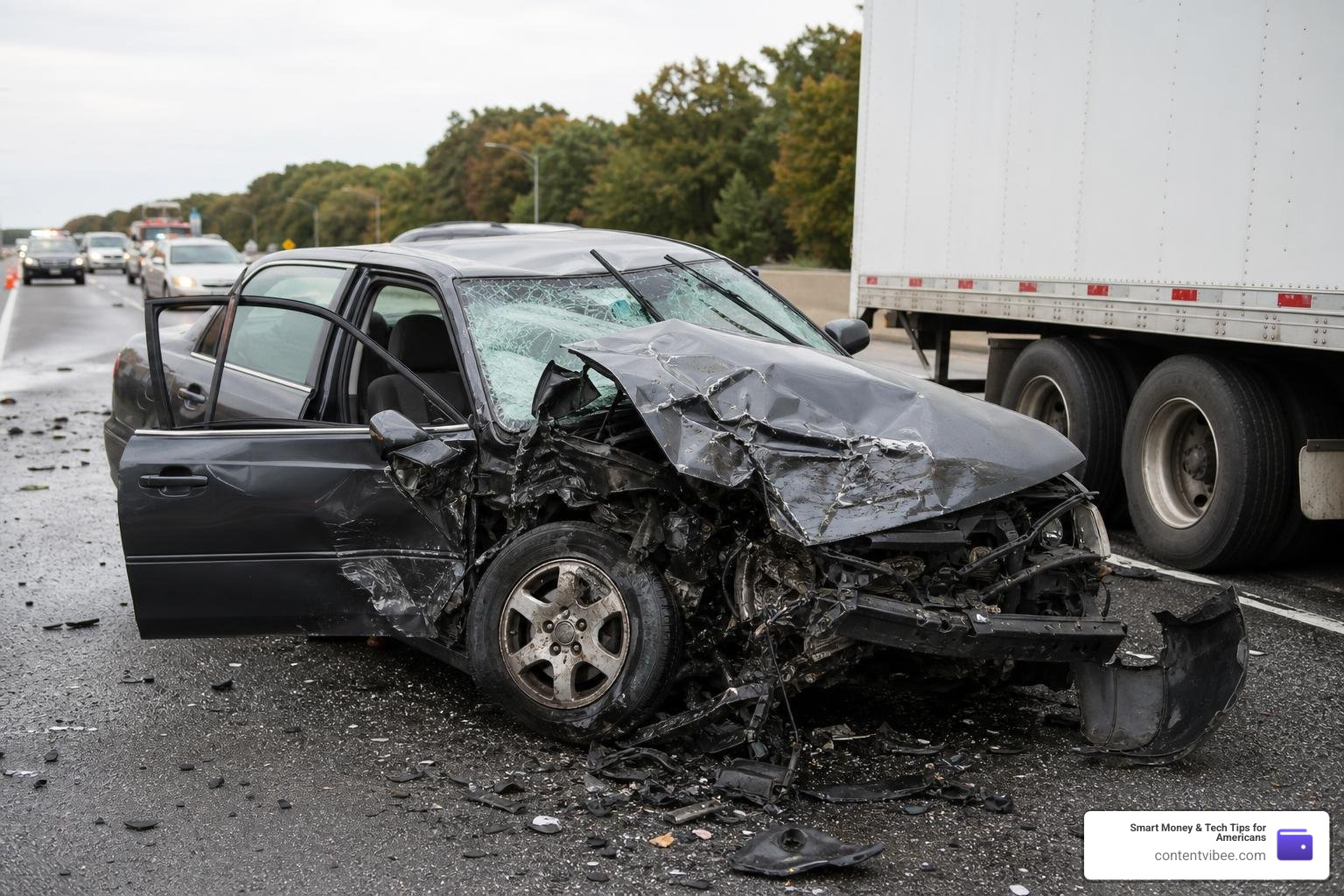
When we are involved in a standard fender-bender, the legal process is relatively straightforward. You exchange insurance information, file a claim, and get your car repaired. But when a semi-truck, tractor-trailer, or 18-wheeler is involved, the entire landscape changes.
Operating a passenger vehicle next to an 80-ton commercial vehicle is inherently intimidating. When a collision occurs, the sheer physics involved dictate that the passenger car will absorb the vast majority of the impact. Because of this, the resulting legal battle is not just about fixing a bumper; it is about securing the financial means to rebuild a shattered life.
A general personal injury attorney might be excellent at resolving simple car accident claims, but they often lack the technical resources and industry-specific experience required to go toe-to-toe with multi-billion-dollar transportation companies. If you want to understand how these legal dynamics shift, check out this More info about truck wreck legal help guide.
Severe Injuries vs Passenger Car Accidents
The injuries sustained in a big truck wreck are typically far more severe, life-altering, and expensive than those from a standard car crash. Because commercial trucks can weigh up to 80,000 pounds, collisions often lead to catastrophic, permanent physical trauma.
Common injuries we see in these cases include:
- Traumatic Brain Injuries (TBIs): Caused by violent impacts that disrupt normal brain function, often requiring lifelong cognitive rehabilitation.
- Spinal Cord Injuries and Paralysis: Damage to the spinal column that can result in permanent loss of motor function and sensation.
- Complex Bone Fractures: Crushed limbs that require multiple reconstructive surgeries and extensive physical therapy.
- Internal Organ Damage: Severe internal bleeding and organ lacerations caused by intense blunt-force trauma.
- Severe Burns: Often resulting from ruptured fuel tanks or hazardous cargo spills.
The medical bills associated with these injuries can easily climb into hundreds of thousands — or even millions — of dollars. When the stakes are this high, a general practitioner may not know how to accurately project your future medical expenses. For a deeper look into how these catastrophic cases are built, see our In-depth guide to serious truck accident cases.
How Insurance Companies Respond to Claims
The moment a big rig wreck is reported, the commercial trucking company’s insurance carrier goes into damage-control mode. Unlike standard auto insurance policies, which might carry limits of $25,000 or $50,000, commercial trucking policies regularly carry liability limits of $1 million to $5 million or more.
Because so much money is on the line, insurance adjusters and high-powered defense lawyers use aggressive tactics to protect their bottom line. Some of their most common strategies include:
- Offering Quick, Lowball Settlements: They may reach out to you while you are still recovering in the hospital, offering a check that looks substantial but covers only a fraction of your long-term medical needs.
- Shifting the Blame: They will analyze the crash scene to find any excuse to argue that you were partially or entirely at fault.
- Exploiting Recorded Statements: Adjusters will call you under the guise of “helping” you process the claim, attempting to trap you into making statements that minimize your injuries or admit fault.
To protect yourself from these predatory tactics, you need an advocate who knows their playbook. You can learn more about how to counter these corporate strategies in this guide on How insurance companies handle big rig claims.
Understanding Liability and Regulations in Commercial Crashes
Proving who was at fault in a big truck wreck is vastly different from a standard car accident. In a typical car crash, the driver of the vehicle is almost always the sole target of your claim. In the commercial trucking industry, however, a web of federal regulations and corporate relationships makes determining liability a complex puzzle.
Federal and state regulations dictate how long a driver can be on the road, how often a truck must be inspected, and how cargo must be secured. A skilled big truck wreck attorney must analyze these rules to find out where the system broke down. For a comprehensive overview of how these commercial cases operate, check out our Ultimate guide to truck wreck attorneys.
Common Causes of California Truck Wrecks
California’s massive highway system, including heavily trafficked corridors like I-5, I-10, and Highway 101, is a hotbed for commercial truck traffic. Understanding what causes these wrecks is crucial for proving negligence.
Some of the most common causes of big truck wrecks in California include:
- Driver Fatigue: Despite strict federal regulations, many drivers are pressured by tight delivery deadlines, leading them to drive while exhausted.
- Distracted Driving: Texting, using dispatch GPS systems, or eating while driving an 80,000-pound vehicle is a recipe for disaster.
- Improper Maintenance: Worn-out brake pads, bald tires, and faulty lighting are common mechanical failures that cause catastrophic highway wrecks.
- Improper Cargo Loading: If cargo is loaded unevenly or unsecured, it can shift during a turn, causing a devastating rollover accident.
- Speeding for Conditions: Truck drivers operating on steep mountain passes or during heavy rain often fail to adjust their speed for safe stopping distances.
Whether the crash occurred on a busy metropolitan freeway or a rural highway, identifying these underlying causes requires a specialized investigation. You can read more about how these accident causes are analyzed in these Valdosta truck accident insights.
Federal Regulations and the Role of a Big Truck Wreck Attorney
The commercial trucking industry is heavily regulated by the Federal Motor Carrier Safety Administration (FMCSA). These regulations are designed to keep the public safe, and when a trucking company violates them, it is powerful evidence of negligence in a lawsuit.
Key federal regulations that often impact a truck wreck case include:
- Hours-of-Service (HOS) Rules: These rules dictate exactly how many hours a commercial driver can operate before taking a mandatory rest break.
- Electronic Logging Devices (ELDs): Modern commercial trucks are equipped with ELDs that automatically record driving time, engine hours, and vehicle movement. This digital “black box” data is crucial for proving HOS violations.
- Maintenance and Inspection Logs: Trucking companies are legally required to perform regular inspections and maintain detailed records of all repairs.
- Commercial Driver’s License (CDL) Standards: Drivers must meet rigorous physical, mental, and training standards to operate commercial vehicles.
A specialized attorney knows how to quickly subpoena this data before the trucking company can legally overwrite it (which often happens automatically after six months). For a deeper dive into how these federal rules protect your case, see this article on Everything you need to know about choosing a semi truck accident lawyer.
Proving Multi-Party Liability and Calculating Damages
One of the most complex aspects of a big truck wreck is that multiple corporate entities may share the blame. Depending on the circumstances, your attorney may pursue claims against:
- The Truck Driver: For negligent behaviors like speeding, distracted driving, or driving under the influence.
- The Trucking Company (Carrier): For negligent hiring practices, failing to train drivers, or encouraging HOS violations.
- The Freight Broker: For hiring an unsafe or unlicensed carrier to transport the cargo.
- The Cargo Loader: If improperly loaded freight caused a rollover or cargo spill.
- The Maintenance Provider: If a third-party mechanic failed to fix a known safety issue, such as failing brakes.
Calculating the damages in these multi-party cases requires a meticulous financial and medical analysis. Your attorney will work with medical experts, life-care planners, and economists to calculate your economic damages (medical bills, lost earning capacity) and non-economic damages (pain and suffering, loss of enjoyment of life). To see how these calculations are structured to maximize your recovery, read about How attorneys calculate truck accident damages.
Top 5 Tips to Choose the Right Advocate
Finding the right legal advocate is the single most important step you can take to protect your physical and financial recovery in 2026. To help you make an informed choice, we have compiled the top five tips for choosing a highly qualified big truck wreck attorney. For a curated list of top-tier legal advocates, check out our guide on the Best truck accident attorneys for 2026.
Tip 1: Look for Board Certification and Trial Experience
The legal field is vast, and many personal injury lawyers have never actually stepped foot in a courtroom to try a complex truck accident case. When vetting potential lawyers, look for those who hold board certification in Truck Accident Law from reputable organizations like the National Board of Trial Advocacy (NBTA).
Board certification requires rigorous testing, a documented history of handling complex trucking cases, and peer recommendations. Furthermore, your attorney must have a proven trial record. If a trucking company knows your lawyer always settles out of court, they will offer you pennies on the dollar. But if they know your attorney is a seasoned trial litigator, they will be forced to negotiate fairly. For an example of a highly credentialed advocate, read this Joseph V. Camerlengo board certified attorney profile.
Tip 2: Verify Their Track Record with Commercial Insurance Tactics
You want an attorney who has a documented history of successfully overcoming the aggressive tactics used by commercial insurance giants. Ask potential lawyers about their past settlement and verdict history specifically regarding commercial vehicles.
Have they recovered multi-million-dollar settlements for their clients? Do they understand how to handle complex insurance structures, such as primary, excess, and umbrella liability policies? A lawyer with a deep understanding of insurance defense strategies will know how to build leverage from day one. To compare some of the most successful truck accident lawyers in the country, check out our Truck wreck attorney top 5 compared analysis.
Tip 3: Ensure They Have Resources to Fight Large Trucking Companies
Litigating a big rig crash is incredibly expensive. To prove your case, your attorney will need to hire a team of independent experts, including:
- Accident Reconstructionists: To analyze skid marks, vehicle damage, and black box data to recreate the physics of the crash.
- Medical Experts: To testify about the severity of your injuries and your future medical needs.
- DOT Safety Experts: To identify specific federal regulatory violations.
- Digital Forensic Experts: To retrieve deleted driver logs or phone records.
An attorney without a substantial litigation budget simply cannot afford to fund these investigations, which can easily cost tens of thousands of dollars before a case ever goes to trial. Ensure your chosen firm has the financial firepower to go the distance. You can learn more about how expert-driven legal teams operate by checking out the Big Truck Chuck legal team.
Tip 4: Choose a Big Truck Wreck Attorney with Deep Regulatory Knowledge
As we discussed earlier, the federal regulations governing commercial vehicles are incredibly dense. Your attorney must know the FMCSA rulebook inside and out.
They should be able to spot subtle inconsistencies in driver logs, identify illegal cargo-loading practices, and understand the specific rules governing hazardous materials (HAZMAT) transport. This specialized knowledge is what separates a standard car accident lawyer from a true trucking litigation expert. For a comprehensive breakdown of these complex rules, read our Ultimate guide to 18 wheeler accident lawyers.
Tip 5: Confirm They Work on a Contingency Fee Basis
You should never have to pay out of pocket to hire a high-quality truck accident lawyer. Reputable attorneys work on a contingency fee basis. This means:
- Your initial consultation is 100% free.
- The law firm covers all upfront litigation expenses (expert fees, filing costs, depositions).
- You pay zero attorney fees unless they successfully recover money for you through a settlement or jury verdict.
- If they win, their fee is a pre-agreed percentage of your total recovery.
This fee structure aligns your attorney’s incentives directly with yours — they only get paid if you get paid, ensuring they will fight for the maximum possible compensation. To learn more about how these fee structures work in practice, read about the Marietta truck accident lawyer fee structure.
Frequently Asked Questions about Truck Wrecks
To help you understand how these cases differ from standard car accidents, here is a quick comparison table:
| Feature | Passenger Car Accident | Commercial Truck Wreck |
|---|---|---|
| Typical Vehicle Weight | ~3,000 lbs | Up to 80,000 lbs |
| Primary Regulations | State traffic laws | State laws + Federal FMCSA regulations |
| Number of Liable Parties | Usually 1 (the other driver) | Multiple (driver, carrier, broker, loader, etc.) |
| Insurance Policy Limits | Often $15,000 to $100,000 | Regularly $1,000,000 to $5,000,000+ |
| Injury Severity | Mild to moderate | Catastrophic, permanent, or fatal |
| Key Evidence | Police report, photos, witness statements | Black box (ECM) data, ELD driver logs, maintenance files |
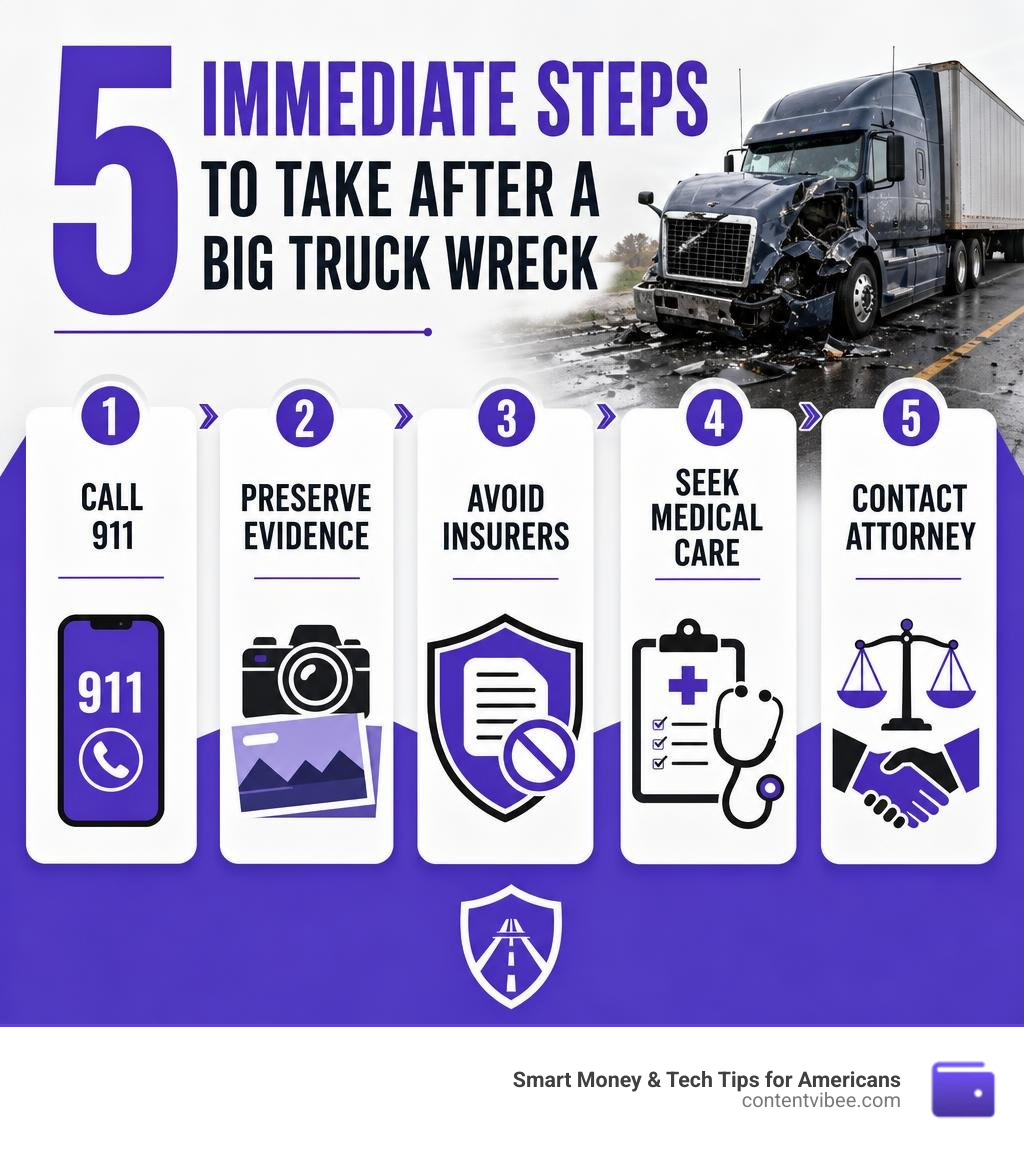
What should I do immediately after a big truck wreck to preserve evidence?
First, prioritize your safety: call 911 and seek immediate medical attention, even if you feel okay. Adrenaline can mask serious internal injuries.
If you are physically able, take photos of the crash scene, the positions of the vehicles, the damage to all cars, road skid marks, and any nearby traffic signs. Collect contact information from any eyewitnesses.
Most importantly, do not speak to the trucking company’s insurance adjusters or sign any documents without consulting an attorney. Your lawyer will immediately send a “spoliation letter” (a formal notice of claim) to the trucking company, legally requiring them to preserve the truck’s black box data, the driver’s ELD logs, and internal company records.
What is the statute of limitations for a truck accident lawsuit in California?
In California, the general statute of limitations for a personal injury claim is two years from the date of the accident. If you do not file a lawsuit within this two-year window, you will lose your legal right to seek compensation.
However, there are critical exceptions that can shorten this timeline. For example, if the truck was owned or operated by a government entity (such as a public transit bus or a city maintenance truck), you must file a formal administrative claim within six months of the accident. Because these deadlines are strict, it is vital to contact a lawyer as soon as possible to ensure you do not miss your window for justice.
How do trucking companies try to avoid liability?
Trucking companies and their insurers employ several strategies to avoid paying out claims. They often send rapid-response investigation teams to the crash scene within hours to gather evidence that supports their version of events.
In some cases, they may attempt to delay the legal process until critical digital evidence — like driver logbooks or black box data — is automatically overwritten or deleted. They may also try to blame you for the crash, argue that your injuries were pre-existing, or offer a quick, lowball settlement before you have a chance to consult a lawyer and understand the true cost of your medical recovery.
Conclusion
Recovering from a big truck wreck is a long, physically demanding, and emotionally exhausting journey. You shouldn’t have to carry the financial burden of a commercial trucking company’s negligence on your own. By selecting a specialized big truck wreck attorney who possesses deep regulatory knowledge, trial experience, and the resources to fight back, you can focus on what matters most: your physical healing and peace of mind.
At Smart Money & Tech Tips for Americans, we want to help you make smart financial decisions during life’s most challenging moments. If you are looking to secure your vehicle and understand the baseline coverage limits that commercial carriers are dealing with, take a moment to Get a commercial auto insurance quote to understand coverage limits and protect your financial future today.