The 7 Best Oilfield Injury Lawyers Near You
When Oilfield Accidents Happen, You Need the Right Legal Help Fast
Oilfield injury lawyers help injured oil and gas workers pursue compensation beyond basic workers’ compensation — including full medical costs, lost wages, pain and suffering, and damages from third parties like contractors and equipment manufacturers.
Quick answers for injured oilfield workers:
- What they do: Investigate accidents, identify all liable parties, and file claims against employers, contractors, and equipment makers
- What you can recover: Medical bills, lost income, future earning capacity, pain and suffering, and sometimes punitive damages
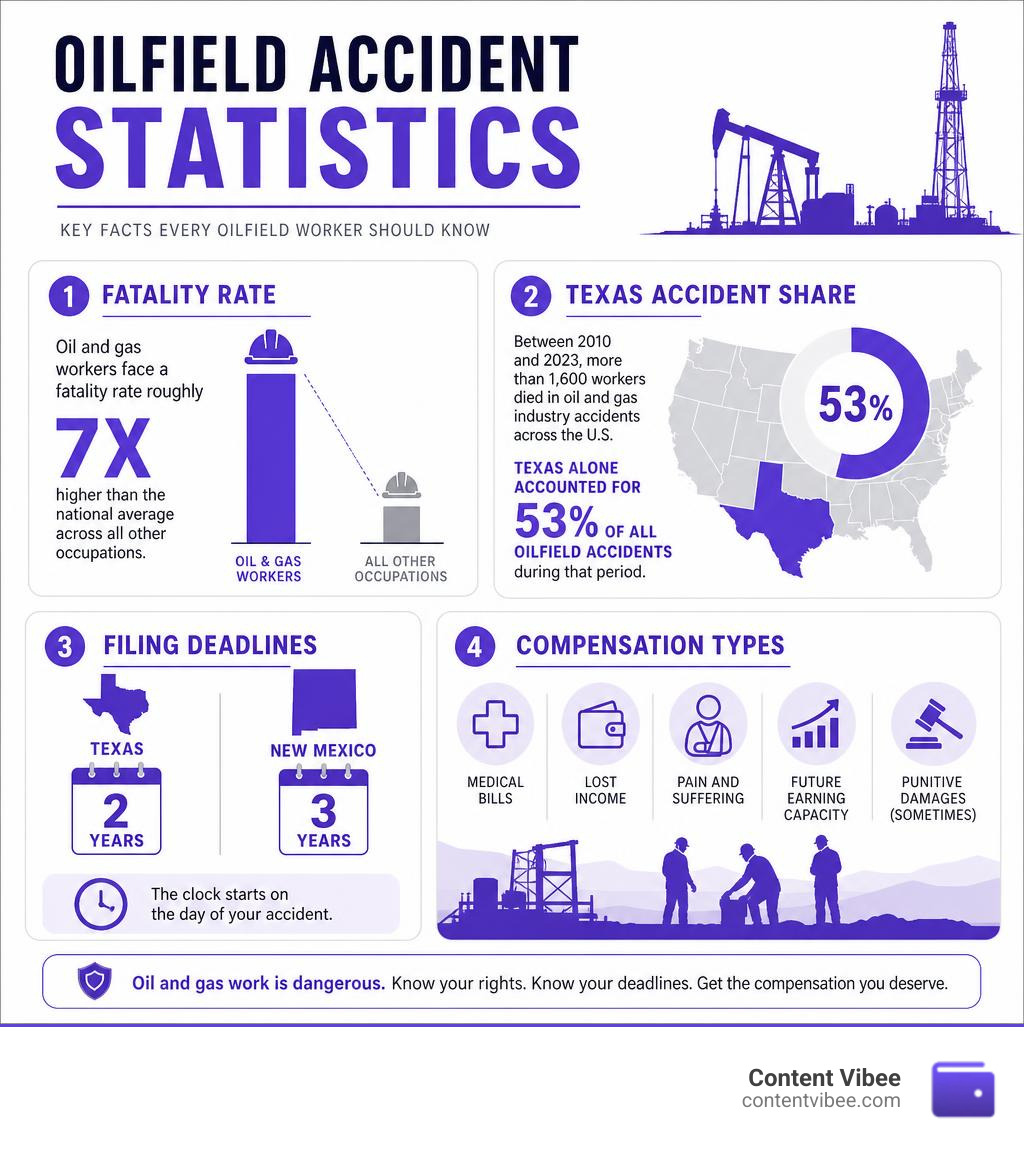
- Key deadline: 2 years to file in Texas, 3 years in New Mexico — the clock starts on the day of your accident
- Cost: Most oilfield injury lawyers work on contingency — you pay nothing unless you win
- First step: Seek medical care, document the scene, and contact a lawyer before speaking to insurance adjusters or signing anything
Oil and gas work is one of the most dangerous jobs in America. The fatality rate for oil and gas workers is roughly seven times higher than the national average across all other occupations. Between 2010 and 2023, more than 1,600 workers died in oil and gas industry accidents across the U.S. — and Texas alone accounted for 53% of all oilfield accidents during that period.
That number has been climbing. The industry fatality rate has increased by 26% over the last decade.
When something goes wrong on a rig or in the field, the consequences are often catastrophic — spinal cord injuries, severe burns, traumatic brain injuries, amputations, or death. And the companies involved? They move fast to protect themselves, not you.
That’s why choosing the right legal representation matters enormously.
Oilfield injury lawyers terms explained:
What to Look For in the Best Oilfield Injury Lawyers
Finding the right legal advocate is the most critical decision you can make following a catastrophic oilfield accident. Unlike a standard slip-and-fall or a minor fender bender, oilfield accidents exist in a highly complex web of federal regulations, state laws, and corporate structures. You cannot simply hire a general practice attorney and expect to win against multi-billion-dollar energy conglomerates.

When we evaluate top-tier legal representation, we look for firms that deeply understand the technical realities of oilfield operations. An oilfield is rarely managed by a single company. Instead, it is a constantly shifting environment filled with operators, leaseholders, drilling contractors, trucking fleets, and specialized service providers.
To govern these relationships, these companies sign complex agreements known as Master Service Agreements (MSAs). These MSAs contain detailed indemnity clauses that dictate which company’s insurance policy must pay out in the event of an accident. An experienced oilfield injury lawyer knows how to read these MSAs, cut through the corporate finger-pointing, and identify who is ultimately responsible for your injuries.
Furthermore, top lawyers do not wait for the official police or Occupational Safety and Health Administration (OSHA) reports to come back. They initiate their own immediate, independent accident investigations. They employ accident reconstruction experts, secure physical evidence before the oil company can “clean up” the site, and download black box data from heavy machinery and commercial transport trucks. To learn more about how specialized representation can protect your rights, you can consult an Award-Winning Houston Oilfield Injury Lawyer – Free Consult.
Key Qualities of Top-Tier Oilfield Injury Lawyers
If you are drafting a shortlist of potential attorneys to handle your case, look for these non-negotiable qualities:
- Extensive Trial Experience: Many personal injury lawyers are “settlement mills” that try to resolve cases quickly for a fraction of their true value. You need a firm with a proven track record of taking complex cases to a jury and winning historic verdicts. Oil companies only offer fair settlements when they know your lawyer is fully prepared to take them to court.
- Deep Technical Knowledge of Drilling and Fracking: Your lawyer should know the difference between a mud pump and a blowout preventer. They must understand the mechanics of hydraulic fracturing, workover rig operations, and pipeline pressure systems.
- Mastery of OSHA Regulations and Safety Standards: The oil and gas industry is heavily regulated. A top attorney knows how to cross-reference the details of your accident with federal safety codes to prove that the company cut corners to maximize profits.
- A Network of Experts: Proving liability often requires testimony from professional engineers, well-control specialists, toxicologists, and life-care planners who can project your medical needs decades into the future.
When you are fighting against massive energy companies, you need aggressive, uncompromising representation. To see how experienced advocates structure these high-stakes cases, explore the resources provided by a Texas Oilfield Accident Lawyer – McFarlane Law.
Workers’ Compensation vs. Personal Injury Lawsuits in Oilfield Accidents
One of the most common misconceptions among injured oilfield workers is that workers’ compensation is their only option. While workers’ comp does provide basic benefits, it is rarely enough to cover the true, long-term costs of a catastrophic, life-altering injury.
In most states, workers’ compensation laws grant employers “immunity” from direct lawsuits. In exchange for providing no-fault insurance that covers medical bills and a portion of lost wages, employers are generally protected from being sued by their employees. However, there are massive exceptions to this rule, particularly in states like Texas.
Texas is unique because it allows employers to be “non-subscribers.” This means oilfield companies can choose not to carry state-regulated workers’ compensation insurance. If your employer is a non-subscriber and their negligence caused your injury, you have the legal right to sue them directly in court. In a non-subscriber lawsuit, the employer loses many of their traditional legal defenses, making it much easier for your attorney to hold them fully accountable.
Even if your employer does carry workers’ comp, you are not necessarily out of luck. Most oilfield accidents are caused by the negligence of a third party—such as a subcontractor, an equipment manufacturer, or a delivery driver. In these cases, you can collect workers’ compensation benefits from your direct employer while simultaneously pursuing a third-party personal injury lawsuit.
| Feature | Workers’ Compensation | Personal Injury Lawsuit (Third-Party or Non-Subscriber) |
|---|---|---|
| Proof of Fault Required? | No. You only need to prove the injury occurred on the job. | Yes. You must prove that another party’s negligence caused your injury. |
| Pain and Suffering Covered? | No. Non-economic damages are completely excluded. | Yes. You can seek substantial compensation for physical and mental anguish. |
| Medical Coverage | Covers approved medical care, but often through company-selected doctors. | Covers all past and future medical care, allowing you to choose your own specialists. |
| Wage Replacement | Limited to a portion of your weekly wages (often capped at two-thirds). | Covers 100% of lost wages, future lost earning capacity, and bonuses. |
| Punitive Damages? | Never available. | Available if you can prove gross negligence or intentional harm. |
Because a personal injury lawsuit can yield significantly higher compensation than a standard insurance claim, understanding how these cases are valued is essential. To get a clearer picture of how legal fees are structured in these situations, you can read our guide on How Much Does A Personal Injury Lawyer Charge.
How Oilfield Injury Lawyers Identify Third-Party Liability
Because the direct employer is often shielded by workers’ compensation immunity, a skilled attorney will immediately look for negligent third parties. On a crowded oilfield, third-party liability is incredibly common.
For example, if you were injured because a specialized contractor failed to secure a suspended load, that contractor can be held liable. If a valve on a pressurized frac tank ruptured due to a manufacturing defect, you can file a product liability claim against the equipment manufacturer. If a leaseholder failed to warn workers about hazardous hydrogen sulfide (H2S) gas pockets on the property, the site owner could be held responsible.
By identifying these third parties, your lawyer can bypass the limitations of workers’ comp and pursue the full compensation you deserve. To understand how these multi-party claims are investigated, you can learn more from an Oilfield Injury Lawyer – Learn, Find and Choose.
Common Permian Basin Injuries, Damages, and Immediate Steps
The Permian Basin, stretching across West Texas and Southeastern New Mexico, is the heart of American oil production. It is also home to some of the most severe industrial accidents in the country.
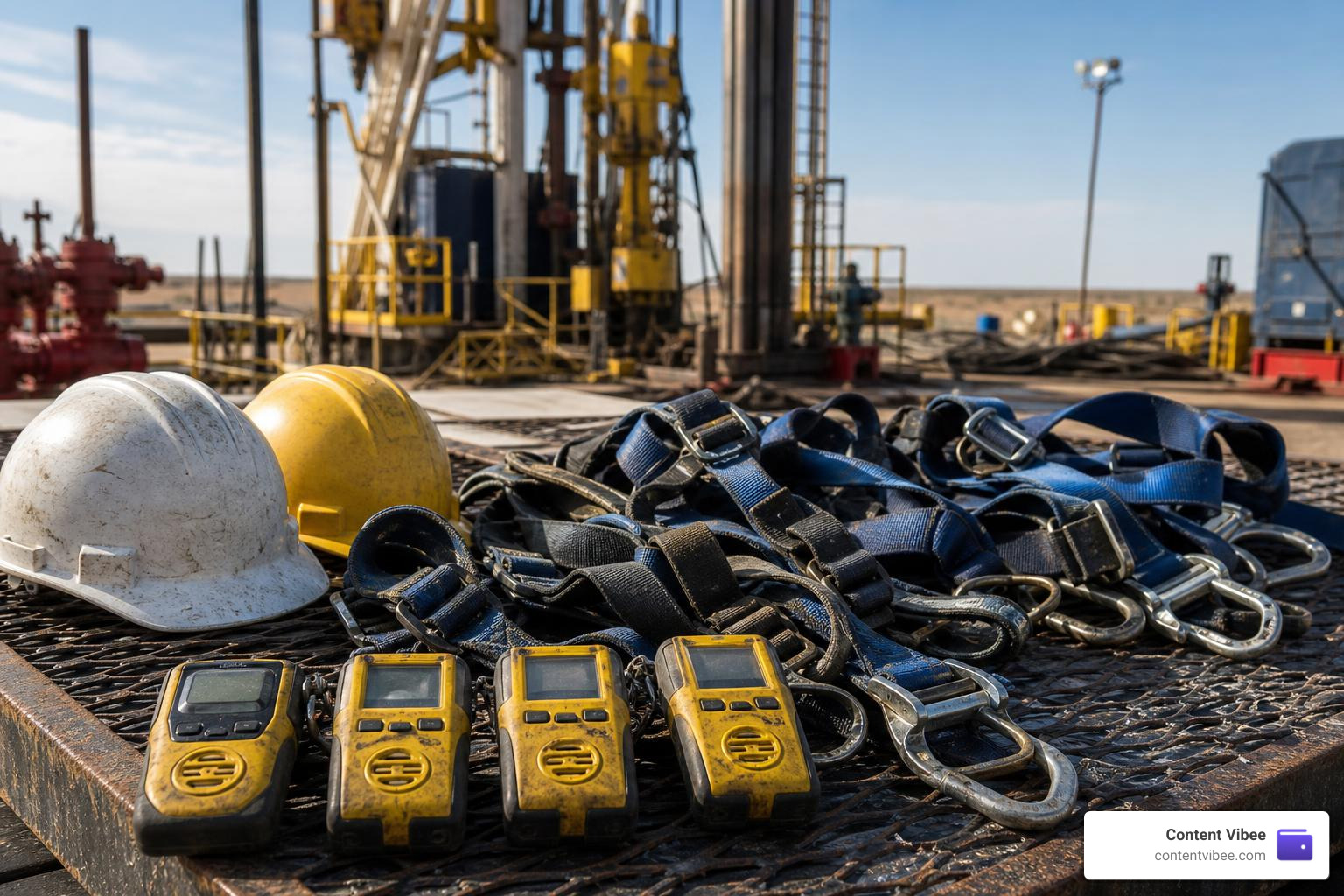
The physical toll of an oilfield accident can be devastating. Some of the most common catastrophic injuries we see in the Permian Basin include:
- Traumatic Brain Injuries (TBIs): Caused by falling objects, pipe swings, or falls from heights.
- Severe Chemical and Thermal Burns: Resulting from well blowouts, pipeline explosions, and flash fires.
- Hydrogen Sulfide (H2S) Inhalation: A highly toxic gas that can cause permanent neurological damage or instant death in high concentrations.
- Spinal Cord Injuries and Paralysis: Often occurring during workover rig collapses or heavy machinery failures.
- Crush Injuries and Amputations: Caused by unguarded catheads, rotary tables, and heavy iron.
If you or a loved one is injured in an accident, what you do in the hours and days following the event can make or break your legal claim.
First, seek independent medical attention immediately. Do not rely solely on the company-approved clinic or doctor. Company doctors are often incentivized to downplay your injuries and clear you to return to work prematurely to protect the company’s safety record.
Second, report the injury to your supervisor. Ensure that an official incident report is filed, and request a copy of it. However, guard your words carefully. Do not apologize, do not admit fault, and do not sign any statements drafted by the company’s safety directors or insurance adjusters.
Third, preserve evidence. If you are physically able, take photos and videos of the accident scene, the faulty equipment, and your injuries. Gather the names and contact information of any coworkers or eyewitnesses who saw what happened.
Finally, keep a close eye on the calendar. Under Texas law, you generally have two years from the date of the accident to file a personal injury lawsuit. In New Mexico, the statute of limitations is three years. If you miss these deadlines, you lose your right to seek compensation forever.
To help estimate what your potential claim might be worth based on your medical bills and lost wages, you can use our interactive Tools/Settlement Calculators/Personal Injury Settlement Calculator.
What Damages Can Oilfield Injury Lawyers Help You Recover?
In a successful third-party or non-subscriber lawsuit, your attorney can help you recover both economic and non-economic damages.
Economic damages are the tangible, quantifiable financial losses you have incurred. This includes all past and future medical expenses, physical therapy, specialized medical equipment, and home modifications. It also covers your lost wages and your lost earning capacity if your injuries prevent you from ever returning to high-paying oilfield work.
Non-economic damages are designed to compensate you for the intangible impact of the accident. This includes physical pain and suffering, mental anguish, post-traumatic stress disorder (PTSD), physical disfigurement, and loss of enjoyment of life.
In cases where the company’s behavior was particularly egregious—such as consciously ignoring a known safety hazard to save money—a jury may also award punitive damages to punish the wrongdoer and deter other companies from acting similarly.
Frequently Asked Questions About Oilfield Injury Claims
Navigating the legal aftermath of an oilfield accident is incredibly stressful. Here are clear answers to some of the most common questions injured workers ask.
How do contingency fee arrangements work for oilfield accident cases?
Most reputable oilfield injury lawyers operate on a contingency fee basis. This means you do not pay any upfront legal fees or out-of-pocket costs. Your attorney will cover all the expenses of investigating your claim, hiring experts, and filing the lawsuit.
They only get paid if they successfully recover compensation for you through a settlement or jury verdict. If they win, their fee is a pre-agreed percentage of your total recovery. If they do not win your case, you owe them absolutely nothing. This structure ensures that every injured worker has access to top-tier legal representation, regardless of their financial situation. To compare this with other practice areas, you can read about How Much Do Workers Comp Lawyers Charge New York.
Can I sue my employer directly for an oilfield injury?
As a general rule, you cannot sue your employer directly if they carry workers’ compensation insurance. This is known as the “exclusive remedy” rule.
However, there are three major exceptions:
- Non-Subscriber Status: If your employer has opted out of the Texas workers’ compensation system, you can sue them directly for negligence.
- Gross Negligence (Wrongful Death): If a worker dies due to an employer’s gross negligence or intentional acts, the surviving family members can often sue the employer directly, even if workers’ comp is in place.
- Third-Party Claims: You can always sue a negligent third party (like a contractor or manufacturer) whose actions contributed to your injuries.
What role do OSHA violations play in proving negligence?
OSHA regulations are the gold standard for workplace safety. If OSHA investigates your accident and issues citations to the oil company for safety violations, these citations can serve as powerful evidence in your lawsuit.
In some legal jurisdictions, proving that a company violated an OSHA safety standard that was directly linked to your injury can establish “negligence per se.” This means the court automatically considers the company negligent, drastically simplifying your case and allowing your lawyer to focus entirely on proving the extent of your damages.
Conclusion
At Content Vibee, we believe that hard-working oilfield crews deserve the absolute best protection when tragedy strikes. The oil and gas industry is built on hard work, but it should never be built on sacrificed lives and ignored safety standards. If you or a loved one has been injured, securing an experienced legal advocate is the most important step you can take toward physical and financial recovery.
Do not let corporate insurance adjusters pressure you into a quick, lowball settlement that won’t cover your future medical bills. Take control of your future, protect your family, and make sure you have a legal heavy hitter in your corner. If you are also dealing with injuries from a transit or commute accident on your way to the job site, be sure to check out our comprehensive guide on How to Find a Good Car Accident Lawyer.