Oilfield Injury Lawyer Texas: Detailed Guide
Why Hiring an Oilfield Injury Lawyer in Texas Could Change Everything
If you’re looking for an oilfield injury lawyer in Texas, here’s what you need to know right now:
Quick answers for injured oilfield workers:
- You likely have two legal paths — workers’ compensation AND a third-party personal injury lawsuit
- You have 2 years from the date of injury to file a claim in Texas
- Do not sign anything or give recorded statements before speaking to a lawyer
- Workers’ comp is capped at $1,271/week — far less than most oilfield workers earn
- A personal injury lawsuit can recover pain and suffering, full lost wages, and punitive damages that workers’ comp never covers
Oilfield work is one of the most dangerous jobs in America. The fatality rate for oil and gas workers is nearly seven times higher than the rate across all other U.S. industries combined. In Texas — the heart of American oil production — that risk is even more concentrated. Nearly 40% of all U.S. oilfield fatalities happen in the Permian Basin alone.
When an accident happens, injured workers and their families face a brutal reality fast. Medical bills pile up. Paychecks stop. And almost immediately, company representatives and insurance adjusters show up — not to help, but to protect the company’s bottom line.
The decisions you make in the days right after an oilfield accident can shape your financial future for years.
This guide explains your rights, your options, and exactly what to do next.
Oilfield injury lawyer texas vocabulary:
Common Causes and Catastrophic Injuries in Texas Oilfields
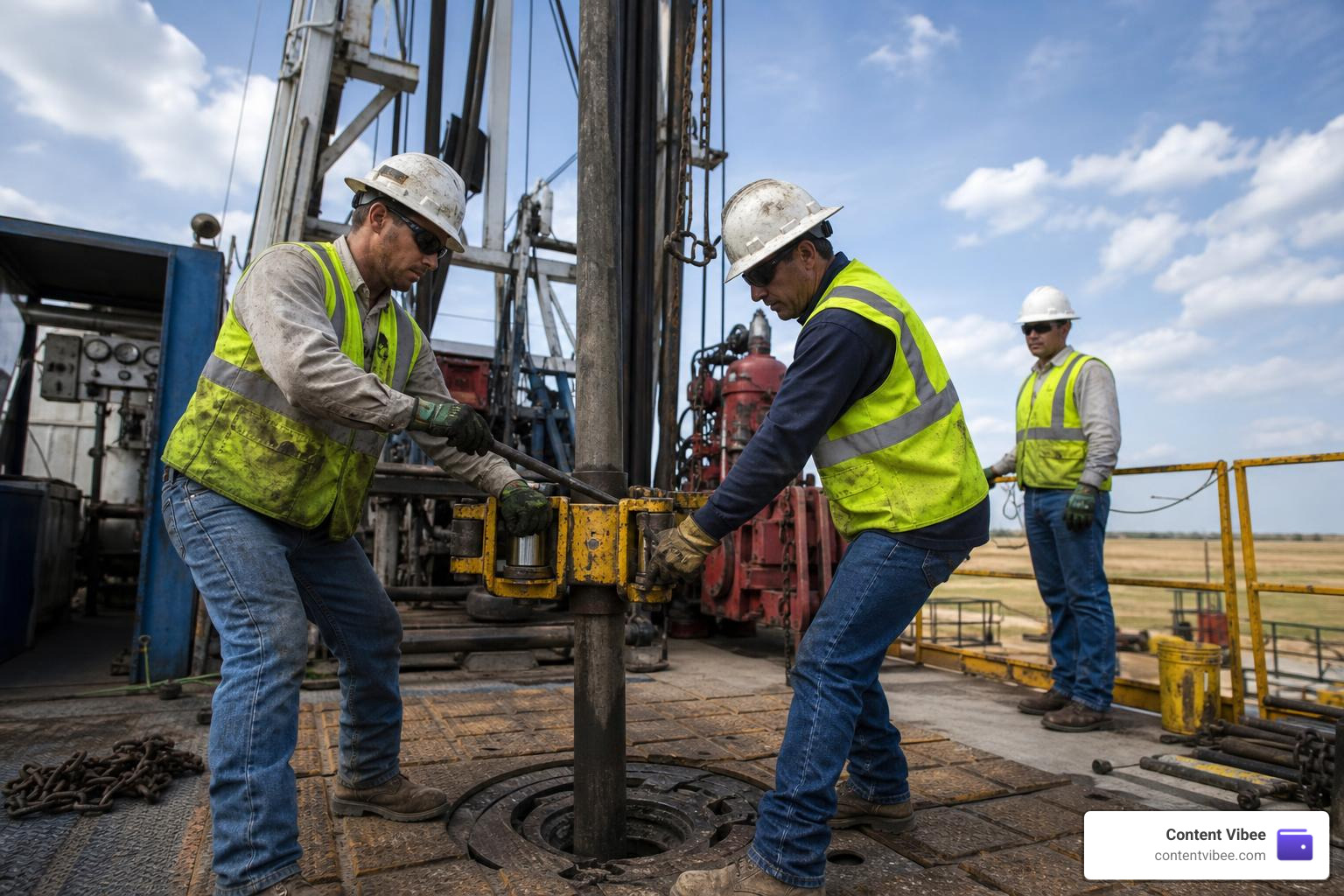
Texas is a powerhouse of energy production, home to massive shale formations like the Permian Basin, the Eagle Ford Shale, and the Haynesville Shale. Because Texas produces over 40% of the nation’s crude oil, the state’s drilling rigs, extraction sites, and refineries operate at an intense, often relentless pace. Unfortunately, when oil companies prioritize speed and profit over safety, catastrophic accidents occur.
Many people assume drilling is the most dangerous phase of an oil well’s life. However, industry data shows that completion, intervention, and workover activities contribute to 35-40% of blowouts and well control accidents. These phases involve live well interventions and highly pressurized operations, making them incredibly volatile.
When blowout preventers are poorly maintained or staff are improperly trained, the results are explosive. Beyond well blowouts, common causes of serious accidents include:
- Heavy machinery failures: Top drives, rotary tables, and catheads operating under extreme tension can fail violently if not regularly serviced.
- Falls from heights: Derrickhands and other crew members frequently work high above the rig floor on slippery catwalks, manlifts, and pipe racks without adequate fall protection.
- Excavation and trench collapses: Unstable ground setups during site preparation can bury workers in seconds.
- Transport and vehicle collisions: Heavy truck traffic traveling to and from remote sites accounts for nearly 25% of all oilfield fatalities.
When safety standards are ignored, the consequences are life-altering. If you or a loved one has experienced this firsthand, reaching out to an experienced team like the Houston Oilfield Accident Lawyers is the first step toward holding the responsible parties accountable.
Catastrophic Injuries Suffered by Texas Oilfield Workers
The physical forces involved in oil and gas extraction are immense. When something goes wrong, the human body bears the brunt of it. We regularly see workers suffer devastating, life-altering injuries that require lifetime medical care and permanently destroy their earning capacity.
The most common serious oilfield injuries include:
- Traumatic Brain Injuries (TBIs): Caused by falling objects, pipe strikes, or falls from high platforms. These injuries can permanently alter cognitive functions, memory, and physical mobility.
- Severe Burns: Well explosions, pipeline ruptures, and chemical fires leave workers with third-degree burns requiring agonizing skin grafts and years of physical therapy.
- Crush Injuries and Amputations: Heavy machinery, moving drill pipes, and crane failures can crush limbs, often requiring surgical amputation.
- Toxic Gas Exposure: Hydrogen sulfide (H2S) gas is a silent killer in oil patches. Even low-level exposure can cause permanent respiratory damage, organ failure, or immediate death.
- Spinal Cord Injuries and Paralysis: Falls from rigs or being struck by heavy equipment can sever or crush the spinal cord, leading to partial or total paralysis.
Recovering from these injuries requires immense resources. If you are facing this difficult road, a dedicated Odessa Oilfield Accident Lawyer can help you secure the specialized medical evaluations and financial compensation needed to rebuild your life.
Workers’ Compensation vs. Third-Party Personal Injury Claims
In Texas, navigating the legal landscape after a workplace injury is uniquely complex. Texas is the only state in the country that does not require private employers to carry workers’ compensation insurance. Employers who opt out are known as “non-subscribers.”
If your employer does carry workers’ comp, you are generally barred from suing them directly for negligence. However, workers’ comp benefits are severely limited. Under Texas law, workers’ comp weekly benefits are capped at $1,271 per week. For high-earning oilfield workers, this cap results in an average loss of $22,500 per year in wages alone—and that is before factoring in the massive physical and emotional toll of the injury.
Fortunately, most oilfield sites are crowded with multiple independent contractors, subcontractors, equipment manufacturers, and site operators. If someone other than your direct employer caused your injury, you can file a third-party personal injury claim. This allows you to bypass workers’ comp limits and pursue full financial recovery.
| Benefit / Damage Type | Texas Workers’ Compensation | Third-Party Personal Injury Lawsuit |
|---|---|---|
| Medical Bills | Covered (but restricted to company-approved doctors) | 100% of past and future medical expenses covered |
| Lost Wages | Capped at $1,271/week (approx. 70% of lost income) | Recovery of 100% of past and future lost earning capacity |
| Pain and Suffering | $0 (Not covered) | Fully recoverable (no cap on non-economic damages) |
| Punitive Damages | $0 (Not covered) | Available in cases of gross negligence or willful misconduct |
| Doctor Choice | Selected by the insurance company | You choose your own independent medical specialists |
Under Texas’s modified comparative negligence system (often called the 50% fault rule), you can still recover damages even if you were partially at fault for the accident, provided your responsibility does not exceed 50%. Your final compensation will simply be reduced by your percentage of fault.
For example, if you are awarded $1,000,000 but found 20% responsible, you will receive $800,000. To ensure you are not unfairly blamed for an accident, it is vital to consult a Texas Oilfield Accident Lawyer who knows how to counter the oil company’s attempts to shift the blame onto you.
When to Hire an Oilfield Injury Lawyer Texas After an Accident
You should contact an attorney immediately after an accident. Oil and gas companies are notorious for deploying rapid-response team investigators to the scene of an accident within hours. Their goal is not to help you; it is to clean up the site, control the narrative, and gather evidence to minimize their liability.
Insurance adjusters may approach you early on with quick settlement offers. These initial offers are almost always lowball figures designed to get you to sign away your rights before you know the true extent of your injuries. They will pressure you to give recorded statements, monitor your social media accounts, and try to send you to “company doctors” who are incentivized to downplay your injuries and clear you to return to work prematurely.
An experienced lawyer will shield you from these predatory tactics, take over all communication with the insurance companies, and ensure you receive an unbiased, comprehensive medical evaluation. If you are worried about the expense of legal representation, understanding how much does a workers comp lawyer cost can help ease your mind, as most reputable injury lawyers work on a contingency fee basis with zero upfront costs.
What to Do Immediately After an Oilfield Accident to Protect Your Rights
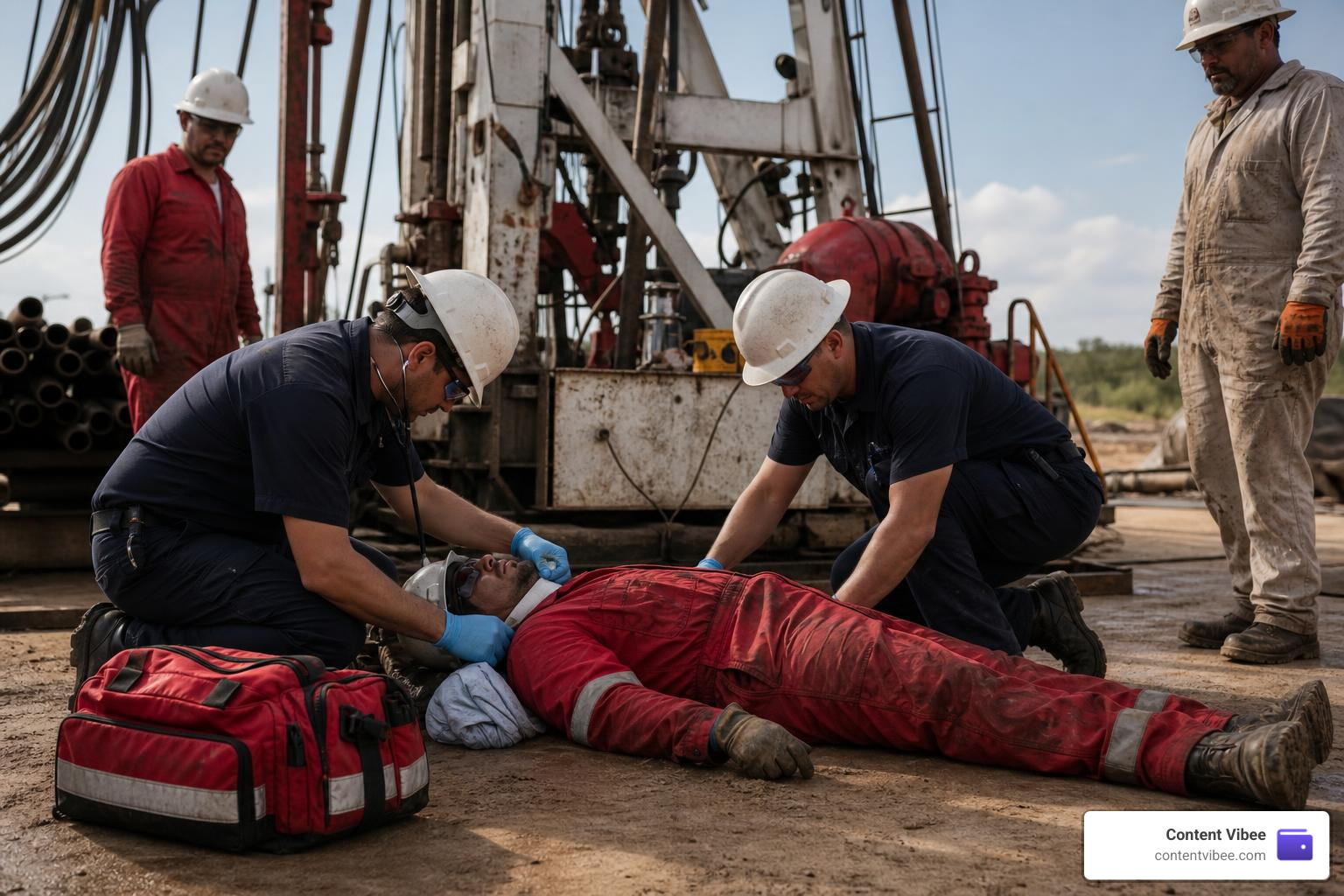
The moments directly following an oilfield accident are chaotic, but taking the right steps is absolutely critical to protecting your health and your legal rights. Here is exactly what you should do:
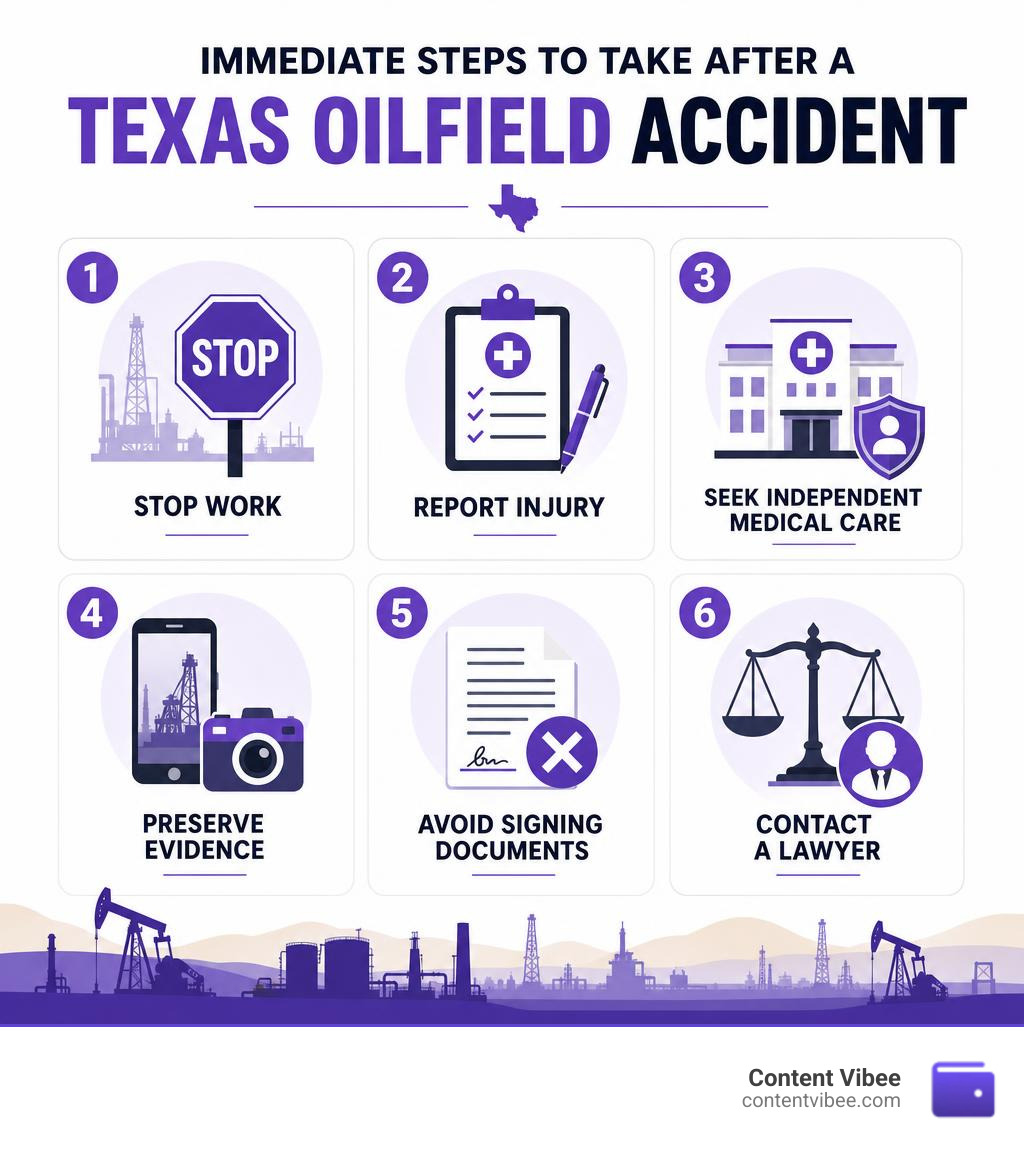
- Exercise Your Stop Work Authority: If you or a coworker is injured, immediately stop working. Continuing to work can worsen your injuries and give the company an excuse to claim your injury did not happen on the job.
- Report the Injury Immediately: Notify your supervisor as soon as physically possible. Ensure they write an official incident report, and ask for a copy of it. If they refuse or try to sweep it under the rug, document your notification in writing via text or email.
- Seek Independent Medical Care: Do not rely solely on the company-selected doctor. Go to an emergency room or a physician of your own choosing. Clearly explain to the medical staff that your injuries occurred in an oilfield accident so it is officially documented in your medical records.
- Preserve the Evidence: If you or a trusted coworker can do so safely, take photos and videos of the accident scene, the faulty equipment, and your visible injuries. Note the names and contact information of any subcontractors or witnesses who saw what happened.
- Do Not Sign Waivers or Give Recorded Statements: The insurance company will ask for a recorded statement to lock you into a narrative before your injuries are fully diagnosed. Politely decline and tell them they must speak to your attorney.
To guide you through these high-stakes steps, having a dedicated Texas Oilfield Injury Lawyer on your side can make all the difference in keeping your claim on the right track.
How an Oilfield Injury Lawyer Texas Can Help Maximize Your Recovery
Oilfield accidents are rarely simple. They regularly involve a complex web of site operators, leaseholders, transport companies, and equipment manufacturers. Proving who is at fault requires a deep understanding of federal OSHA regulations, Texas Railroad Commission rules, and industry-specific safety standards.
We thoroughly investigate these cases by:
- Deploying independent accident reconstruction experts to analyze the scene.
- Identifying multiple liable parties to tap into different commercial insurance policies.
- Uncovering OSHA violations, such as a failure to implement proper lockout/tagout (LOTO) procedures or secure hot work permits.
- Holding equipment manufacturers accountable for design defects or manufacturing flaws.
Most importantly, we handle these cases on a contingency fee basis. This means you pay nothing out of pocket, and we only get paid if we successfully recover a settlement or jury verdict for you. If you are curious about how this works, you can read more about how much does a personal injury lawyer charge to see how risk-free this process is for injured workers.
Partnering with a specialized Houston Oilfield Injury Lawyer ensures you have the aggressive advocacy needed to stand up to multi-billion-dollar energy corporations.
Proving Liability with an Oilfield Injury Lawyer Texas
To win a personal injury lawsuit, your legal team must prove that the defendant’s negligence directly caused your injuries. In cases of gross negligence—where an employer or contractor showed an extreme degree of risk-taking while consciously ignoring the safety of others—you may also be entitled to punitive damages, which are designed to punish the wrongdoer.
We build an airtight case by gathering and analyzing critical evidence that companies often try to hide:
- Safety Audits and Job Safety Analyses (JSAs): To prove the company knew about hazards but chose to ignore them.
- Maintenance Logs: To show if blowout preventers, cranes, or pressure vessels were neglected.
- Black Box and Electronic Data: From commercial trucks or heavy rig machinery to prove operator error or speed violations.
- Expert Witness Testimony: Utilizing drilling engineers, toxicologists, and safety directors to explain complex technical failures to a jury.
Understanding the deep financial commitment required for this level of litigation highlights why knowing how much does a personal injury lawyer cost is so important—it allows you to hire top-tier experts without spending a dime of your own money upfront.
Texas Statutes of Limitations and Filing Deadlines
In Texas, you do not have unlimited time to seek justice. The law imposes strict deadlines, known as the statute of limitations, on filing injury claims:
- Personal Injury Claims: You must file your lawsuit within two years from the exact date of the accident.
- Wrongful Death Claims: If you lost a spouse, parent, or child in a fatal oilfield accident, the family generally has two years from the date of death to file a claim.
While two years might sound like a long time, evidence in the oil patch disappears rapidly. Faulty equipment is repaired or replaced, physical evidence on the rig floor is cleaned up, and transient subcontractors move on to different jobs across the country, making them difficult to locate.
Waiting to hire an attorney can permanently damage your case. By reaching out to the Monsour Law Firm | Oilfield Injury Lawyer early, you ensure that vital evidence is legally preserved and that your filing deadlines are met securely.
Frequently Asked Questions About Texas Oilfield Injuries
Can I sue my employer for an oilfield injury if they have workers’ compensation?
Generally, if your employer carries workers’ comp, you cannot sue them directly for standard negligence. However, you can still file third-party personal injury lawsuits against negligent subcontractors, equipment manufacturers, or site operators who contributed to the accident. Additionally, if your employer’s gross negligence or willful misconduct resulted in a fatal injury, Texas law allows surviving family members to sue the employer directly for punitive damages.
What is the difference between workers’ comp and personal injury damages?
Workers’ comp only covers medical bills (with company-approved doctors) and a capped portion of your lost wages (up to $1,271/week). It provides absolutely nothing for your physical pain, emotional suffering, scarring, or loss of enjoyment of life. A personal injury lawsuit, however, allows you to recover unlimited non-economic damages, 100% of your actual past and future lost wages, and punitive damages for gross negligence.
To learn more about how legal fees are structured in these different claims, you can check out how much do workers comp lawyers charge New York for an in-depth breakdown of workplace injury fee structures.
What should I avoid doing after an oilfield accident?
Avoid giving recorded statements to insurance adjusters, signing any liability waivers, or accepting early settlement offers before consulting a lawyer. Do not post anything about your accident, your recovery, or your daily activities on social media, as insurance companies hire private investigators to monitor your accounts and use your posts to downplay your injuries. Finally, avoid relying solely on company-provided medical care; always seek an independent medical opinion.
Conclusion
At Content Vibee, we know that an oilfield accident does not just injure a worker—it threatens the stability and financial security of an entire family. The physical, emotional, and financial toll of these catastrophic events can be overwhelming, but you do not have to face the multi-billion-dollar oil companies alone.
As we navigate the complex legal landscape of May 2026, securing aggressive, experienced legal advocacy is your best path to protecting your family’s future and holding negligent corporations accountable. If you are ready to take the next step toward justice, we encourage you to learn how to find a good car accident lawyer to understand what qualities to look for when choosing the perfect champion for your case.