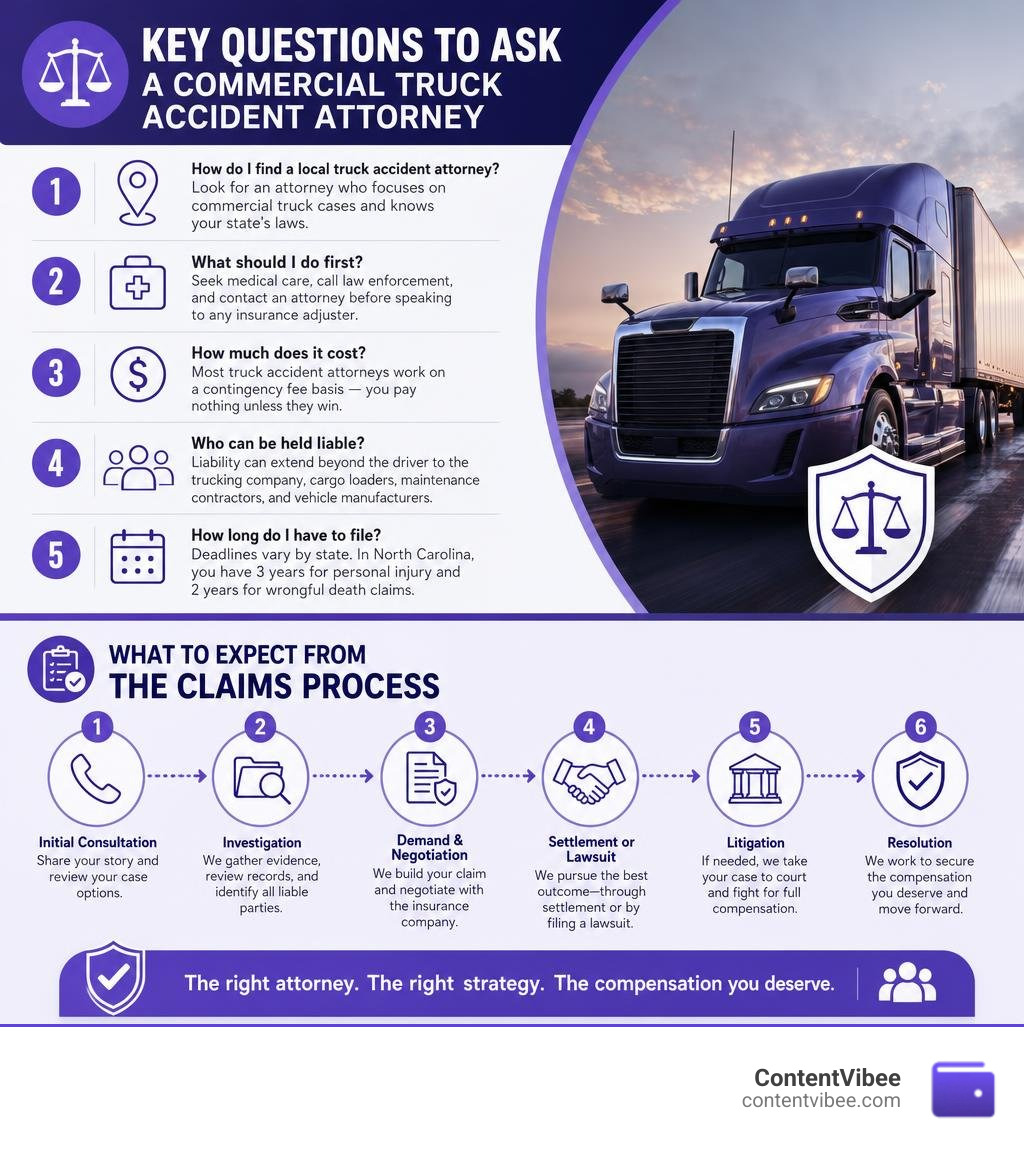
Don’t Cash That Check Yet: How to Evaluate an Insurance Settlement Offer
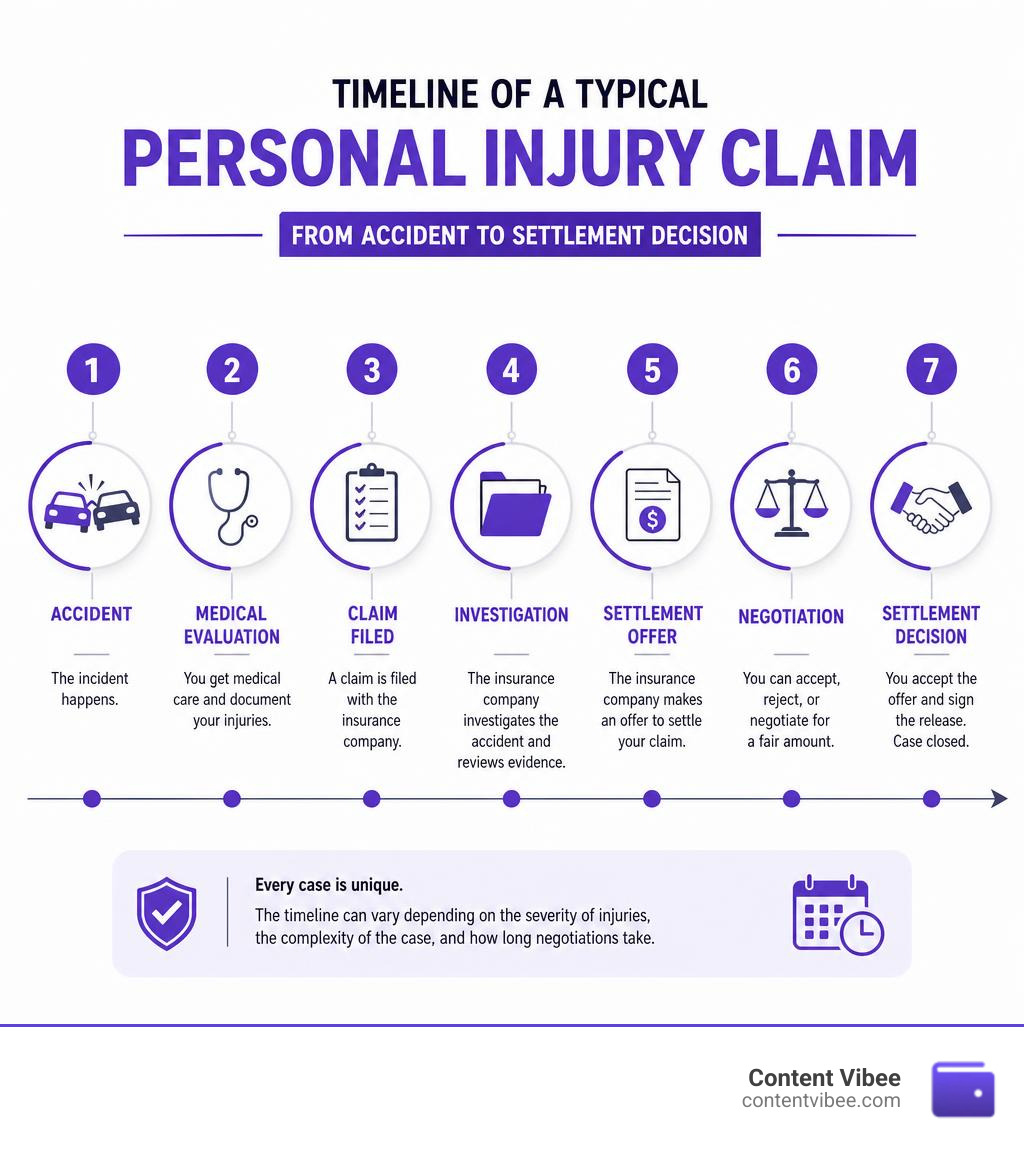
That Check May Cost You More Than You Think
An insurance settlement offer can feel like a lifeline after a car accident — but signing too fast is one of the most expensive mistakes you can make.
Here’s a quick answer to what you need to know right now:
What is an insurance settlement offer?
It is a formal proposal from an insurance company to pay you a specific amount of money in exchange for dropping all future legal claims related to your accident or injury. Once you sign, that agreement is permanent — even if your injuries turn out to be far worse than you knew at the time.
Should you accept the first offer?
| Situation | Recommendation |
|---|---|
| Still receiving medical treatment | Do not accept yet |
| Haven’t reached Maximum Medical Improvement (MMI) | Do not accept yet |
| Offer doesn’t cover all lost wages and bills | Reject and counter |
| Injuries are minor and fully resolved | May be worth considering |
| You haven’t consulted an attorney | Get a free consult first |
The numbers tell a hard story. Claimants who hire an attorney receive an average settlement of $77,600, compared to just $17,600 for those who go it alone. That’s not a small gap — it’s the difference between covering your care and going into debt.
Insurance companies are for-profit businesses. Their adjusters are trained to close claims quickly and cheaply — often before you know the full extent of your injuries. That fast offer in your inbox isn’t generosity. It’s strategy.
This guide will walk you through how to read an offer, calculate what your claim is actually worth, and decide whether to accept, reject, or negotiate.
What is an Insurance Settlement Offer and What Does Accepting It Legally Mean?
When you receive an insurance settlement offer, it arrives wrapped in official-looking paperwork. But at its core, it is a contract. Specifically, it is a financial agreement where the insurer pays you a lump sum (or a structured sequence of payments) in exchange for your signature on a document called a “Release of All Claims.”
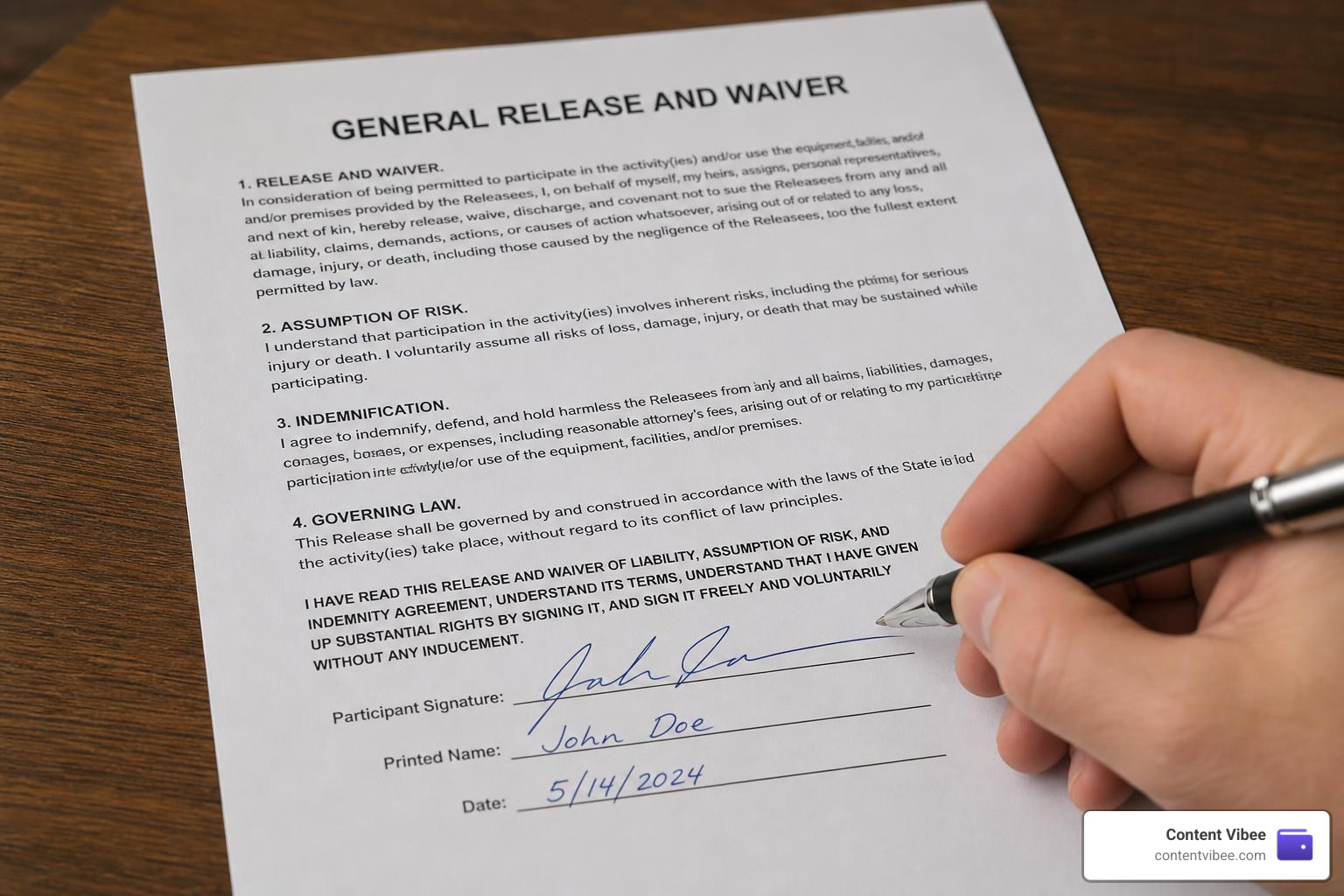
Signing this legal release triggers a concept known in law as “accord and satisfaction.” This means the dispute is officially resolved, and the insurer’s liability is completely extinguished.
Accepting this permanent settlement means you forfeit:
- The right to demand more money if your medical condition worsens.
- The right to seek compensation for hidden injuries that manifest months down the road.
- Your constitutional right to sue the at-fault party or their insurance carrier in court.
Imagine settling a neck injury claim for $5,000, only to discover six months later that you have a herniated disc requiring an $80,000 spinal fusion surgery. If you have already signed that release, the insurance company will not pay another dime. You are entirely on your own.
Before you take that leap, we highly recommend reading our Should I Accept the First Settlement Offer? Guide to understand the legal gravity of what you are signing. You can also review external insights on this process in the Payne Law Guide.
Why Insurance Companies Make Low Initial Offers
It is easy to think of insurance adjusters as neutral referees simply trying to calculate a fair payout. In reality, insurance companies are major corporations with a primary duty to protect their bottom line and maximize profit.
To keep payouts low, many major insurers have historically utilized corporate strategies like the “McKinsey three Ds” (Deny, Delay, Defend) to control costs. Adjusters operate under strict performance metrics, which often include:
- Reserve Minimization: Adjusters set aside a “reserve” (the maximum estimated cost of a claim) early on. They are evaluated on their ability to settle the claim at or below this reserve.
- Claim Closure Speed: The faster a claim is closed, the less time there is for a claimant to hire a lawyer or realize the full extent of their injuries.
- Targeting Unrepresented Claimants: Adjusters know that people without legal counsel are rarely familiar with negotiation strategies or the true value of their claims.
If you are facing an undervalued claim, our guide on Insurance Company Offering Low Settlement, What to Do? Guide provides an excellent roadmap. You can also read the Pencheff and Fraley Guide for additional context on how insurance companies structure these initial lowball offers.
The Mechanics of a Low Insurance Settlement Offer
In negotiation psychology, the first number put on the table is called the “anchor.” Insurance companies use low initial offers as a deliberate psychological anchoring strategy. By setting a very low baseline, they try to shift your expectations. If your claim is actually worth $50,000, starting with an opening bid of $5,000 makes a subsequent compromise of $15,000 feel like a win—even though it still leaves you severely undercompensated.
This pressure to close quickly exploits your vulnerability during a stressful recovery. To get an objective baseline before the insurance adjuster anchors your expectations, check out our resource on How Much Is My Car Accident Settlement Worth.
How Software Like Colossus Calculates Your Claim
If your initial offer feels cold and calculated, that’s because it was. Most major U.S. insurance companies use algorithmic valuation software, such as Colossus, to determine claim values.
Instead of looking at you as a human being experiencing pain, the adjuster inputs specific data points into Colossus:
- ICD Diagnosis Codes: The exact medical codes assigned to your injuries.
- Treatment Duration and Type: Whether you saw a chiropractor, a physical therapist, or an orthopedic surgeon.
- Impairment Ratings: Objective physical limitations documented by your doctors.
Colossus is calibrated to produce highly conservative, standardized outputs. It systematically undervalues non-economic factors like chronic pain, emotional distress, and the individual impact of an injury on your unique lifestyle. This algorithmic approach has drawn regulatory scrutiny over the years, most notably resulting in Allstate settling a multi-state examination in 2010 for $10 million alongside agreements to reform its use of claim software.
To learn more about how these digital systems operate, you can read the analysis on How Insurance Companies Determine Settlement Amounts or review the Chicago Lawyer Blog.
How to Calculate the True Value of Your Personal Injury Claim
To fight back against lowball algorithmic offers, you have to calculate your claim’s value independently.

A comprehensive personal injury claim is built on two primary classes of damages: economic (special) damages and non-economic (general) damages.
| Damage Type | What It Covers | How It Is Documented |
|---|---|---|
| Economic Damages (Special) | Direct financial losses: medical bills, pharmacy receipts, lost wages, future medical treatments, and property damage. | Invoices, pay stubs, W-2s, medical bills, and expert medical projections. |
| Non-Economic Damages (General) | Intangible losses: physical pain, suffering, emotional distress, loss of enjoyment of life, and loss of consortium. | Daily pain journals, psychological evaluations, and multiplier calculations. |
To get an immediate, customized estimate of what your unique case might be worth, we recommend trying our interactive Personal Injury Settlement Calculator.
Quantifying Economic vs. Non-Economic Damages
Economic damages are relatively straightforward to calculate because they are rooted in hard receipts. You simply add up all past and projected medical bills alongside your lost wages.
Non-economic damages require a bit more strategy. Insurance companies and attorneys typically use the Multiplier Method to estimate pain and suffering. This formula takes your total economic damages and multiplies them by a number between 1.5 and 5 (or higher for catastrophic injuries), depending on the severity of the situation:
- Soft Tissue Multiplier (1.5x to 3x): Used for minor injuries like whiplash, sprains, or bruising that are expected to heal fully within a few months.
- Severe Injury Multiplier (3x to 5x+): Reserved for broken bones, head trauma, spinal damage, or injuries requiring surgery and long-term rehabilitation.
Reaching Maximum Medical Improvement (MMI) Before Settling
You should never agree to an insurance settlement offer until you have reached Maximum Medical Improvement (MMI).
MMI is a medical milestone defined by the American Medical Association (AMA) indicating that your healing process has plateaued. It does not necessarily mean you are completely pain-free; rather, it means your condition is stable and is not expected to improve any further with additional medical treatment.
Settling before reaching MMI is incredibly risky. If you settle early, you cannot accurately project:
- The cost of future surgeries or physical therapy.
- The long-term impact of the injury on your earning capacity.
- Whether you will experience permanent chronic pain.
Always wait until your primary care physician or specialist officially declares you have reached MMI before you begin final settlement negotiations.
Strategic Steps to Negotiate a Better Payout
Negotiation is not a casual conversation; it is a battle of documentation. Once you have calculated your claim’s true value, you must present your case systematically.
The process begins by submitting a formal demand letter. This document outlines the facts of the accident, establishes the other party’s liability, details your medical treatments, and presents your calculated demand for compensation. If you are dealing with a car accident claim, utilize our Car Accident Settlement Calculator to help format your financial demands.
For a deeper dive into the art of writing these demands, see the guide on How to Negotiate an Insurance Settlement or study the property-focused strategies outlined by Allied Public Adjusters.
How to Respond to a Low Insurance Settlement Offer
If the insurance company counters with a lowball offer, do not panic or get angry. Instead, follow these steps:
- Set Your Private Minimum: Before replying, establish a “walk-away” number—the absolute minimum you are willing to accept. Keep this number strictly confidential.
- Request a Written Justification: Ask the adjuster to break down their offer in writing. Force them to justify why they are discounting certain medical bills or pain and suffering.
- Draft a Calm, Factual Response: Address their points one by one. If they claim a treatment was unnecessary, reference the specific doctor’s note that ordered it.
- Submit a Strategic Counteroffer: Propose a new figure that sits between their lowball offer and your original demand, showing a reasonable willingness to compromise without giving up your leverage.
Building a Strong Documentation File
The strength of your negotiation rests entirely on your evidence. To counter the adjuster’s arguments, build a comprehensive file containing:
- Comprehensive Medical Records: Complete charts, diagnostic imaging (X-rays, MRIs), and prescription receipts.
- Independent Estimates: For property damage, secure at least two independent, detailed contractor or mechanic estimates rather than relying solely on the insurer’s appraiser.
- Visual Evidence: Timestamped photographs and videos of the accident scene, your physical injuries, and property damage.
- A Detailed Communication Log: A written timeline of every phone call, email, and letter exchanged with the insurance company, noting dates, times, and the names of the representatives you spoke with.
When to Accept vs. Reject the Insurance Company’s Proposal
How do you know when it is actually time to sign on the dotted line?
Accepting the very first insurance settlement offer is occasionally appropriate, but only under highly specific conditions:
- Your injuries were minor, required minimal medical care, and are completely resolved.
- The offer quickly approaches or maxes out the at-fault party’s maximum policy limits.
- The liability is crystal clear, and the offer genuinely covers all of your medical bills, property damage, and lost wages.
In almost all other scenarios—especially those involving ongoing medical care, disputed liability, or significant pain and suffering—you should reject the initial offer.
Represented claimants secure settlements that average 3.5 times larger than those who represent themselves. While hiring an attorney means sharing a portion of your payout via a contingency fee, the net recovery in your pocket is still statistically much higher.
Frequently Asked Questions about Insurance Settlements
What happens if I reject an insurance settlement offer?
Rejecting an offer does not mean your claim is canceled. It simply means you have declined their opening bid, which keeps the negotiation open. You can submit a counteroffer backed by your documentation file. If negotiations stall completely, your remaining options include filing an administrative appeal with the insurer, hiring an attorney to take over negotiations, or filing a formal lawsuit before your state’s statute of limitations expires.
Can I ask for more money after signing a settlement release?
No. Once you sign a settlement release, the agreement is legally binding and final. Even if you discover a week later that you need a major surgery related to the accident, you cannot reopen the claim or demand more money. This is why reaching MMI and consulting an attorney prior to signing is so critical.
How long do I have to decide on a settlement offer?
You generally have until your state’s statute of limitations for personal injury claims runs out—which is typically between two to four years from the date of the accident. Do not let insurance adjusters pressure you with arbitrary “expiring” deadlines. They often use these artificial timelines to force quick, cheap decisions before you can seek legal counsel.
Conclusion
Navigating an insurance settlement offer can feel overwhelming, but you do not have to let corporate claims software and high-pressure adjuster tactics dictate your financial recovery. By understanding the legal weight of a release form, calculating your true damages, and waiting until you reach maximum medical recovery, you can protect your health and your wallet.
At Content Vibee, we believe in empowering you with the smart financial resources and technology tips you need to make confident decisions. Before you respond to any insurance adjuster, take a moment to Use our Settlement Calculators to estimate your claim’s true value. Armed with the right data, you can negotiate the fair payout you truly deserve.