The Best Truck Accident Attorney Los Angeles
When a Truck Hits You in Los Angeles, the Stakes Are Different
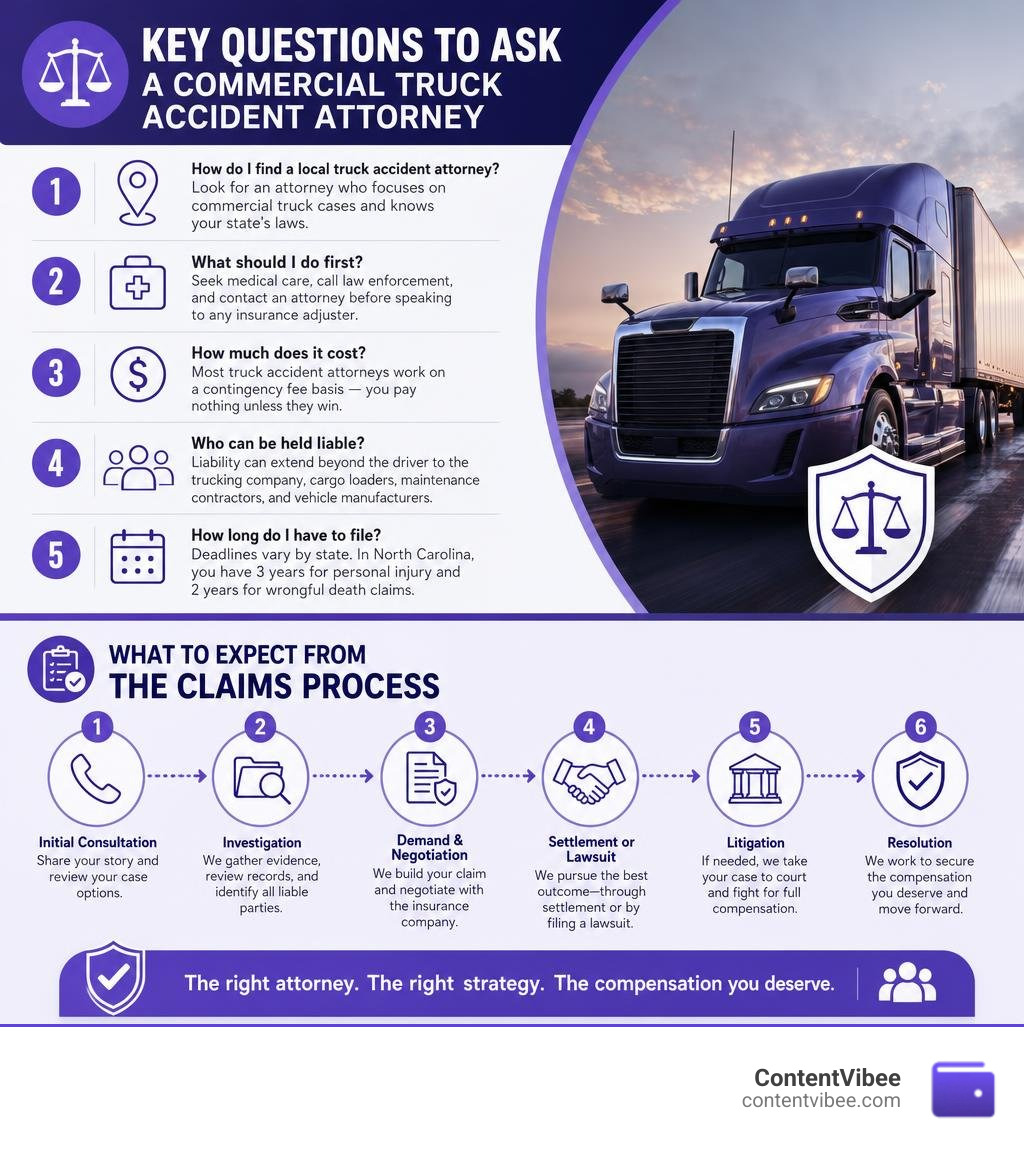
If you’re looking for a truck accident attorney in Los Angeles, here’s what you need to know right now:
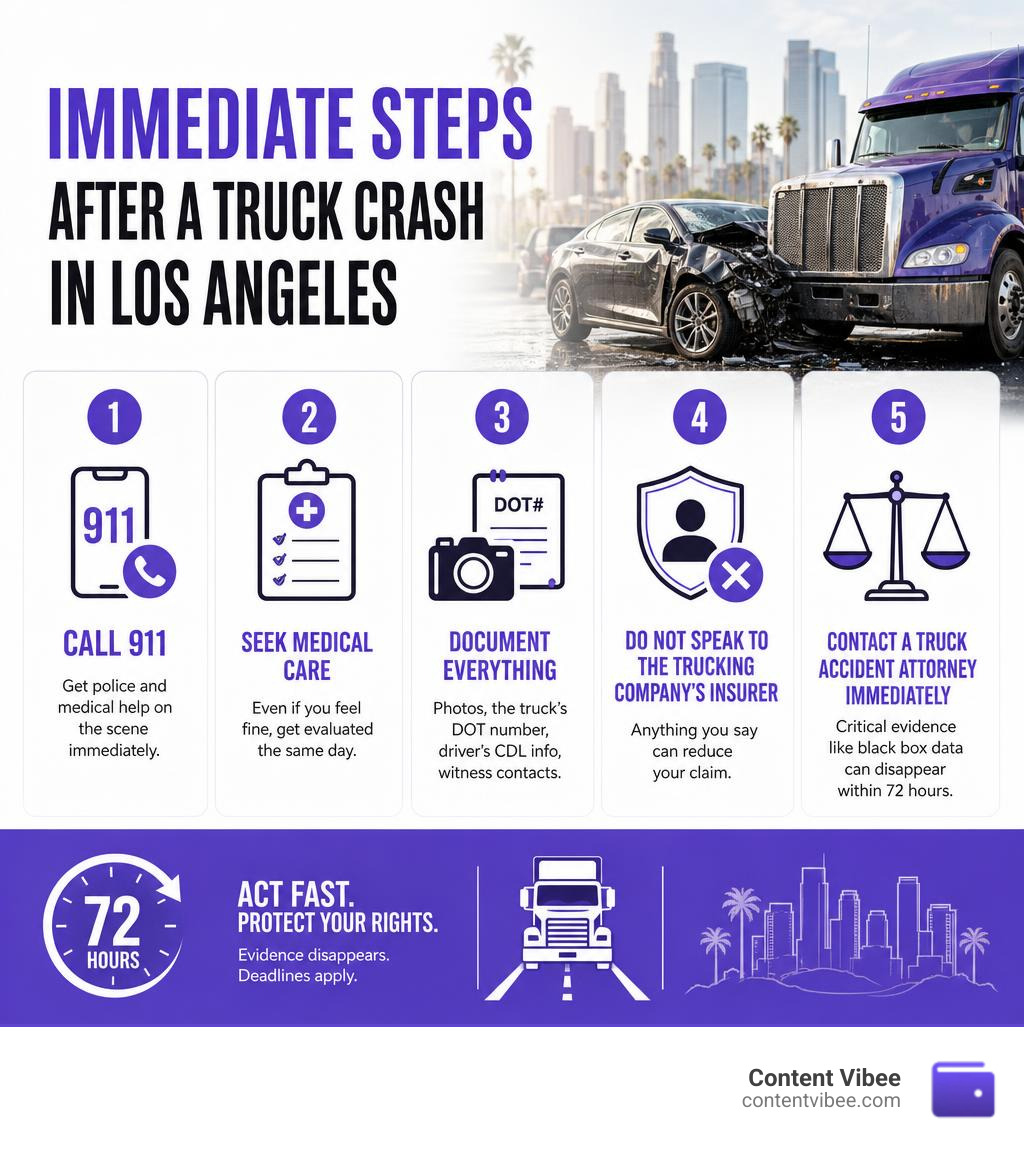
Quick Answer: What to Do After a Truck Accident in Los Angeles
- Call 911 u2014 get police and medical help on the scene immediately
- Seek medical care u2014 even if you feel fine, get evaluated the same day
- Document everything u2014 photos, the truck’s DOT number, driver’s CDL info, witness contacts
- Do not speak to the trucking company’s insurer u2014 anything you say can reduce your claim
- Contact a truck accident attorney immediately u2014 critical evidence like black box data can disappear within 72 hours
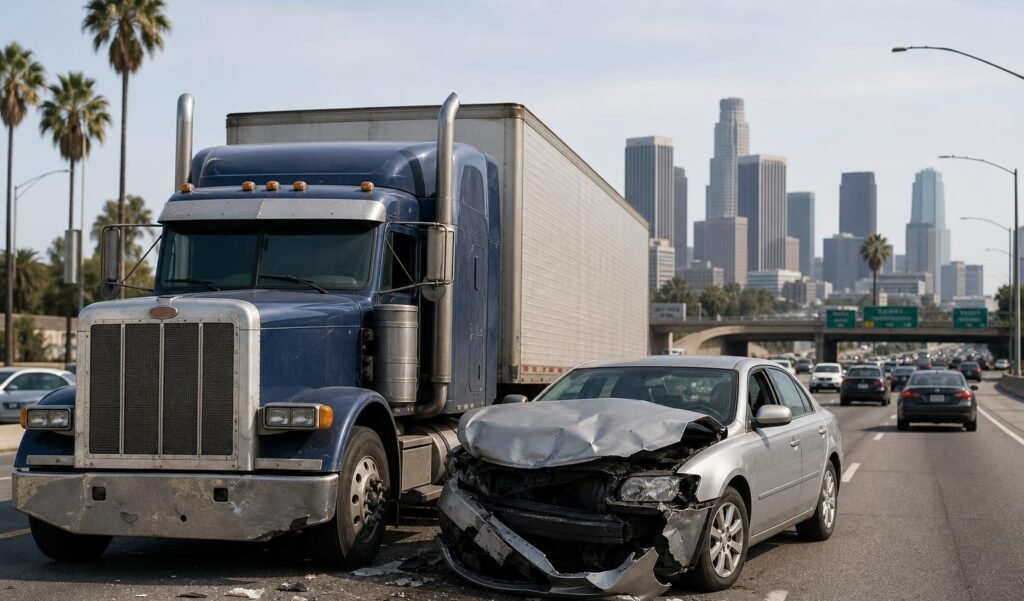
A semi-truck can weigh up to 80,000 pounds when fully loaded. Your car weighs roughly 4,000. When those two collide at freeway speed, the results are rarely equal.
Los Angeles makes this problem worse. The Ports of Los Angeles and Long Beach together handle roughly 40% of all U.S. containerized imports, pushing tens of thousands of heavy commercial trucks onto local freeways every single day. And the numbers are grim: Los Angeles County accounts for roughly half of all semi-truck accident fatalities in California, despite holding only 27% of the state’s population.
These aren’t ordinary car accident cases. Trucking companies carry massive insurance policies, deploy legal teams within hours of a crash, and have strong financial incentives to minimize your payout. Evidence disappears fast. And the law is complicated.
That’s exactly why who you hire matters enormously.
Truck accident attorney los angeles word guide:
Why You Need a Specialized Truck Accident Attorney Los Angeles
You might think any personal injury lawyer can handle a truck accident. That is a dangerous assumption. Commercial trucking lines are backed by high-powered insurance syndicates and rapid-response defense teams who are dispatched to crash scenes within hours. Their only goal is to limit their financial exposure.
When you go up against these entities, you aren’t just fighting a driver; you are fighting a massive corporate structure. A generalist lawyer may easily miss regulatory violations that could dramatically increase the value of your claim. We recommend reading our 5 Convincing Reasons You Need A Truck Accident Lawyer to understand how specialized representation protects you.
Furthermore, commercial carriers operate under policy limits that are exponentially higher than standard passenger vehicles. While a typical California driver might carry a $15,000 policy, commercial trucks routinely carry $750,000 to $5,000,000 or more in liability coverage. To secure a fair share of these high-stakes policies, you need an advocate who knows where to look for leverage. Learn more about navigating this landscape in our guide on How to Find the Best Truck Accident Lawyer in California.
How to Choose a Truck Accident Attorney Los Angeles
Finding the right legal advocate in a sea of billboards can feel overwhelming. To cut through the noise, look for these key indicators of quality:
- Board Certification: Only a small percentage of attorneys nationwide hold a Board Certification in Truck Accident Law from organizations like the National Board of Trial Advocacy (NBTA). This certification proves they have passed rigorous testing and have extensive trial experience specifically with commercial vehicles.
- Trial Readiness: Many firms operate as “settlement mills,” taking the first lowball offer the insurance company throws at them. You want a team that prepares every case as if it is going to trial. Insurers know which lawyers are willing to walk into a courtroom, and they settle for higher amounts with those who do.
- No Upfront Costs (Contingency Fees): A reputable truck accident lawyer works on a contingency fee basis. This means you pay nothing out of pocket, and they only get paid if they successfully recover compensation for you.
To help narrow down your search, check out our breakdown of the Best Truck Accident Attorneys For 2026.
When to Contact a Truck Accident Attorney Los Angeles
The short answer is: immediately.
Under California Code of Civil Procedure Section 335.1, the standard statute of limitations for personal injury and wrongful death claims is two years from the date of the accident. However, waiting two yearsu2014or even two monthsu2014can completely destroy your case.
If your accident involved a government-owned truck (such as a city waste management vehicle or Caltrans truck), you must file a formal government claim within six months.
Even more urgent is the physical evidence. Trucking companies are legally permitted to destroy or overwrite electronic data (like ELD logs and cabin camera footage) after a short periodu2014often as little as 30 days. An experienced attorney will immediately issue a formal spoliation letter, legally forcing the trucking company to preserve all black box data, maintenance records, and driver logs. For an in-depth timeline of this process, read our In Depth Guide To Serious Truck Accident Lawyer.
Key Differences: Truck Accidents vs. Car Accidents
To illustrate why these cases are so unique, let’s look at how they compare directly to standard passenger car collisions:
| Feature | Passenger Car Accident | Commercial Truck Accident |
|---|---|---|
| Average Vehicle Weight | 3,000 to 4,500 lbs | Up to 80,000 lbs |
| Primary Regulatory Body | California DMV | Federal Motor Carrier Safety Administration (FMCSA) |
| Typical Insurance Limits | $15,000 u2013 $100,000 | $750,000 u2013 $5,000,000+ |
| Potential Defendants | The other driver | Driver, carrier, shipper, parts manufacturer, cargo loader |
| Evidence Complexity | Police report, photos, basic medical bills | Black box (ECM), ELD logs, maintenance history, dispatch records |
Because of the massive weight disparity, truck accidents frequently result in catastrophic, life-altering injuries. Victims often suffer from traumatic brain injuries (TBI), complex spinal cord damage resulting in paralysis, multiple fractures, severe internal organ damage, or wrongful death.
If you’re dealing with the aftermath of a commercial collision, our Commercial Vehicle Accident Lawyers Guide 2026 and our comprehensive California Truck Accident Guide offer deep dives into managing these specific struggles.
Federal Regulations and FMCSA Compliance
Commercial truck drivers and motor carriers must comply with strict rules set by the Federal Motor Carrier Safety Administration (FMCSA). These regulations are designed to keep tired, unqualified, or poorly maintained trucks off our public roads.
One of the most critical sets of rules is the Hours of Service (HOS) regulations (49 CFR Part 395). Under these laws:
- Drivers are limited to a maximum of 11 hours of driving within a 14-hour on-duty window.
- They must take a mandatory 30-minute break after 8 consecutive hours of driving.
- They must have at least 10 consecutive hours off-duty before starting a new driving shift.
When trucking companies push their drivers to meet unrealistic deadlines, driver fatigue sets in, often leading to devastating highway crashes. A skilled attorney will audit these logs to find violations, which can establish “negligence per se” in court. Learn more about these rules in our Truck Accident Law Firm Complete Guide.
Determining Liability Across Multiple Parties
In a standard car accident, you usually sue the other driver. In a truck accident, liability is rarely that simple. Multiple parties may share the blame:
- The Truck Driver: For reckless driving, speeding, driving under the influence, or violating HOS rules.
- The Motor Carrier (Trucking Company): Under the legal doctrine of respondeat superior, companies are generally liable for the negligent actions of their employees. They can also be sued directly for negligent hiring, training, or failing to maintain their fleet.
- The Cargo Shipper/Loader: If a trailer was overloaded or improperly balanced, causing a jackknife or rollover crash.
- The Parts Manufacturer: If a critical component, like the brakes or steering mechanism, failed due to a manufacturing defect.
Untangling this web of independent contractors and corporate entities requires a sophisticated liability analysis. Read our guide on Best Truck Accident Lawyers Injury Claims to see how we trace responsibility back to every negligent party.
Critical Evidence and Dangerous LA Freight Corridors
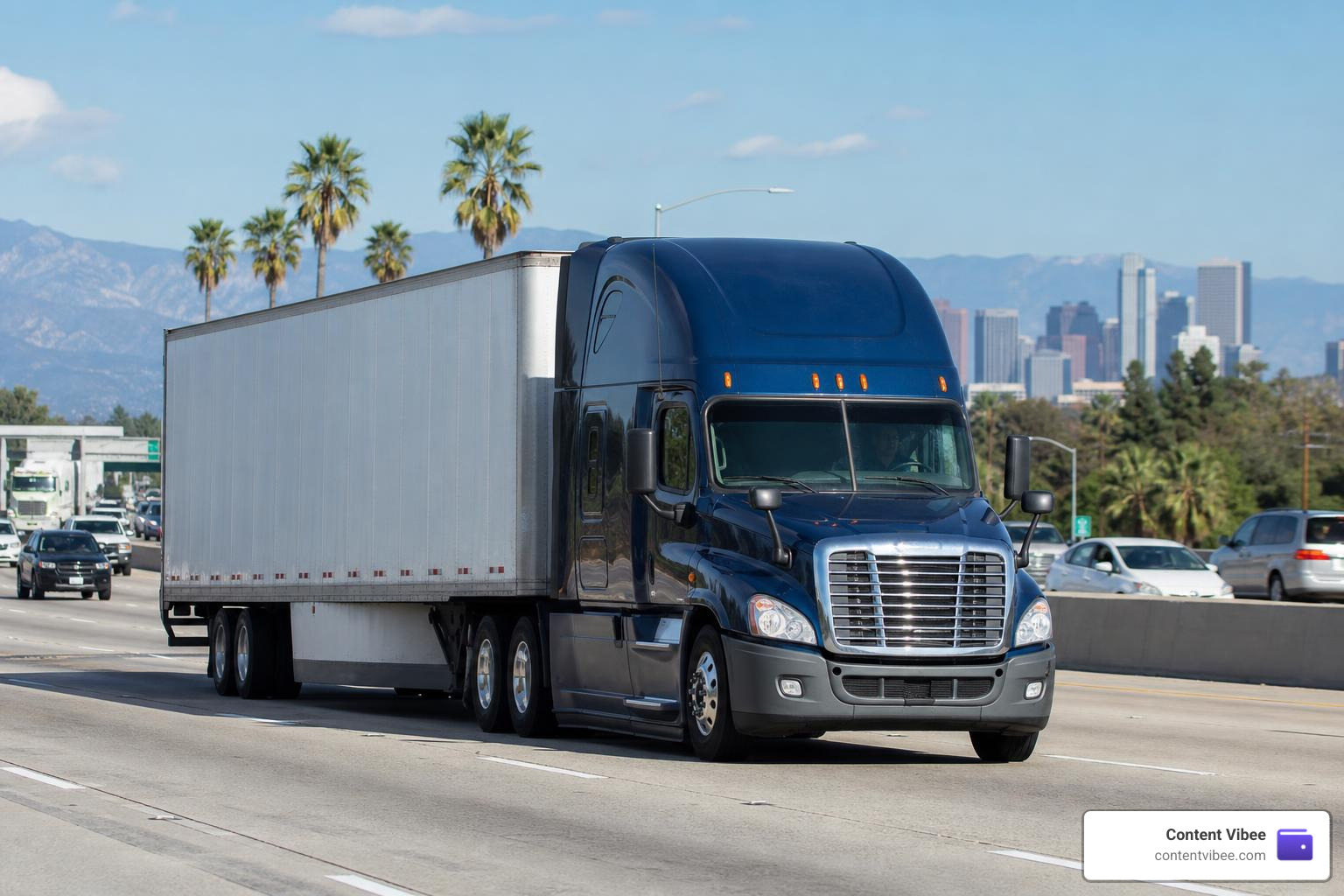
Proving fault in a truck accident requires a heavy reliance on technical data and physical evidence. Unlike passenger car cases, which often boil down to “he-said, she-said” arguments, truck accident claims are won or lost on cold, hard data.
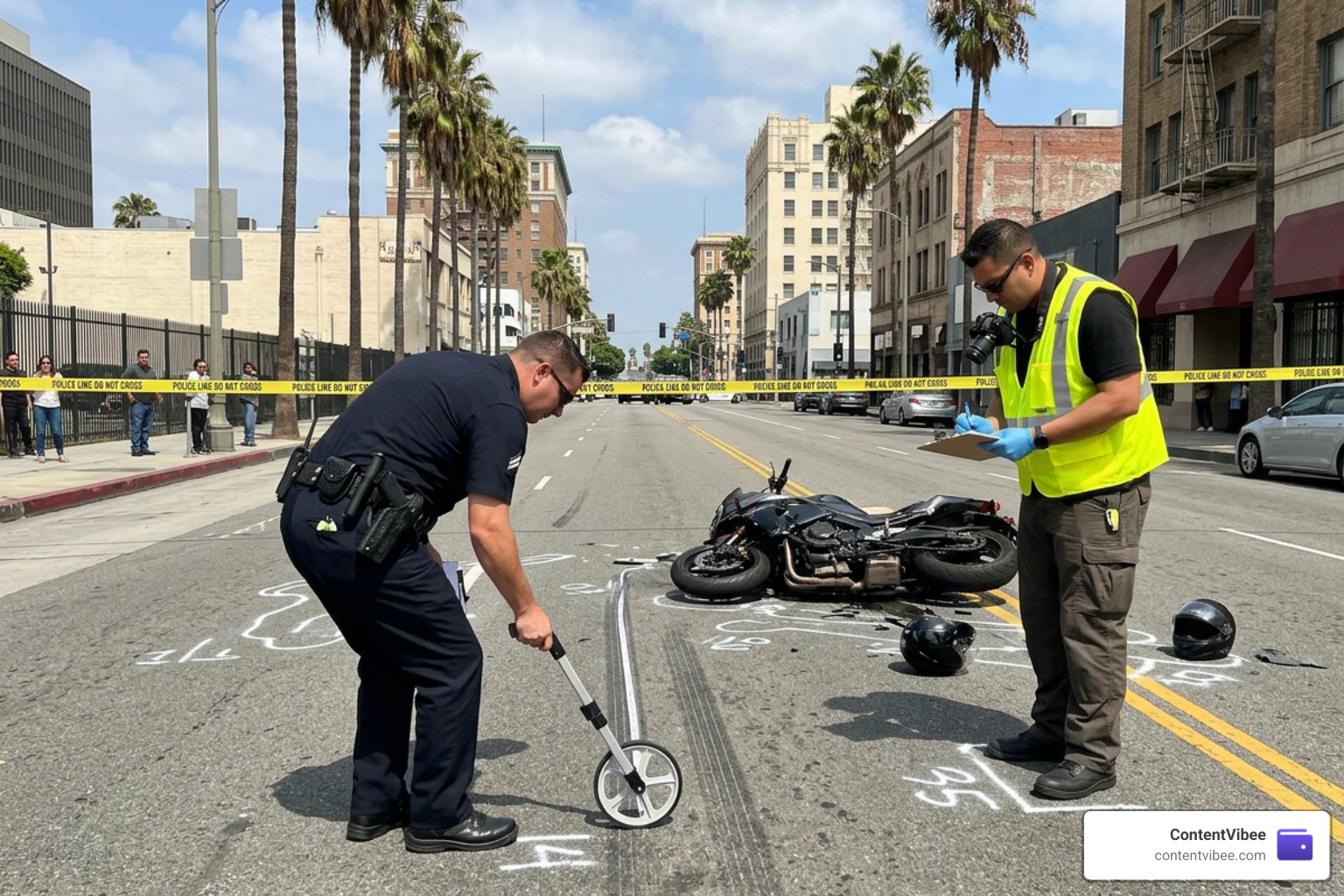
Your legal team will work with accident reconstruction experts, obtain FMCSA safety ratings for the carrier, and even pull gate camera footage from local ports if the crash involved a drayage truck. To understand how we collect and leverage this information, refer to our Los Angeles Truck Accident Claims Guide.
Unlocking Black Box and ELD Data
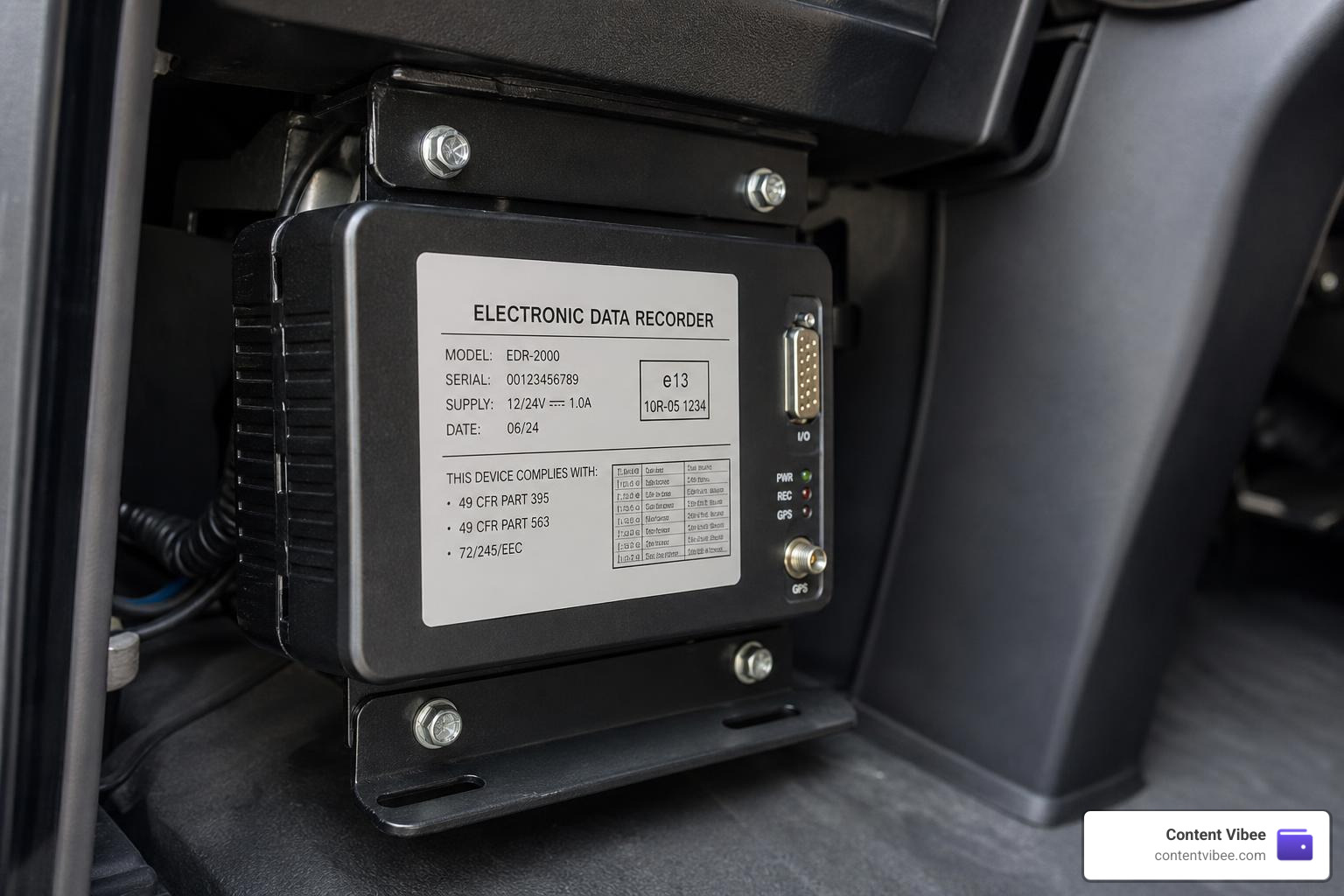
Modern commercial trucks are equipped with advanced electronic systems that serve as the “black box” of the vehicle. These include:
- Electronic Control Modules (ECM): This device records technical data in the seconds leading up to a crash, including travel speed, engine RPM, brake application, steering angles, and seatbelt usage.
- Electronic Logging Devices (ELD): These devices automatically track driving hours, making it incredibly difficult for drivers to falsify their paper logs to hide Hours of Service violations.
Because this data can easily be overwritten or lost during routine truck operations, securing it immediately via a court order or spoliation letter is the single most important step in building a winning case.
High-Risk Highways and Port Drayage Hazards
Los Angeles features some of the most dangerous trucking corridors in the United States. Due to our proximity to the Ports of Los Angeles and Long Beach, certain freeways are heavily congested with commercial traffic:
- Interstate 710 (Long Beach Freeway): Known locally as the “truck freeway,” this corridor is packed with drayage trucks moving cargo containers inland.
- Interstate 5 (Golden State/Santa Ana Freeway): A major national shipping artery that sees heavy stop-and-go truck traffic daily.
- State Route 60 (Pomona Freeway): A high-volume route connecting LA to the warehousing hubs of the Inland Empire.
- Interstate 405 (San Diego Freeway): Infamous for bumper-to-bumper traffic, making it a prime spot for devastating rear-end truck collisions.
Many port drayage drivers are paid on a “per-load” basis rather than an hourly wage. This pay structure creates a dangerous financial incentive for drivers to drive faster, skip mandatory rest breaks, and push through fatigue to maximize their daily income.
Compensation and California’s Comparative Fault Rules
If you have been injured in a truck accident, you may be eligible to recover a wide range of damages designed to make you financially whole again. These damages are split into two primary categories: economic and non-economic.
Types of Damages You Can Recover
- Economic Damages: These are measurable financial losses, including:
- Emergency room bills and ongoing hospital expenses.
- Rehabilitation costs, physical therapy, and mental health counseling.
- Future medical care (surgeries, medications, and home modifications for permanent disabilities).
- Lost wages and lost future earning capacity if you can no longer work in your field.
- Non-Economic Damages: These compensate you for intangible, subjective losses, such as:
- Severe physical pain and suffering.
- Emotional distress and anxiety.
- Loss of enjoyment of life.
- Wrongful Death Damages: If you lost a loved one, you can pursue compensation for funeral expenses, loss of financial support, and loss of companionship.
In rare cases where the trucking company’s behavior was incredibly egregious (such as knowingly allowing an unlicensed driver with a history of DUIs to operate an 80,000-pound rig), California courts may also award punitive damages to punish the wrongdoer and deter similar behavior in the future.
How Partial Fault Impacts Your Claim
California operates under a pure comparative negligence system. This means that even if you were partially to blame for the truck accident, you can still recover damages.
However, your total compensation award will be reduced by your percentage of fault. For example, if a jury determines your total damages are $1,000,000, but finds you were 20% at fault for the crash (perhaps because you were speeding slightly), your final recovery will be reduced to $800,000.
Because trucking insurance defense lawyers will do everything they can to shift the blame onto you to save their bottom line, having a strong legal advocate on your side is critical to defending your rights and keeping your fault percentage as close to zero as possible.
Frequently Asked Questions about Los Angeles Truck Accidents
Navigating the aftermath of a serious crash brings up a lot of questions. Here are the answers to some of the most common concerns we hear from accident victims in Los Angeles:
How long does a truck accident lawsuit take to resolve in Los Angeles?
Every case is unique, but most complex truck accident claims take anywhere from 12 to 24 months to resolve.
If liability is clear and your injuries are straightforward, a settlement may be reached sooner. However, if your injuries are catastrophic and require long-term medical evaluation to determine your future care costs, or if multiple corporate defendants are pointing fingers at each other, the litigation timeline can stretch longer. It is crucial not to rush into a quick settlement before the full physical and financial impact of your injuries is known.
Can I sue the trucking company directly if the driver was at fault?
Yes. Under California law, you can hold a trucking company directly liable for an accident under several legal theories:
- Vicarious Liability (Respondeat Superior): The company is automatically responsible for the negligent actions of their employee while they are on the job.
- Direct Negligence: You can sue the carrier directly if they engaged in negligent hiring practices (hiring a driver with a history of reckless driving), negligent training, negligent supervision, or failed to properly maintain the truck’s equipment.
What should I do immediately after a truck accident in Los Angeles?
The steps you take in the minutes and hours following a crash are vital to your physical recovery and your future legal claim:
- Call 911: Ensure police officers and paramedics are dispatched to the scene. A formal police report is a cornerstone of your case.
- Get a Medical Evaluation: Go to the emergency room or urgent care immediately. Adrenaline can mask severe internal injuries or concussions.
- Document the Scene: If it is safe to do so, take photos and videos of the vehicles, skid marks, road conditions, and traffic signs.
- Gather Information: Write down the truck driver’s name, commercial driver’s license (CDL) number, insurance information, and the truck’s DOT number.
- Collect Witness Contacts: Speak to anyone who stopped to help and get their names and phone numbers.
- Consult an Attorney: Do not speak to the trucking company’s insurance adjusters or sign any paperwork until you have secured experienced legal representation.
Conclusion
A collision with an 18-wheeler or semi-truck on a busy Los Angeles freeway can change your life in an instant. The path to physical and financial recovery is often long, stressful, and filled with complex legal hurdles.
You do not have to carry this heavy burden alone. Securing the help of a dedicated legal advocate who understands the nuances of federal trucking regulations, corporate liability, and local Los Angeles traffic corridors is the best way to protect your future.
If you or a loved one has been injured, let us help you find the clarity and support you deserve. For more general guidance on choosing the right legal representation, explore our guide on How to Find a Good Car Accident Lawyer.