Ultimate Guide to 18-Wheeler Accident Lawyer
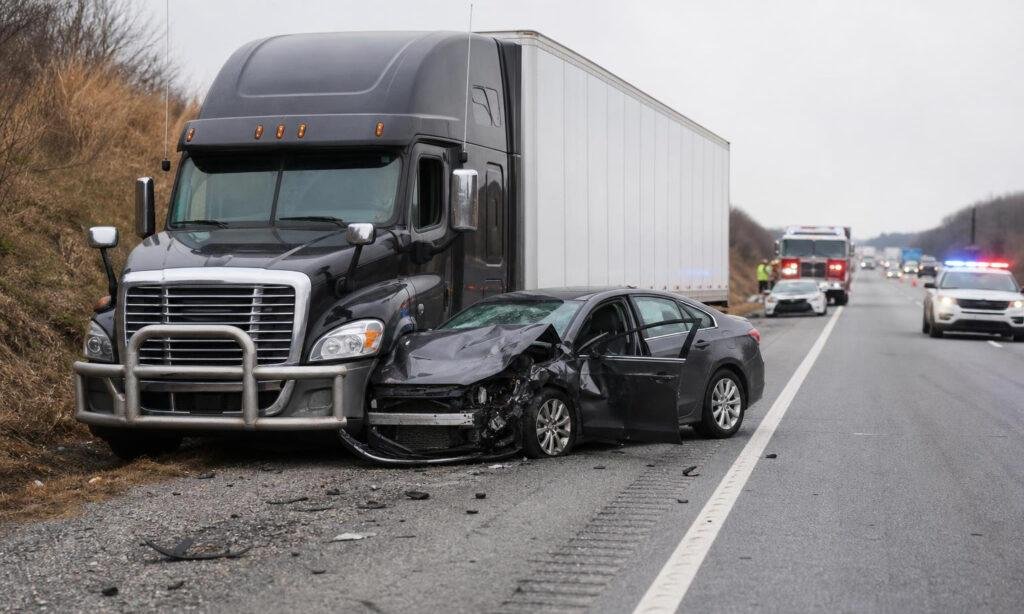
When an 18-Wheeler Hits You: What You Need to Know Right Now
An 18-wheeler accident lawyer is a personal injury attorney who specializes in crashes involving large commercial trucks — and if you’ve just been hit by one, you need to know your options fast.
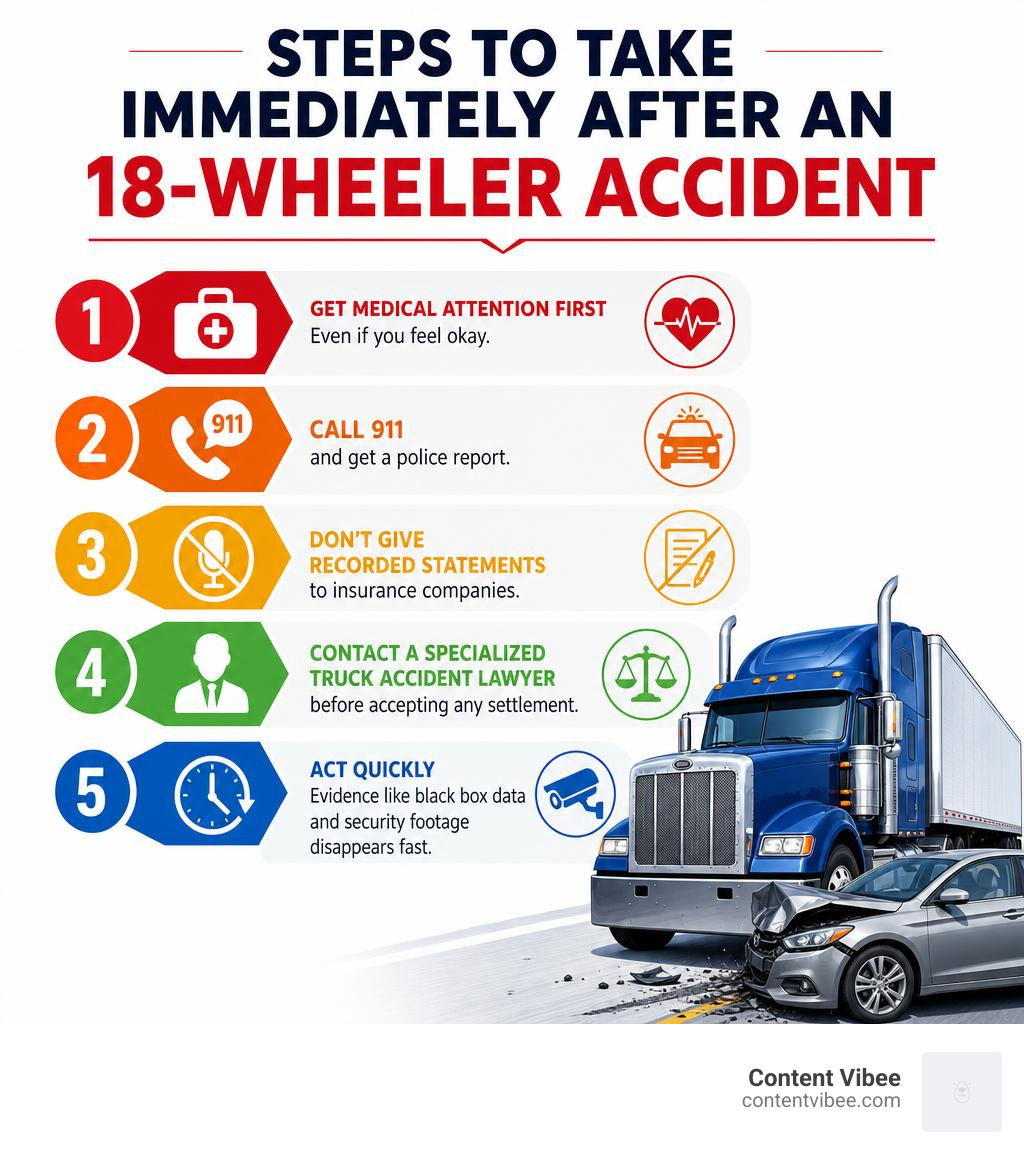
Quick answer for accident victims:
- Get medical attention first — even if you feel okay
- Call 911 and get a police report
- Don’t give recorded statements to insurance companies
- Contact a specialized truck accident lawyer before accepting any settlement
- Act quickly — evidence like black box data and security footage disappears fast
The numbers are stark. In 2022, large trucks were involved in 5,837 fatal crashes in the United States — that’s 12% of all traffic fatalities from vehicles that make up just 4% of what’s on the road. The average cost of a fatal truck accident exceeds $10 million when you factor in medical costs, lost productivity, and legal expenses.
These aren’t fender-benders. When a fully loaded 18-wheeler — weighing up to 80,000 pounds — collides with a passenger vehicle weighing around 4,000 pounds, the results are almost always catastrophic.
And here’s the part most people don’t realize: trucking companies have rapid-response legal teams that often arrive at the scene before victims even leave the hospital. They’re already building their defense while you’re still in the emergency room.
That’s exactly why having the right legal representation — someone who knows federal trucking regulations, how to preserve critical evidence, and how to fight back against large insurance carriers — can make all the difference in your case.
Essential 18-wheeler accident lawyer terms:
Why You Need a Specialized 18-Wheeler Accident Lawyer

If you have a toothache, you go to a dentist, not a cardiologist. If you are in a collision with an 80,000-pound commercial vehicle, you need a lawyer who eats, sleeps, and breathes truck accident litigation.
Treating an 18-wheeler collision like a standard fender-bender is one of the quickest ways to lose out on the compensation you actually deserve. The legal, regulatory, and financial stakes are simply on another level. To understand why these cases require a specialized touch, it helps to look at Why Semi-Truck Accident Lawyers Are My Favorite Choice when navigating the aftermath of a major highway crash.
Understanding the Role of an 18-wheeler accident lawyer
An 18-wheeler accident lawyer is not just a general personal injury attorney. They are specialists who understand the complex web of federal and state laws governing the commercial shipping industry.
These attorneys focus on:
- Federal Motor Carrier Safety Administration (FMCSA) Rules: They know how to spot hours-of-service violations, improper cargo loading, and negligent maintenance.
- Corporate Litigation: They know how to go toe-to-toe with multi-million-dollar transportation conglomerates and their aggressive defense teams.
- Technical Evidence Analysis: They know how to secure and interpret electronic logging data, black box data, and dispatch communications.
How 18-Wheeler Accidents Differ from Standard Car Crashes
When two passenger cars collide, the physics are relatively straightforward, and the liability usually rests on one of the drivers. When an 18-wheeler is involved, everything changes.
First, the sheer weight disparity is terrifying. A standard passenger car is no match for a commercial big rig. This massive difference in mass and velocity translates directly into catastrophic injuries, such as traumatic brain injuries, spinal damage, and severe fractures.
Second, the legal landscape is far more complex. Instead of dealing with a single driver and their auto insurance policy, a truck crash case often involves multiple corporate entities, federal safety standards, and commercial insurance policies worth millions of dollars.
| Metric | Passenger Car | 18-Wheeler (Fully Loaded) |
|---|---|---|
| Average Weight | 3,000 – 4,000 lbs | Up to 80,000 lbs |
| Average Length | 15 – 18 feet | 70 – 80 feet |
| Stopping Distance (65 mph) | ~300 feet | ~525 feet (nearly two football fields) |
| Insurance Minimums | State-level minimums (often $25k–$50k) | Federal minimum of $750,000 up to $5M+ |
| Primary Defendant | The other driver | Driver, carrier, manufacturer, loader, etc. |
Common Causes and Liability in Semi-Truck Crashes
To build a successful case, we must first understand exactly why the crash occurred. Commercial truck accidents are rarely simple mistakes; they are often the result of systemic safety failures or corporate pressure to meet unrealistic delivery deadlines.
Here is a list of the most common causes of truck accidents on our highways:
- Driver Fatigue: Truckers are frequently pushed to drive long hours, leading to drowsy driving and slowed reaction times.
- Distracted Driving: Using dispatch systems, mobile phones, or navigation equipment while operating a heavy vehicle.
- Inadequate Maintenance: Worn-out brakes, bald tires, and defective steering components that should have been replaced.
- Improperly Loaded Cargo: Overloaded trailers or unsecured cargo shifting mid-turn, causing jackknifing or rollover accidents.
- Negligent Hiring and Training: Trucking companies putting unqualified or poorly trained drivers behind the wheel to fill empty seats.
- Speeding and Reckless Driving: Driving too fast for weather conditions, tailgating, or making unsafe lane changes.
Who Can Be Held Liable in an 18-Wheeler Accident?
One of the most challenging aspects of a truck accident case is identifying all the parties who share legal blame. Unlike a typical car crash, liability in a commercial vehicle accident can extend far beyond the person behind the wheel.
Depending on the circumstances, we can pursue claims against:
- The Truck Driver: For direct negligence, such as driving under the influence, speeding, or violating rest break requirements.
- The Trucking Company (Carrier): Under the legal doctrine of respondeat superior (vicarious liability), employers are generally responsible for the actions of their employees. They can also be held directly liable for negligent hiring, poor training, or forcing drivers to violate safety rules.
- Third-Party Contractors and Cargo Loaders: If a separate company loaded the trailer incorrectly, causing the load to shift and the driver to lose control, that company can be held liable.
- Maintenance Providers: If a third-party mechanic failed to fix a known brake issue or performed shoddy repair work.
- Parts Manufacturers: If a defective tire blew out or a critical braking component failed due to a manufacturing defect.
To dive deeper into how these different layers of responsibility work, you can read our comprehensive More info on commercial vehicle liability resource.
The Impact of Federal and State Trucking Regulations
Commercial trucking is heavily regulated to protect everyone else on the road. The FMCSA establishes strict safety standards that carriers and drivers must follow.
When a crash occurs, we look closely for violations of these regulations, including:
- Hours of Service (HOS) Limits: Rules that dictate how long a driver can be on duty and behind the wheel before taking a mandatory rest break.
- Electronic Logging Device (ELD) Mandates: Electronic systems that automatically record driving time to prevent drivers from falsifying their paper logbooks.
- Medical Certification Requirements: Ensuring drivers are physically fit and free of medical conditions that could impair their ability to drive safely.
- Pre-Employment Screening: Requiring companies to thoroughly check a driver’s safety history, prior accidents, and drug test results before hiring them.
When an 18-wheeler accident lawyer proves that a carrier or driver violated these federal standards, it provides powerful evidence of negligence. You can learn more about these critical guidelines by reviewing the Federal trucking safety standards details.
Crucial Evidence and Recovering Damages in Truck Accidents
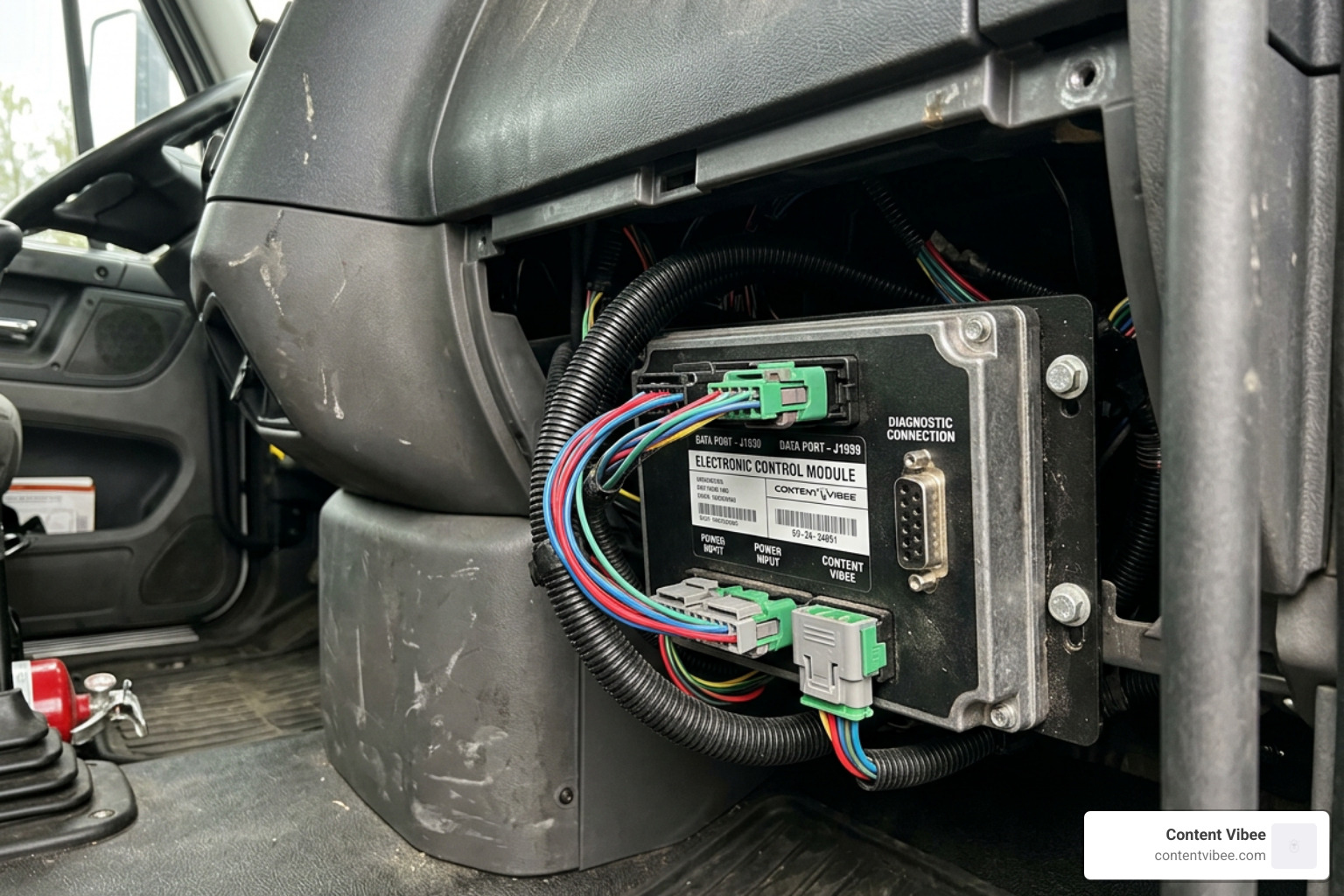
In the legal world, claims are won or lost based on evidence. Because trucking companies have massive resources and rapid-response teams, critical evidence can disappear quickly if you do not act immediately to protect your rights.
Shortly after a crash, we must send a formal “spoliation of evidence” letter to the trucking company. This legal notice obligates them to preserve all physical and electronic evidence related to the crash. If they destroy or alter evidence after receiving this letter, they can face severe legal penalties in court. To see how this process works in practice, check out How evidence is preserved after a crash.
Securing Black Box Data and Electronic Logs
Modern commercial trucks are rolling computers. They are equipped with Event Data Recorders (EDRs) — commonly known as “black boxes” — and Electronic Logging Devices (ELDs).
This technology captures invaluable data from the moments leading up to the crash, including:
- The exact speed of the truck before impact
- Whether and when the driver applied the brakes
- Steering wheel angles and sudden maneuvers
- Engine RPMs and throttle position
- The exact hours the driver had been on the road
Securing this data requires specialized technical knowledge and quick legal action before the trucking company overwrites or deletes the records. For help finding a qualified legal team in your area who knows how to handle this data, refer to our Guide to finding local truck accident lawyers.
Working with an 18-wheeler accident lawyer and Reconstruction Experts
Even with black box data, proving exactly how a crash occurred often requires the help of accident reconstruction experts. These professionals use physics, engineering, and computer modeling to recreate the collision scene.
They analyze:
- Crush damage on all vehicles involved
- Skid marks and gouges in the asphalt
- Sightlines, blind spots, and weather conditions at the time of the crash
- The trajectory of the vehicles post-impact
By combining expert testimony with physical evidence, your lawyer can present a clear, undeniable picture of liability to the insurance company or a jury.
Recoverable Damages and Dealing with Insurance Companies
If you have been injured in an 18-wheeler collision, you have the legal right to seek compensation for the full impact the accident has had on your life.
We categorize these losses into economic and non-economic damages:
-
Economic Damages (Objective financial losses):
- Immediate medical bills and emergency room costs
- Estimated costs for future medical treatments, surgeries, and physical therapy
- Lost wages for time missed from work
- Loss of future earning capacity if you can no longer work in your profession
- Property damage (repairing or replacing your vehicle)
-
Non-Economic Damages (Subjective, non-financial losses):
- Physical pain and suffering
- Mental anguish, anxiety, and PTSD
- Permanent disfigurement, scarring, or loss of limb
- Loss of enjoyment of life and inability to participate in hobbies
Dealing with commercial insurance adjusters is notoriously difficult. Their job is to protect their company’s bottom line by paying you as little as possible. They may offer a quick, lowball settlement before the full extent of your injuries is even known. An experienced attorney will handle all communications, shield you from aggressive tactics, and fight to maximize your financial recovery. For an inside look at these negotiations, see How insurance companies handle big rig claims.
Frequently Asked Questions about Truck Accidents
How much does it cost to hire a truck accident attorney?
Almost all reputable 18-wheeler accident lawyers work on a contingency fee basis. This means you pay absolutely nothing upfront. The law firm covers all investigation costs, expert witness fees, and court filings. They only get paid if they successfully recover money for you through a settlement or jury verdict. If you don’t win, you don’t owe them a dime.
What should I do immediately after an 18-wheeler collision?
Your immediate priority is safety.
- Move to safety if possible, and call 911 immediately.
- Seek medical attention right away, even if you feel fine. Adrenaline can mask severe internal injuries.
- Document the scene by taking photos of vehicle damage, road conditions, skid marks, and commercial logos on the truck.
- Gather information including the truck driver’s license, insurance details, and contact info for any witnesses.
- Do not apologize or admit fault to anyone at the scene.
- Contact a lawyer as soon as possible to protect the evidence.
Can I still recover compensation if I was partially at fault?
Yes, in most states. Many jurisdictions follow a legal rule called modified comparative negligence. Under this rule, you can still recover compensation as long as you were not primarily responsible for the accident (usually meaning you were 50% or less at fault). However, your final financial recovery will be reduced by your percentage of fault. For example, if you are awarded $100,000 but found to be 20% at fault, you would receive $80,000.
Conclusion
Colliding with an 18-wheeler is a life-altering event. The physical pain, emotional trauma, and mounting financial pressures can easily feel overwhelming. But you do not have to carry this heavy burden alone.
By partnering with an experienced 18-wheeler accident lawyer, you level the playing field against massive trucking corporations and their insurance companies. Your legal team will handle the complex investigations, deal with the adjusters, and fight for the maximum compensation you deserve, allowing you to focus entirely on your physical recovery.
If you are ready to take the next step and protect your financial future, let us help you find the right legal advocate. Learn more about choosing the best representation by visiting our guide on How to find a good car accident lawyer.