How Motorcycle Injury Attorneys Can Help You
When a Motorcycle Crash Turns Your Life Upside Down
Motorcycle injury attorneys help injured riders recover compensation for medical bills, lost wages, and pain and suffering after a crash caused by someone else’s negligence.
Here’s a quick overview of what they do and when you need one:
- File your claim – They handle all paperwork and deadlines so you don’t miss your window to recover damages
- Investigate the crash – They gather evidence, police reports, and witness statements to build your case
- Deal with insurers – They negotiate against insurance companies who often try to lowball or deny motorcycle claims
- Prove liability – They establish who was at fault, even when insurers try to blame the rider
- Maximize your payout – They calculate the full value of your injuries, including long-term impacts
Motorcycle accidents are among the most devastating on the road. Riders have no seatbelt, no airbag, and no steel frame protecting them in a crash.
The numbers back this up. In 2020, there were 5,579 motorcycle fatalities in the U.S. — accounting for 14% of all traffic deaths. Motorcyclists die in crashes nearly 28 times more often than passenger car occupants per mile traveled.
And surviving a crash doesn’t mean the pain ends. Serious injuries — broken bones, spinal damage, traumatic brain injuries — can mean months of treatment, lost income, and mounting debt. Insurance companies know this, and they often use it as leverage to pressure victims into accepting far less than they deserve.
That’s exactly where motorcycle injury attorneys make the difference.
Motorcycle injury attorneys terms to learn:
Motorcycle Accident Injuries, Helmet Laws, and Liability
When a motorcycle collides with a passenger vehicle, the physical toll on the rider is almost always severe. Because motorcycles lack the structural protection of standard cars, riders absorb the direct force of the impact. Understanding the types of injuries sustained and how local laws treat helmet use and liability is essential for anyone pursuing a personal injury claim.
Common Injuries and Their Long-Term Impact
In our experience analyzing traffic safety data, motorcycle crashes produce a high volume of catastrophic, life-altering injuries. These include:
- Traumatic Brain Injuries (TBIs): Head injury is the leading cause of death in motorcycle crashes. Even survivors can suffer from permanent cognitive decline, memory loss, and personality changes.
- Spinal Cord Injuries: Blunt force impact can cause temporary or permanent paralysis, requiring lifelong medical care and expensive home modifications.
- Road Rash: This is not just a bad scrape. Severe road rash can strip away skin down to the muscle, requiring painful skin grafts and leaving permanent, highly visible scars.
- Fractures and Crushing Injuries: Riders often break bones in their arms, legs, and pelvis as they attempt to brace for impact or find themselves pinned beneath a heavy bike.
According to national motorcycle injury statistics, a high percentage of these crashes require immediate hospitalization and long-term physical rehabilitation.
Helmet Laws and Their Legal Implications
There is no denying the safety benefits of wearing a helmet. Federal safety data estimates that motorcycle helmets are 37% effective in preventing fatal head injuries for drivers and 42% effective for passengers. Furthermore, helmets are 67% effective in preventing traumatic brain injuries. Riders who hit the road without a helmet are three times more likely to suffer a brain injury in a crash than those who wear one. In a recent one-year period, more than 1,700 motorcyclists across the United States were saved simply because they were wearing helmets.
But how does helmet use affect your legal rights if you are struck by a negligent driver?
If you live in a state with a universal helmet law, failing to wear one is a traffic violation. In a personal injury case, the defense will use this failure to argue that you did not take reasonable steps to protect yourself. Under the legal concept of “mitigation of damages,” the insurance company may argue that while their driver caused the crash, your failure to wear a helmet caused or worsened your head injuries.
Liability, Comparative Negligence, and Contributory Negligence
Proving who is at fault is the cornerstone of any motorcycle accident claim. However, different states use different legal frameworks to distribute fault, which can dramatically affect your potential compensation.
- Comparative Negligence (Pure and Modified): In states that use comparative negligence, you can still recover compensation even if you were partially at fault for the accident (or if your failure to wear a helmet worsened your injuries). Your final payout is reduced by your percentage of fault. For example, if your total damages are $100,000 but a jury finds you 20% at fault for not wearing a helmet, you will receive $80,000. In modified comparative negligence states, you are barred from recovering anything if your share of the fault exceeds a specific threshold (usually 50% or 51%).
- Contributory Negligence: This is a much harsher rule. In states that practice strict contributory negligence, if you are found to be even 1% at fault for the crash or your injuries, you are completely barred from recovering any compensation from the other driver. This is why having skilled legal representation is so critical; insurance companies will look for any minor detail to shift even a tiny fraction of the blame onto you.
| Negligence System | How Fault Affects Compensation | Example Scenario |
|---|---|---|
| Pure Comparative Negligence | Compensation is reduced by your exact percentage of fault. | You are 10% at fault; you recover 90% of your damages. |
| Modified Comparative Negligence | Compensation is reduced by fault, but you get $0 if you are 50% or 51%+ at fault. | You are 49% at fault; you recover 51%. If you are 51% at fault, you get nothing. |
| Contributory Negligence | If you are even 1% at fault, you are completely barred from recovering damages. | You are 1% at fault; you recover $0. |
Why You Need Specialized Motorcycle Injury Attorneys
Many injured riders assume that any general personal injury lawyer can handle their case. However, motorcycle accidents require a deep understanding of rider dynamics, physics, and the unique biases that motorcyclists face. Hiring a firm with a focus on specialized legal representation is often the deciding factor in securing a fair settlement.

When you work with dedicated motorcycle injury attorneys, they immediately start leveling the playing field. They understand how to counter the common stereotype that all motorcyclists are reckless speed demons. If you are searching for a qualified advocate, using resources like our guide on finding an injury lawyer near me can help you identify local professionals who have a proven track record in motorcycle accident representation.
How Motorcycle Injury Attorneys Investigate Your Case
Building a rock-solid case requires swift, meticulous investigation. When you hire experienced motorcycle accident lawyers, they will take several critical steps to preserve evidence before it disappears:
- Securing the Scene: They obtain traffic camera footage, nearby business security video, and dashcam recordings before they are overwritten.
- Gathering Law Enforcement Reports: They analyze the official police report for inconsistencies and follow up with responding officers.
- Interviewing Eye Witnesses: They record statements from bystanders while memories are still fresh.
- Employing Accident Reconstructionists: They work with engineering experts who can reconstruct the crash scene, calculating speed, impact angles, and braking distances to prove the other driver was negligent.
Overcoming Insurance Tactics with Motorcycle Injury Attorneys
Insurance adjusters are not your friends. Their primary goal is to settle your claim for as little money as possible. They frequently employ tactics designed to take advantage of vulnerable, stressed victims:
- The Lowball Offer: They may call you shortly after the crash, offering a quick cash settlement. This offer rarely covers the long-term cost of your medical care.
- The Recorded Statement Trap: They will ask you to describe the accident on tape, hoping you will say something like “I’m feeling okay today” or “It happened so fast I didn’t see them,” which they will later use to deny your claim.
- Delaying the Process: They may drag out negotiations in the hopes that your growing medical bills will make you desperate enough to accept a tiny settlement.
With professional legal guidance for recovery, you do not have to speak to the insurance adjusters yourself. Your attorney will handle all communication, call out their bad-faith tactics, and prepare your case as if it is heading to trial, forcing the insurer to take your claim seriously.
Steps to Take Immediately After a Motorcycle Crash
The moments following a crash are chaotic, but what you do in the minutes and days after can make or break your personal injury claim.
If you are involved in a collision, try to follow these steps to protect your physical health and your legal rights:
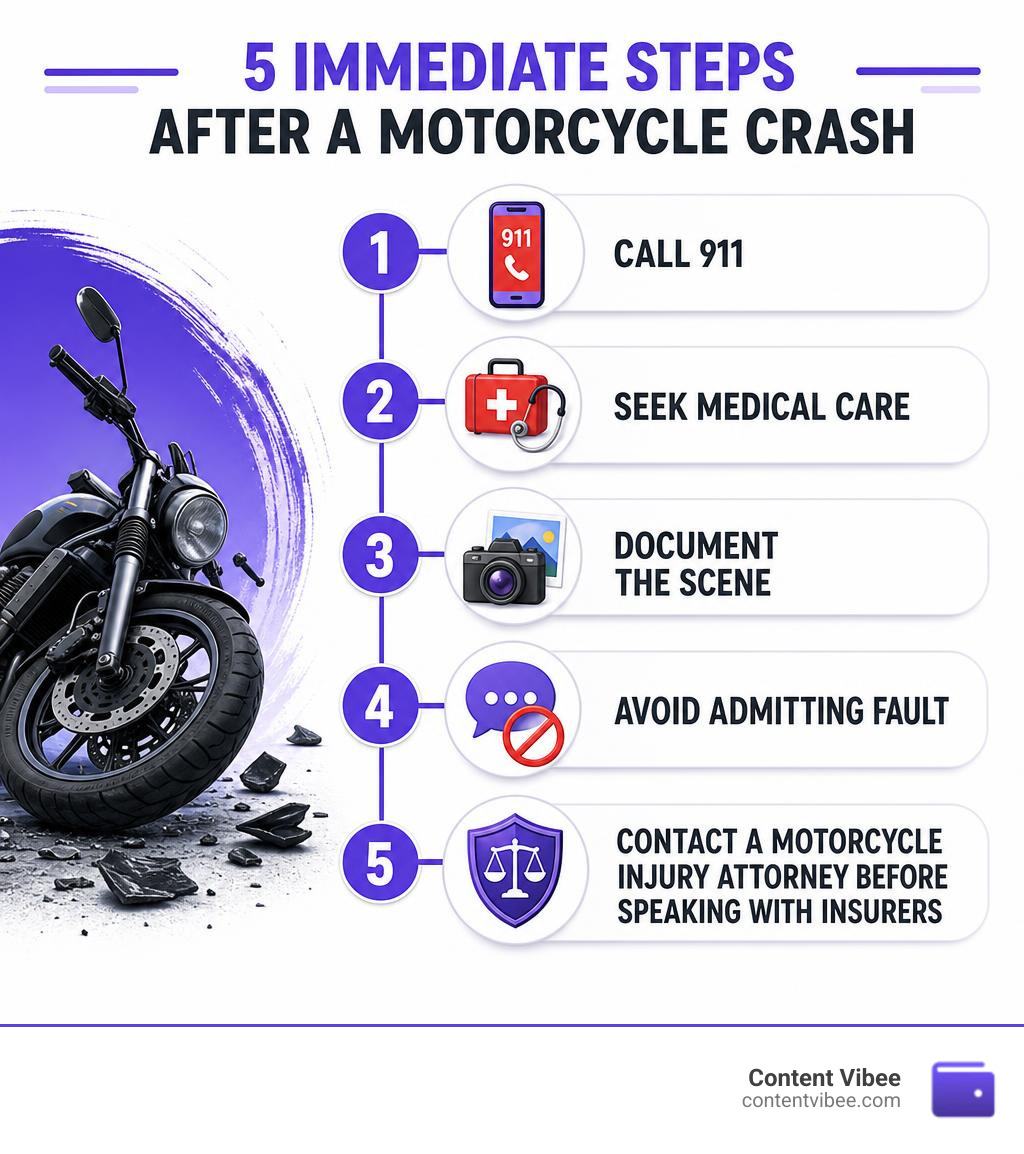
- Move to Safety and Call 911: Get out of the flow of traffic if you are physically able. Call the police immediately so an official report is generated.
- Seek Medical Attention Immediately: Even if you feel fine, adrenaline can mask severe injuries like internal bleeding or concussions. Go to an emergency room or urgent care clinic right away. Failing to do so creates a gap in medical documentation that the insurance company will use to claim you weren’t actually hurt in the crash.
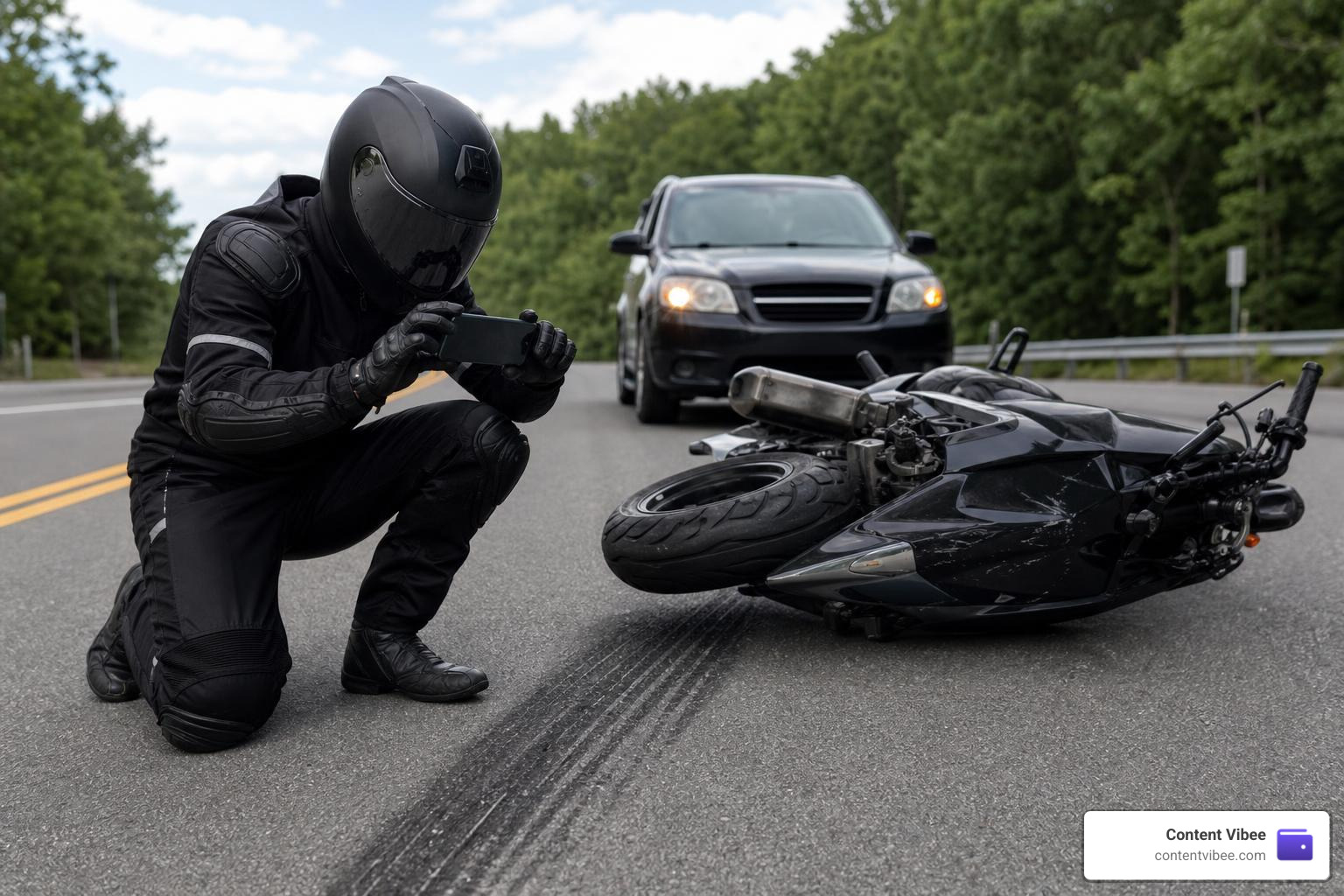
- Document the Scene: If you are able, take photos of your motorcycle, the other vehicle, skid marks, road conditions, and your visible injuries. Get the contact information of any witnesses who stopped.
- Never Admit Fault: Avoid saying “I’m sorry” or “I didn’t see you” to the other driver or the police. Stick strictly to the facts of what happened.
- Preserve Your Gear: Keep your damaged helmet, riding jacket, and boots. They are valuable physical evidence of the forces involved in the crash.
- Contact a Lawyer: Reach out to a specialized attorney before you sign any paperwork or give statements to the insurance company. If you were hit by a car, consulting with a car accident lawyer who understands multi-vehicle collisions is a smart first step to protect your motorcycle accident claims.
By systematically documenting your physical injuries and financial losses, your attorney can build a comprehensive demand package. This package will seek compensation for both economic damages (medical bills, future rehabilitation costs, lost wages, and property damage) and non-economic damages (pain and suffering, emotional distress, and loss of life enjoyment).
Frequently Asked Questions about Motorcycle Accidents
Navigating the legal aftermath of a crash is confusing. Here are answers to some of the most common questions riders ask us.
What is the statute of limitations for a motorcycle accident claim?
The statute of limitations is the strict legal deadline you have to file a personal injury lawsuit. If you miss this deadline, you lose your right to seek compensation forever.
While the standard timeline is typically three years from the date of the accident in many jurisdictions, it varies significantly depending on where you live. Furthermore, there are exceptions that can shorten this window—such as if the negligent driver was operating a government-owned vehicle, which often requires a notice of claim to be filed within just a few months. Understanding local contributory negligence rules and procedural deadlines is crucial, which is why you should consult an attorney as soon as possible after a crash.
Can I still recover damages if I wasn’t wearing a helmet?
Yes, in most cases, you can still recover damages even if you weren’t wearing a helmet. However, your compensation may be reduced.
Under comparative fault laws, the defense must prove that your lack of a helmet directly caused or worsened your injuries. For example, if you suffered a broken leg because a driver ran a red light, your helmet use (or lack thereof) has absolutely no bearing on that specific injury. However, if you suffered a concussion, the insurance company will argue that you failed to mitigate your damages. An experienced attorney can evaluate the helmet safety impact on your specific case and fight to ensure you are still fairly compensated for the driver’s negligence.
What resources are available for injured riders beyond legal help?
Recovering from a severe crash involves more than just a legal battle. Riders often need physical, emotional, and social support to rebuild their lives.
Many local riding clubs and national advocacy groups offer “riders helping riders” programs that provide peer support, hospital visits, and assistance with daily tasks. Additionally, specialized traumatic brain injury and spinal cord injury support groups can help you and your family navigate the psychological challenges of rehabilitation. When looking for comprehensive help, reviewing our list of top motorcycle lawyer picks for 2026 can connect you with legal professionals who are actively involved in the riding community and can point you toward these valuable community resources.
Conclusion
A motorcycle accident can disrupt your health, your career, and your financial stability in the blink of an eye. But you do not have to face the recovery process alone. By partnering with dedicated motorcycle injury attorneys, you gain an advocate who understands the unique challenges of the road, knows how to dismantle insurance company tactics, and will fight to secure the compensation you need to heal.
At Content Vibee, we are committed to helping you understand your rights and manage your personal finances after an unexpected life event. If you want to learn more about navigating the legal system after a crash, check out our comprehensive guide on how to find a good car accident lawyer to ensure you have the best possible representation in your corner. Let us help you get back on the road to recovery.